


Euro Forecast: Will Core PCE Tip the Scales for the Fed?
The last Core PCE before the Fed's September meeting will mark 65 straight months above the central bank's 2% target - will it be enough to push the FOMC toward a rate hike?
Written by
Matt Weller
Head of Market Research
Core PCE, EUR/USD Key Takeaways
- US Core PCE expectations are for a 0.2% m/m (3.3% y/y) print.
- This will be the last Core PCE print before the FOMC’s monetary policy meeting on September 16, where traders are pricing in 40% odds that the central bank will raise interest rates
- The technical outlook for EUR/USD remains constructive with the recent tight consolidation taking place above the 200-day MA and rising trend line off the late July lows.
Get ready: The BEA will release the July iteration of the Federal Reserve’s preferred inflation gauge, the Core PCE inflation rate, at 8:30 ET on Wednesday.
Last month, Core PCE rose 0.1% m/m (3.3% y/y), and despite softer-than-expected CPI and PPI readings since then, economists expect a similar reading this time around. Consensus expectations are for a 0.2% m/m (3.3% y/y) print; if met, this reading would reinforce the impression that disinflation has stalled and mark the 65th consecutive month with inflation running above the FOMC’s stated 2% target.
As always, the details within the report will be key. Service prices, housing-related costs and financial services will help determine whether underlying inflation is broadening or merely reflecting temporary distortions. Consumer spending will also be important, particularly after real consumption increased 0.4% in June.
Crucially, this will be the last Core PCE print before the FOMC’s monetary policy meeting on September 16. Traders are currently pricing in 40% odds that the central bank will raise interest rates:
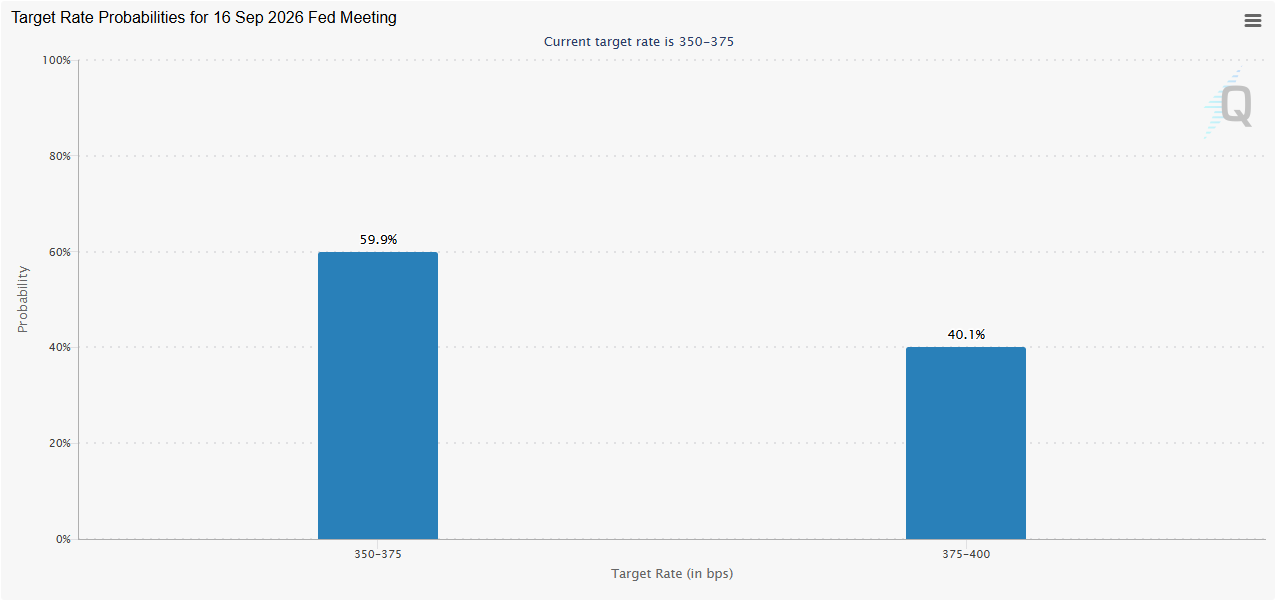
Source: CME FedWatch
Against that backdrop, the market interpretation of the release is relatively straightforward: A 0.1% or 0.2% m/m reading would reduce the pressure on FOMC Chairman Kevin Warsh and Company to raise interest rates immediately, likely weighing on the US dollar and boosting risk assets like major stock indices. Conversely, a firm 0.3%+ reading, particularly alongside strong consumption, would strengthen the case for raising interest rates sooner rather than later, likely boosting the buck at the expense of risk assets.
With inflation already testing the Fed’s credibility, Wednesday’s report may carry more market significance than the modest forecasted change suggests.
Euro Technical Analysis: EUR/USD Daily Chart
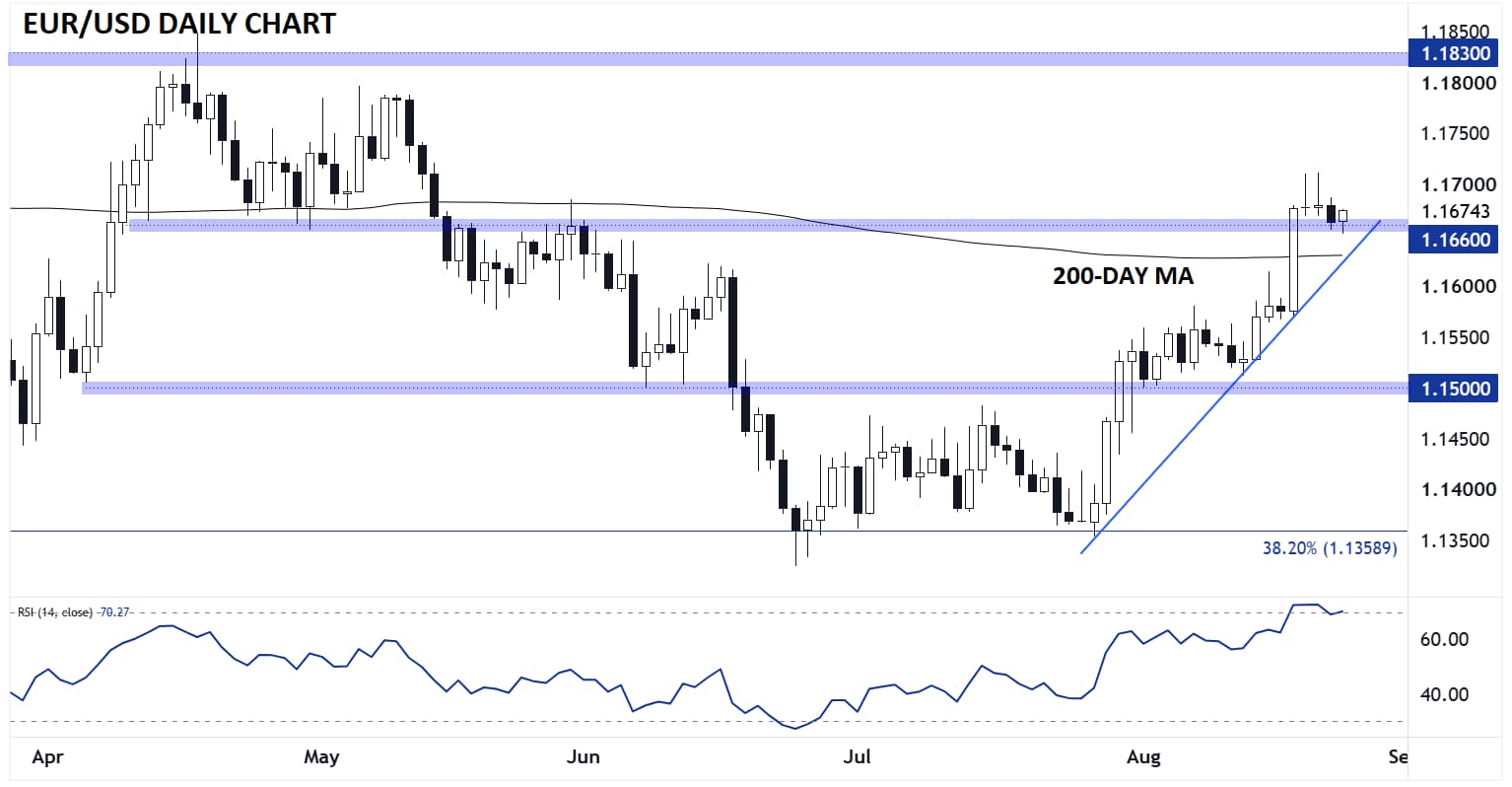
Source: Tradingview, StoneX
Turning our attention to the world’s most widely-traded currency pair, EUR/USD is holding just above previous-resistance-turned-support in the 1.1660 area. The technical outlook for the pair remains constructive with the recent tight consolidation taking place above the 200-day MA and rising trend line off the late July lows.
An as-expected or softer-than-expected print should keep the outlook for EUR/USD bullish, with potential to extend the near-term uptrend above 1.1700 ahead of FOMC Chairman Warsh’s Jackson Hole speech on Friday, whereas a hotter-than-anticipated reading could weigh on the pair and potentially threaten a break of bullish trend line support.
-- Written by Matt Weller, Global Head of Research
Check out Matt’s Daily Market Update videos on YouTube and be sure to follow Matt on Twitter: @MWellerFX
Latest market news









Web Trader platform
Our sophisticated web-based platform is packed with features.
Open an account today
Experience award-winning platforms with fast and secure execution.
Economic calendar
Related articles

EUR/USD forecast: All eyes on Warsh at Jackson Hole - Forex Friday
For much of this week, the EUR/USD has been edging lower with the US dollar regaining some ground after last week’s sell-off that was triggered, in part, by the bond market worries. Investors have been unwilling to bet further against the US dollar so far this week ahead of Kevin Warsh’s keynote speech at the Jackson Hole summit, due later today.


Bitcoin Forecast: BTC/USD Back to $80K Ahead of Warsh’s Jackson Hole Speech
After surging over $15,000 in the past 10 days alone, there is risk of a near-term pullback if Warsh says anything remotely hawkish at Jackson Hole - what are the levels to watch from here?

DAX and EUR/USD forecast: Lower energy prices, yields offer support
But the question, of course, is how much further oil prices and bond yields can fall. For now, the combination is supportive of risk assets and is helping to sustain a relatively benign decline in the dollar. The focus today will be on US core PCE inflation, due for release shortly, while Nvidia’s second-quarter earnings will provide another test for risk appetite after the US markets close – not just for US indices but for global tech-heavy indices given the influence Nvidia has over the global tech and AI names.