


EURUSD Analysis Can the dollar continue to dominate
Near the end of June, one of the most important factors for markets has been the recent strength of the US dollar. This behavior has pressured the euro and can be seen in the latest moves in EUR/USD, which has accumulated a decline of nearly 0.8% over the last two trading sessions.
Written by
Julian Pineda
Market Analyst
Near the end of June, one of the most important factors for markets has been the recent strength of the US dollar. This behavior has pressured the euro and can be seen in the latest moves in EUR/USD, which has accumulated a decline of nearly 0.8% over the last two trading sessions.
For now, selling pressure remains in place as the market continues to price in the possibility of a more aggressive Federal Reserve. This expectation has allowed the dollar to hold its strength and has become one of the main fundamental catalysts for the pair. If this dynamic continues, EUR/USD could keep facing bearish pressure over the next few trading sessions.

Is the dollar starting to dominate?
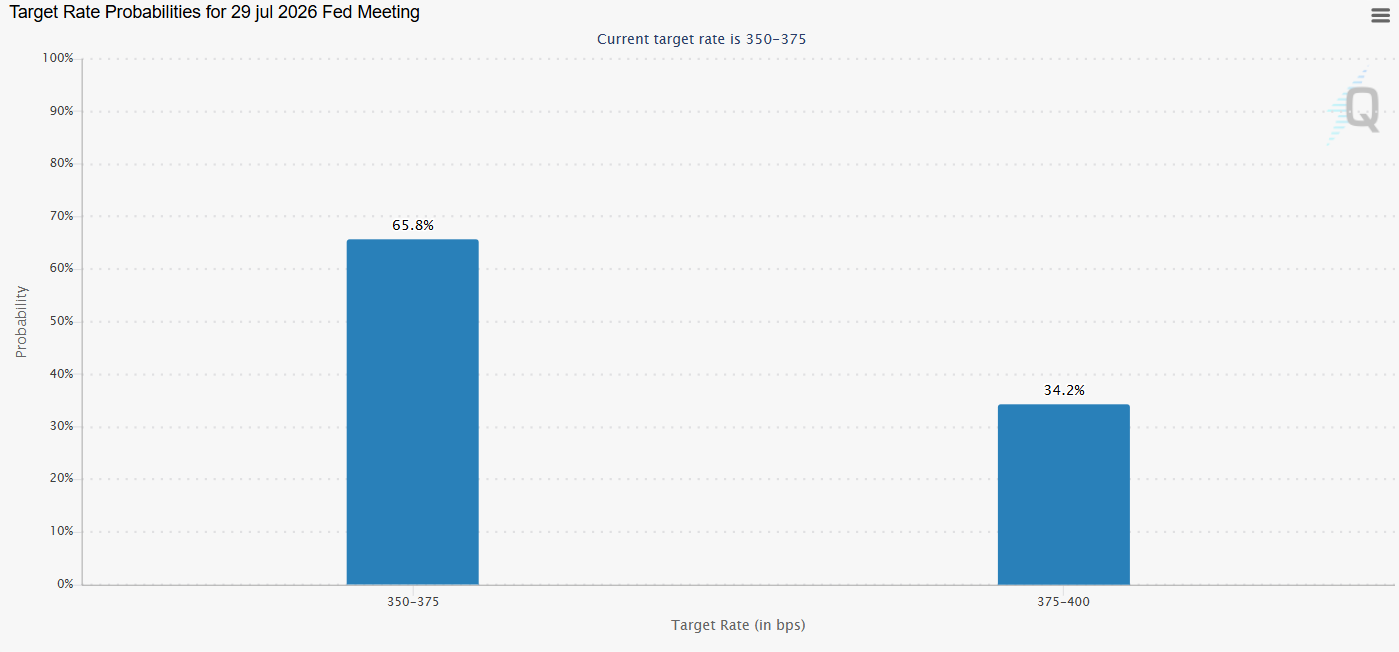
Several sessions have already passed since the latest Federal Reserve decision, and the probability outlook continues to lean toward a higher-rate scenario. According to the CME Group, for the July 29 decision, there is still a 65.8% probability that the rate will remain unchanged around the 3.75% level. However, the probability of a rate increase has also started to gain ground, now standing at 34.2%.
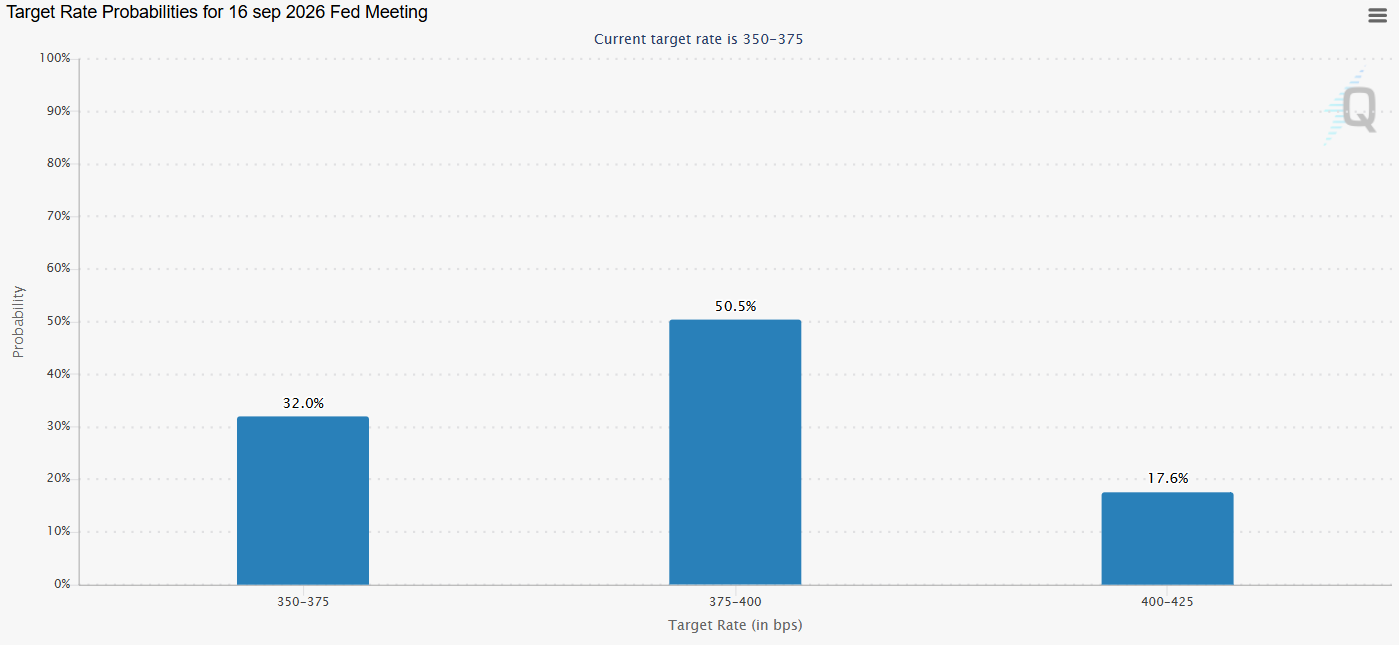
The main focus remains on September. For that meeting, the market is already assigning a probability close to 50% that the rate could rise toward the 4.00% area, while there is also a 17% probability of an even larger increase. This shows that markets are starting to adjust their expectations toward a more restrictive Fed over the coming months.
Source: CMEGROUP
Source: CMEGROUP
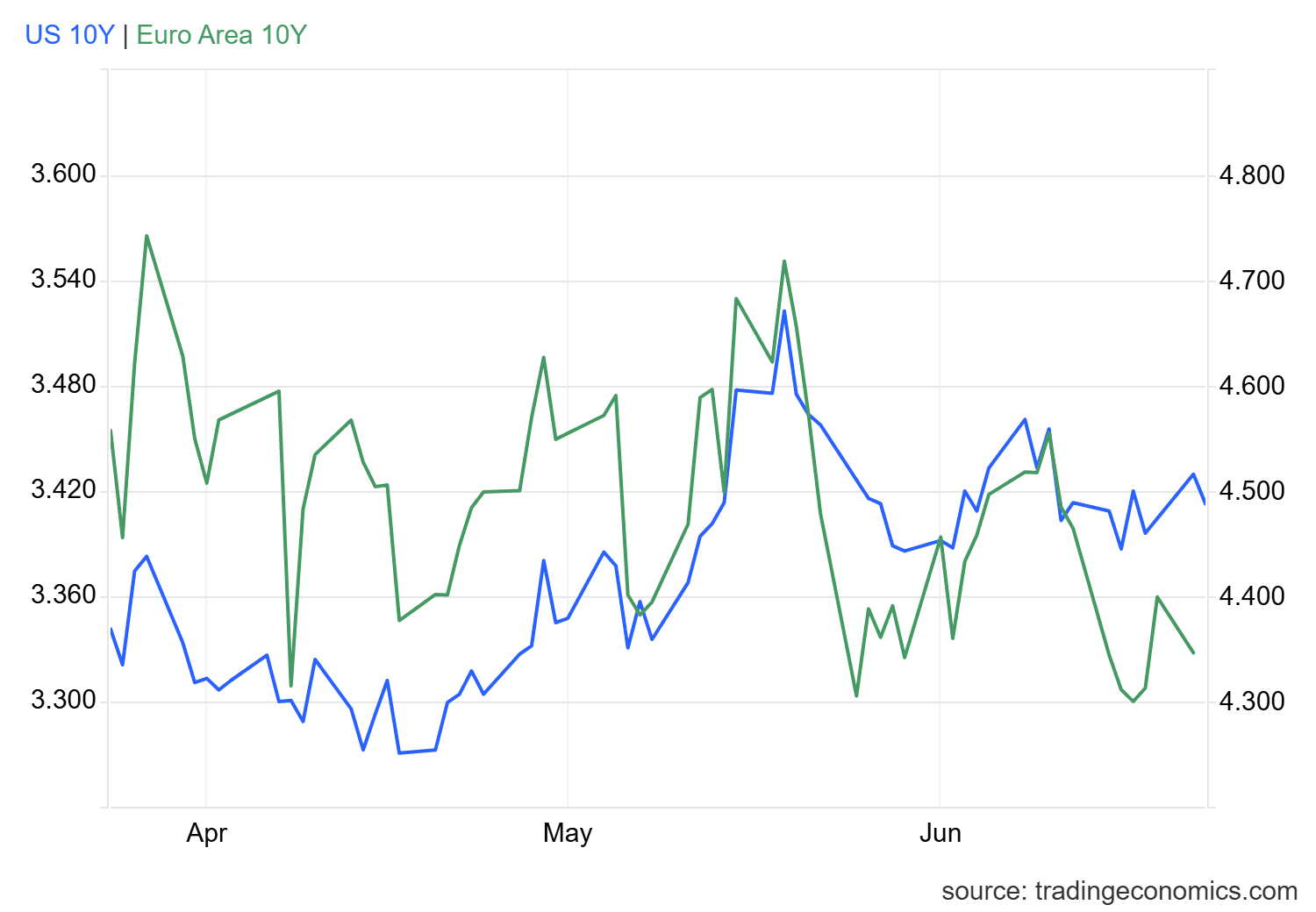
This scenario has been key in supporting the rate differential between the United States and Europe. The US 10-year Treasury yield remains near the 4.5% area, while European bond yields have registered recent declines and are now below 3.4%. This difference continues to make dollar-denominated assets more attractive, especially if the outlook for elevated rates in the United States remains in place.
Source: TradingEconomics
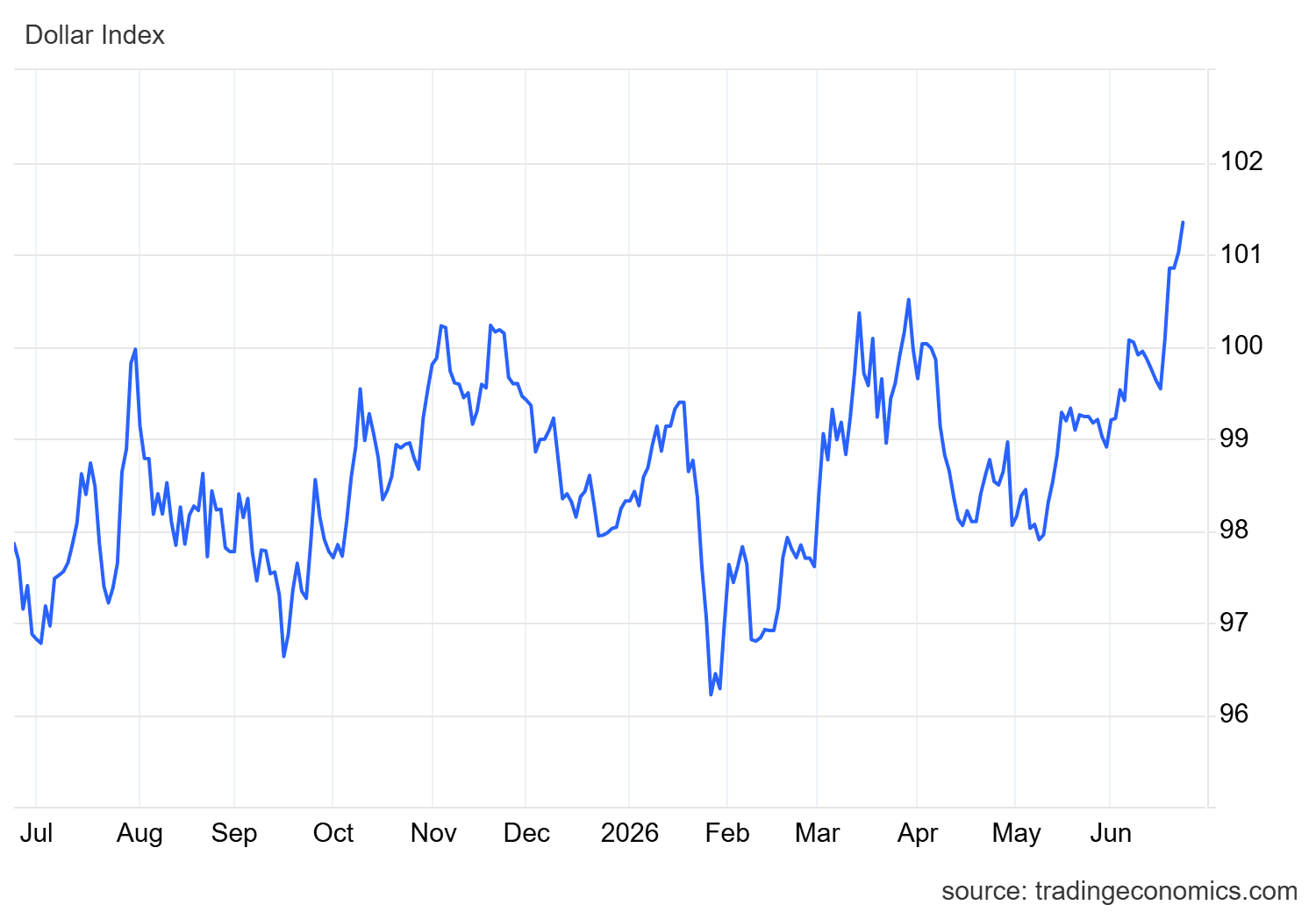
This dynamic has favored the US dollar, as a more attractive bond market can support demand for USD-denominated assets. This can be seen in the behavior of the DXY, which measures the strength of the dollar and currently maintains a relevant upward slope, with moves above the 100-point area. The index’s recovery started gaining more strength after last week’s Federal Reserve announcement.
Source: TradingEconomics
The Fed’s decision continues to have a meaningful impact on EUR/USD. As long as the US bond market remains attractive and the dollar holds its strength, the euro could struggle to recover ground consistently. Under this backdrop, selling pressure on the pair could remain relevant over the next few trading sessions.
Technical outlook for EUR/USD
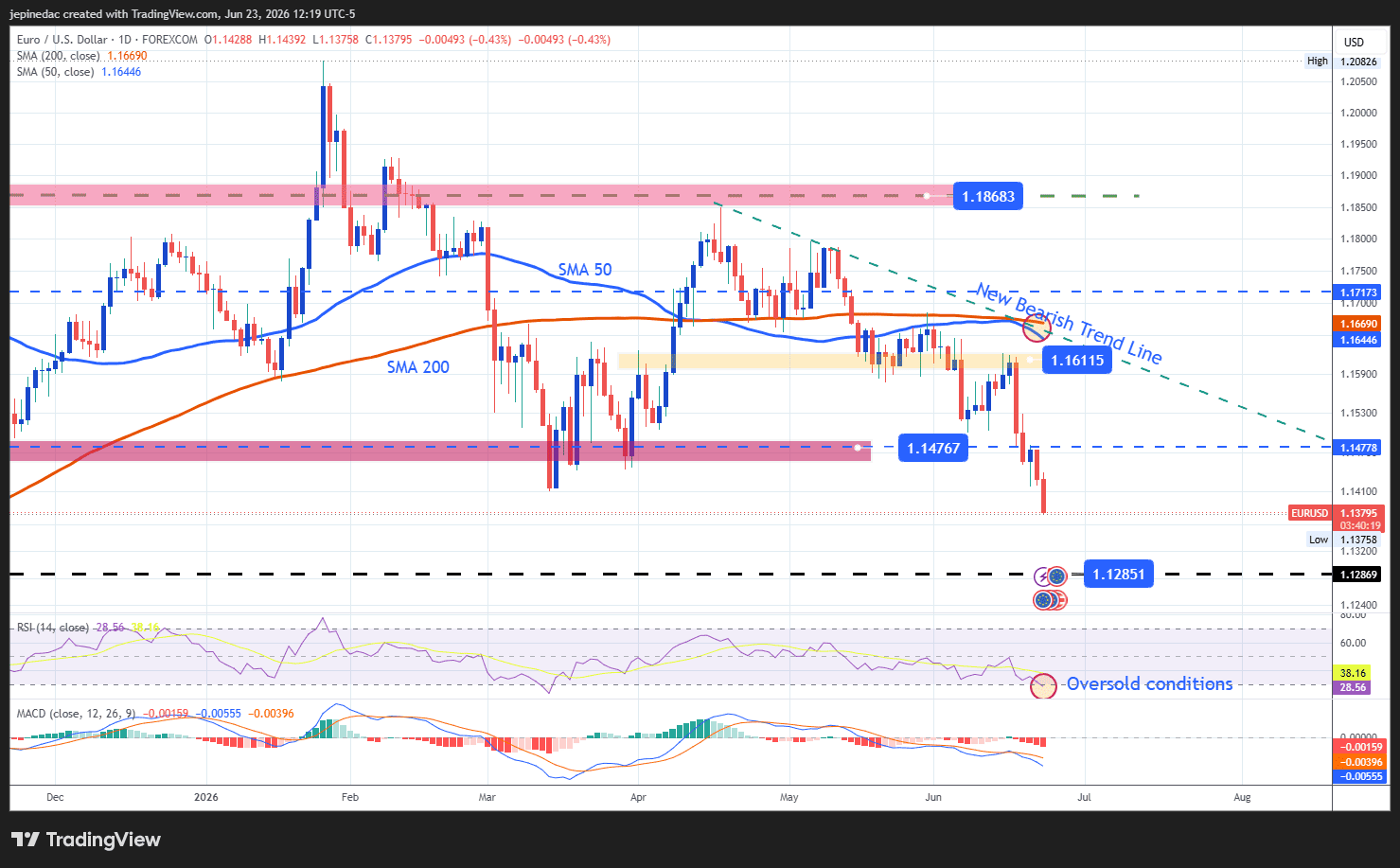
Source: StoneX, Tradingview
- The bearish trendline gains relevance: Since late April, EUR/USD has started to form a bearish trendline on the daily chart, as price action began to show a weaker short-term behavior. This structure has now become the most important technical pattern, especially after the pair broke below a sideways range that had been in place for several months. If selling pressure continues, this trendline could keep guiding price action over the next few trading sessions.
- RSI: The RSI remains below the 50 neutral lines, indicating that bearish impulses have dominated over the last 14 sessions. This confirms the recent selling pressure. However, the indicator is also approaching the oversold area near 30, meaning short-term bullish corrections could appear if the market starts to show signs of bearish exhaustion.
- MACD: The MACD histogram remains below the 0 line, showing that short-term moving averages continue to favor a bearish bias. If this dynamic remains in place, selling pressure could continue to be relevant on the EUR/USD chart.
Key levels:
- 1.16115 – Relevant resistance: This level is located near the latest highs reached by the price in previous weeks. For now, this area remains the most important bullish barrier. A return toward this level could put the bearish trendline at risk and open the door to a possible shift in bias over the coming weeks.
- 1.14767 – Nearby barrier: This level previously acted as an important support and has now become a nearby resistance. This area could serve as a tentative barrier in case of short-term bullish corrections.
- 1.12851 – Final support: This level is linked to a relevant neutrality zone observed in May 2025 and now acts as the main support to watch. If the price continues moving toward this area, the bearish bias would strengthen, increasing the possibility of an extension of the bearish trendline over the coming weeks.
Written by Julian Pineda, CFA, CMT – Market Analyst
Follow him on: @julianpineda25







Web Trader platform
Our sophisticated web-based platform is packed with features.
Open an account today
Experience award-winning platforms with fast and secure execution.
Economic calendar
Related articles

Euro Short-term Outlook: EUR/USD Pullback Nears Pivotal Uptrend Support 8 28 2026
Warsh's comments accelerated the EUR/USD selloff, raising the stakes as buyers look to stabilize the broader recovery.


EUR/USD forecast: All eyes on Warsh at Jackson Hole - Forex Friday
For much of this week, the EUR/USD has been edging lower with the US dollar regaining some ground after last week’s sell-off that was triggered, in part, by the bond market worries. Investors have been unwilling to bet further against the US dollar so far this week ahead of Kevin Warsh’s keynote speech at the Jackson Hole summit, due later today.


AUD/CAD breakout puts the Bradman barrier in sight
A bullish breakout has pushed AUD/CAD to its highest level since early 2021. Whether it can clear 0.9994 may determine if the move extends well above parity.
