


EURUSD Forecast Euro Remains Under Pressure as Middle East Tensions Escalate
The week has not been particularly favorable for the euro. Over the last three trading sessions, EUR/USD has declined by nearly 0.5%, once again highlighting a meaningful bearish bias in the short term.
Written by
Julian Pineda
Market Analyst
The week has not been particularly favorable for the euro. Over the last three trading sessions, EUR/USD has declined by nearly 0.5%, once again highlighting a meaningful bearish bias in the short term. For now, this selling pressure has been supported by factors such as the recovery in the U.S. bond market and the resurgence of geopolitical tensions, developments that have allowed the dollar to regain part of the ground lost in previous weeks. As long as these catalysts remain relevant, selling pressure around EUR/USD could continue to play an important role during the coming trading sessions.
Is Inflation Risk Returning to the Markets?
Today's session has been particularly relevant due to new developments coming out of the Middle East. The United States resumed attacks against certain targets in Iran after nearly a month without significant exchanges between the two sides. In addition, attacks against two tankers in the Strait of Hormuz were reported at the start of the week, a development that has once again raised concerns about potential disruptions to one of the most important routes for global energy trade and reduced expectations of a quick diplomatic resolution to the conflict.
The market's reaction to these events has been an increase in the geopolitical risk premium and a rise in uncertainty surrounding the outlook for global markets. This effect is already beginning to appear in the behavior of WTI crude oil, which has once again moved closer to the $90 per barrel area. In broader terms, this dynamic is reviving concerns over rising energy costs and could continue to fuel expectations of higher inflationary pressures in the months ahead.
This environment also comes at a time when markets continue to reassess the outlook for the Federal Reserve. Since Jackson Hole, investors have increasingly priced in a more hawkish stance after Kevin Warsh emphasized that inflation remains a meaningful risk to the U.S. economy. These comments have helped reinforce expectations that interest rates could remain elevated for longer or even leave room for additional hikes should inflation continue to prove persistent.
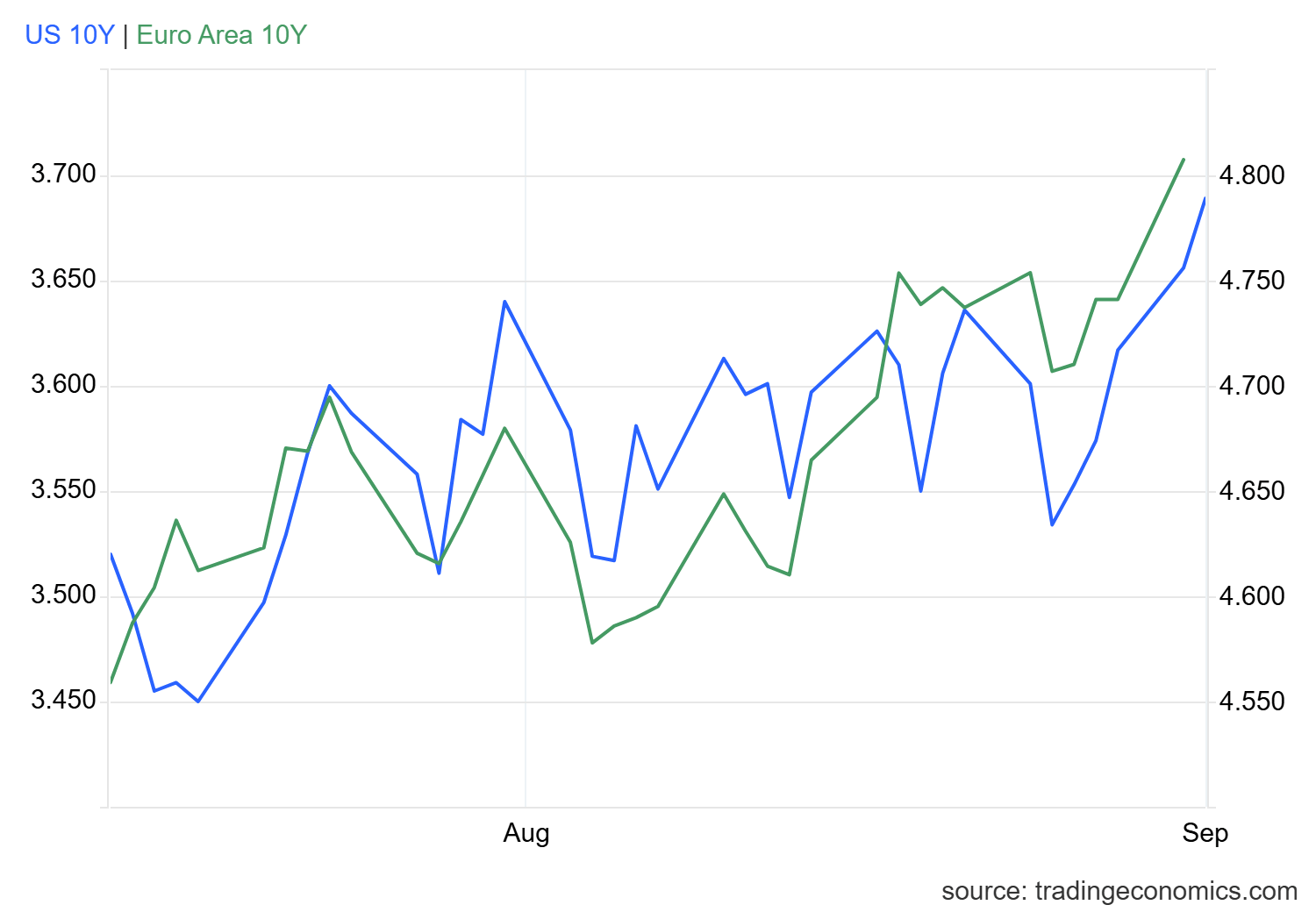
This situation is already being reflected in the U.S. bond market. 10-year Treasury yields continue to move toward the 4.8% area, reaching new highs for 2026. While European bond yields have also shown a gradual recovery, benchmark yields remain near 3.7%, still well below equivalent levels in the United States. This yield differential continues to support the relative attractiveness of dollar-denominated assets over their European counterparts.
Source: TradingEconomics
Taking all of this into account, the current environment remains supportive of the U.S. dollar. On one hand, rising geopolitical tensions could once again encourage demand for safe-haven assets. On the other, the strength of the U.S. bond market continues to support interest in dollar-denominated investments. Together, these factors help explain why the euro is struggling to regain ground in a consistent manner.
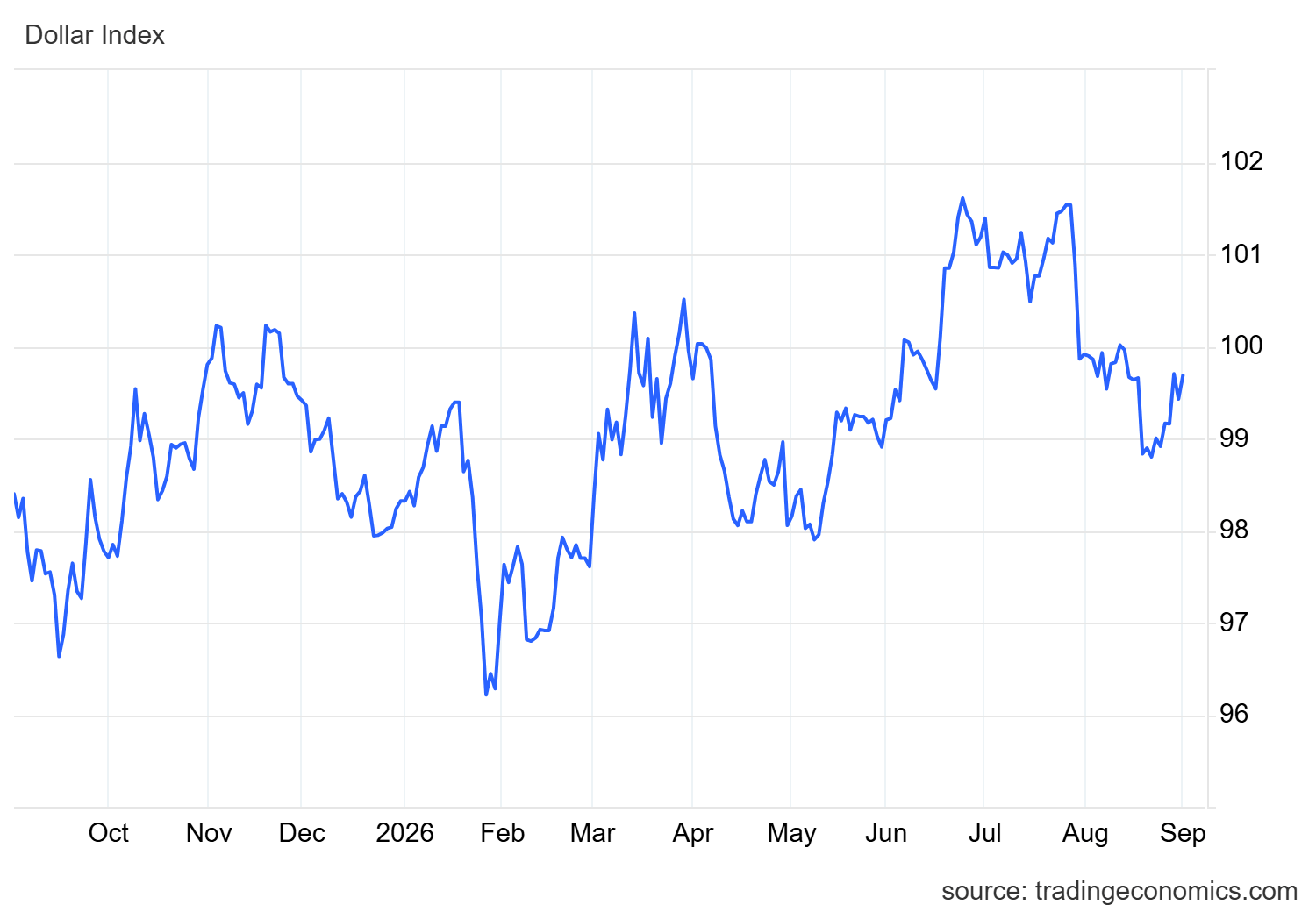
This reaction can already be seen in the behavior of the DXY Index, which measures the dollar's performance against its major rivals. The index continues to maintain a relatively steady upward slope and is once again approaching the 100-point area, reflecting a gradual improvement in confidence toward the greenback during recent sessions.
Source: TradingEconomics
As a result, recent developments appear to be providing fresh support for the U.S. dollar. As long as the market continues to perceive that the dollar is benefiting from both geopolitical concerns and expectations of higher interest rates, the euro may continue facing difficulties in establishing a sustained recovery. Under this scenario, bearish pressure around EUR/USD could remain relevant during the upcoming trading sessions.
EUR/USD Technical Outlook
Source: StoneX, Tradingview
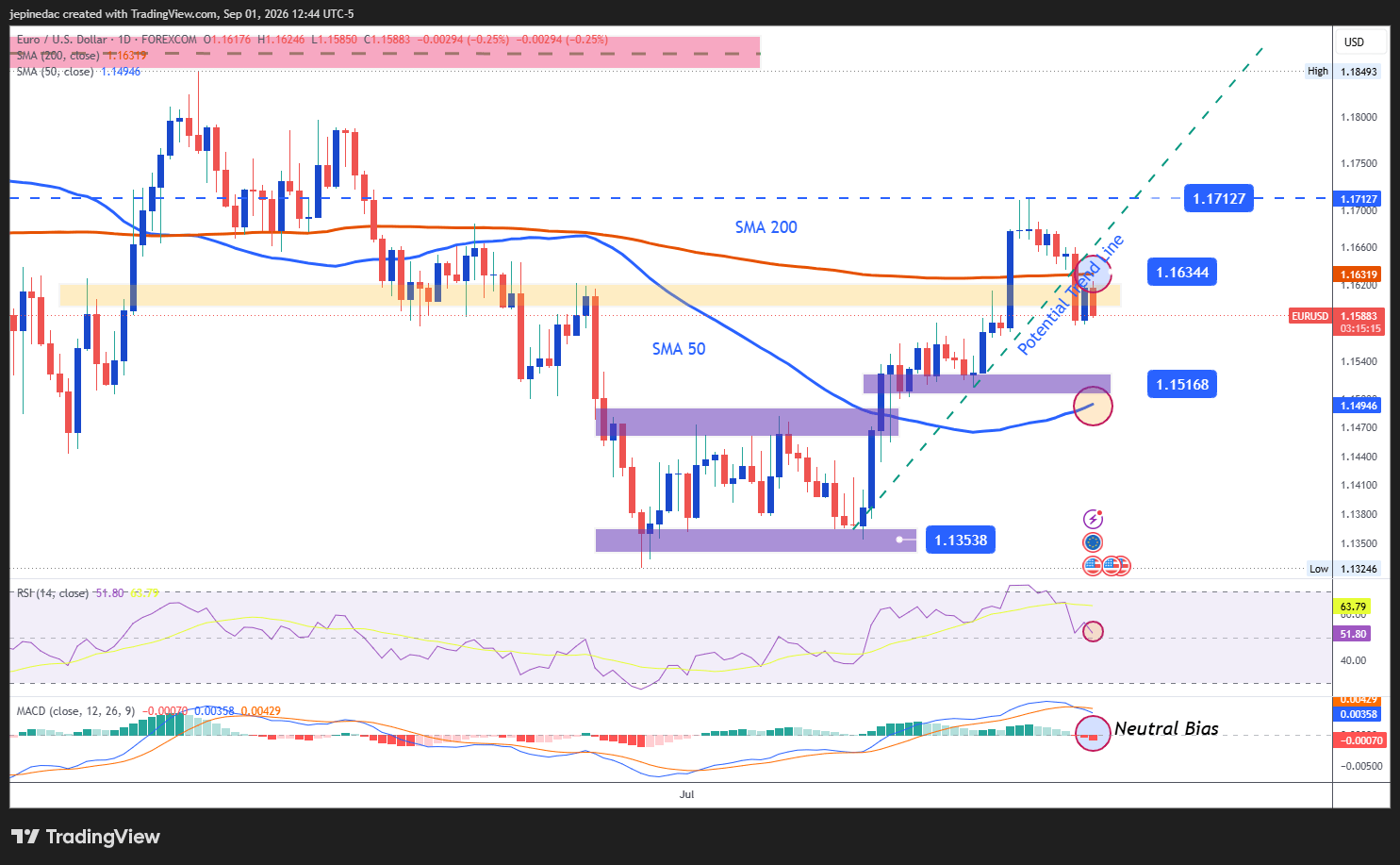
- Potential Bullish Trendline Enters a Risk Zone: Since late July, a bullish trendline had been developing as a result of the euro's recovery over recent weeks. However, the latest downside price action has started to place this structure under pressure and could signal an important shift in the broader chart outlook. Unless buying pressure begins to stabilize more convincingly, it is possible that the market enters a more neutral phase during the coming sessions.
- RSI: The RSI is now fluctuating around the neutral 50 level. This reading suggests that the balance between bullish and bearish momentum has become increasingly even and may reinforce the importance of a broader period of indecision in the short term.
- MACD: A similar picture can be seen in the MACD histogram, which continues to fluctuate near the neutral 0 line. This reflects balance in the average strength of short-term moving averages and supports the possibility that the market remains in a consolidation phase over the next several sessions.
Key Levels to Watch:
- 1.17127 – Key Resistance: A high not seen since May of this year and the most important upside barrier within the current structure. Price action that manages to approach or break above this area could restore the relevance of the bullish trend observed in previous weeks and support a more meaningful recovery.
- 1.16300 – Nearby Barrier: An important equilibrium zone that coincides with previous retracement levels and the 200-period Simple Moving Average. As long as the price continues to trade around this area, a lack of clear direction could remain dominant and even support the development of a broader trading range in the short term.
- 1.15168 – Critical Support: A level that coincides with one of the most important lows recorded in recent weeks as well as the 50-period Simple Moving Average. A move below this area could strengthen a more dominant bearish bias within short-term price action.
Written by Julian Pineda, CFA, CMT – Market Analyst
Follow him on: @julianpineda25
Latest market news










Web Trader platform
Our sophisticated web-based platform is packed with features.
Open an account today
Experience award-winning platforms with fast and secure execution.
Economic calendar
Related articles

EUR/USD, AUD/USD, Gold Weekly Technical Outlook 8 31 2026
Sr. Technical Strategist Michael Boutros highlights the levels that matter on the Euro, Aussie and Gold this week.


FX Futures Positioning: Dollar Rebound Meets Diverging Forex Bets | COT Report
US dollar longs held firm into Jackson Hole, while euro, yen and commodity FX positioning diverged ahead of ISM and NFP.


Australian Dollar Outlook: AUD/USD Faces RBA-Fed Rate Tug-of-War
AUD/USD faces competing RBA and Fed hike bets this week, with Australian GDP and US payrolls set to test the eight-week rally.