


FX Futures Positioning: GBP Shorts Hit Records as USD Rally Slows | COT Report
The US dollar remained firmly bid as record short bets hit sterling. Meanwhile, positioning in the yen, Aussie and Kiwi hints at emerging sentiment extremes.
Written by
Matt Simpson
Market Analyst
The latest CFTC Commitment of Traders (COT) report shows speculators continuing to favour the US dollar, although the pace of buying is slowing. Sterling attracted record bearish positioning, while traders began trimming extreme yen exposure. Futures positioning for the Australian and New Zealand dollars also points to diverging sentiment, with Kiwi shorts continuing to build and Aussie bearish momentum showing signs of fading.
View related analysis:
COT Report Highlights Record GBP Shorts as US Dollar Momentum Slows
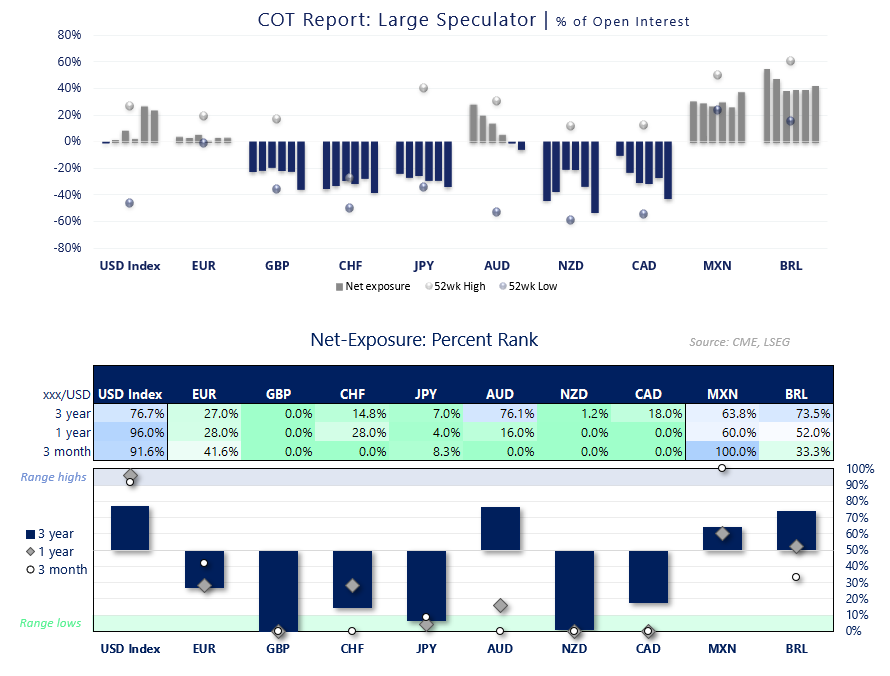
Large Speculator Positioning from the COT report
Source: CFTC (COT), LSEG
For traders wanting a deeper understanding of futures positioning, I’ve also published a guide on how to read and interpret weekly COT data in forex markets.
- US Dollar: Traders effectively increased their net-long US dollar exposure on the futures market by $4.9 billion last week to $33.5 billion.
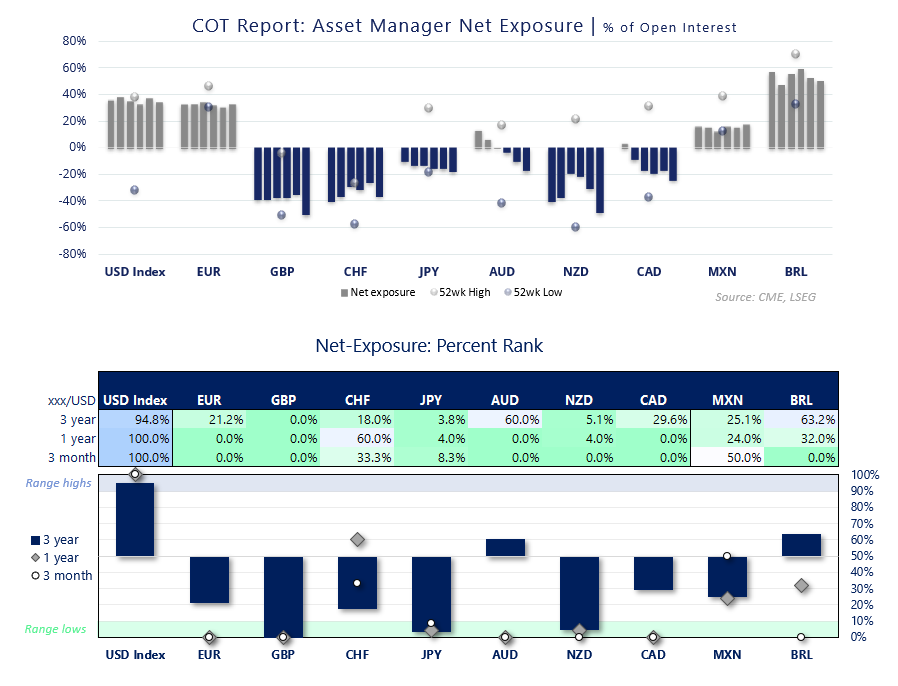
- EUR/USD: Gross shorts against the euro surged to a record high among asset managers and a 16-month high among large speculators.
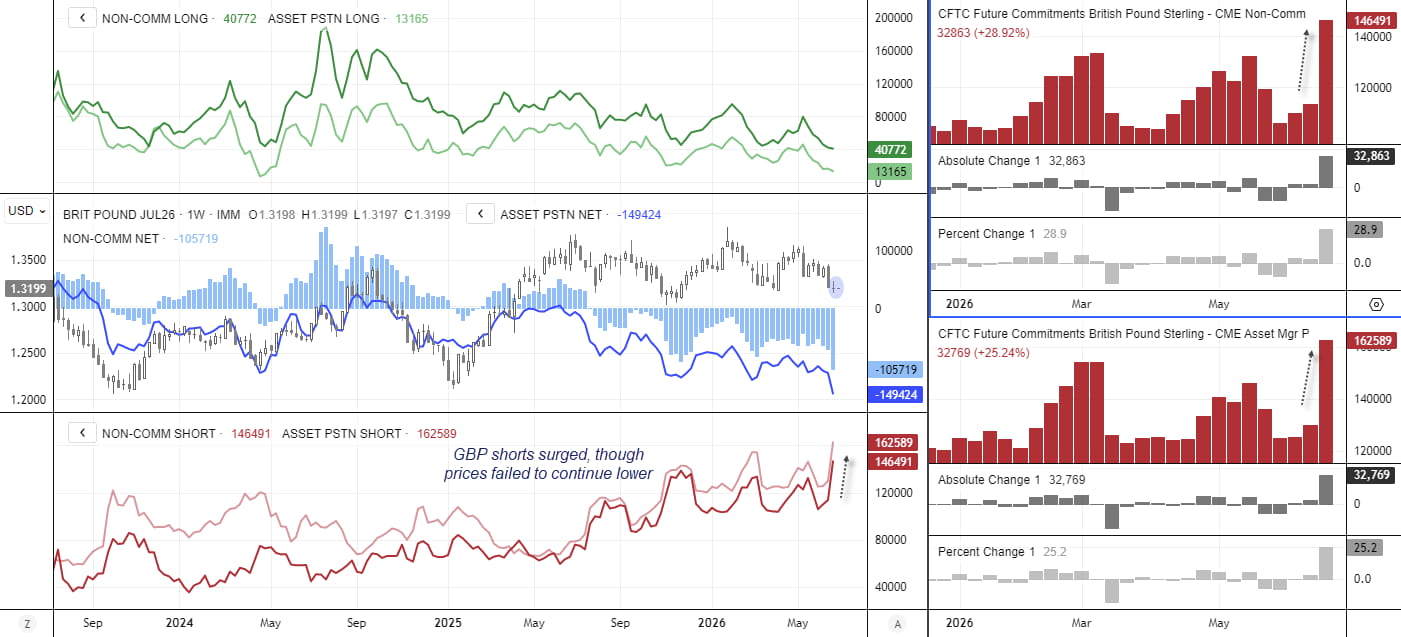
- GBP/USD: A surge in short bets against the British pound saw asset managers' net-short exposure reach a record high, with large speculators close to matching the feat.
- USD/JPY: Traders marginally reduced their net-short yen exposure from already extreme levels.
- USD/CHF: Net-short exposure rose to a 16-week high among large speculators.
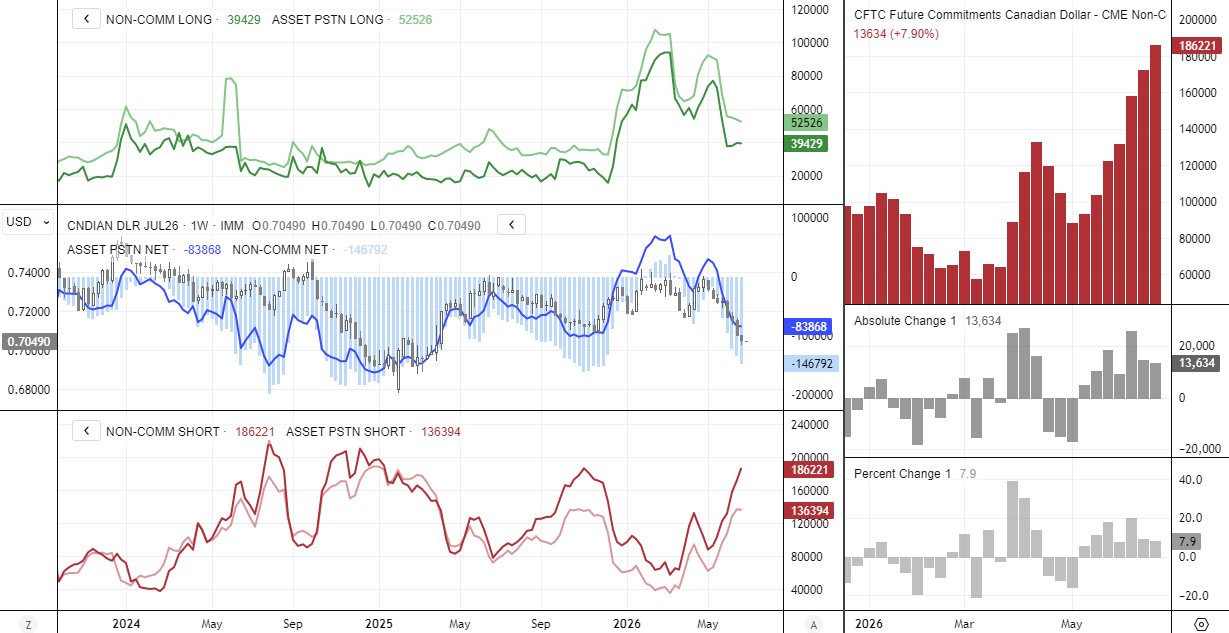
- USD/CAD: Large speculators increased their net-short exposure to a 29-week high against the Canadian dollar.
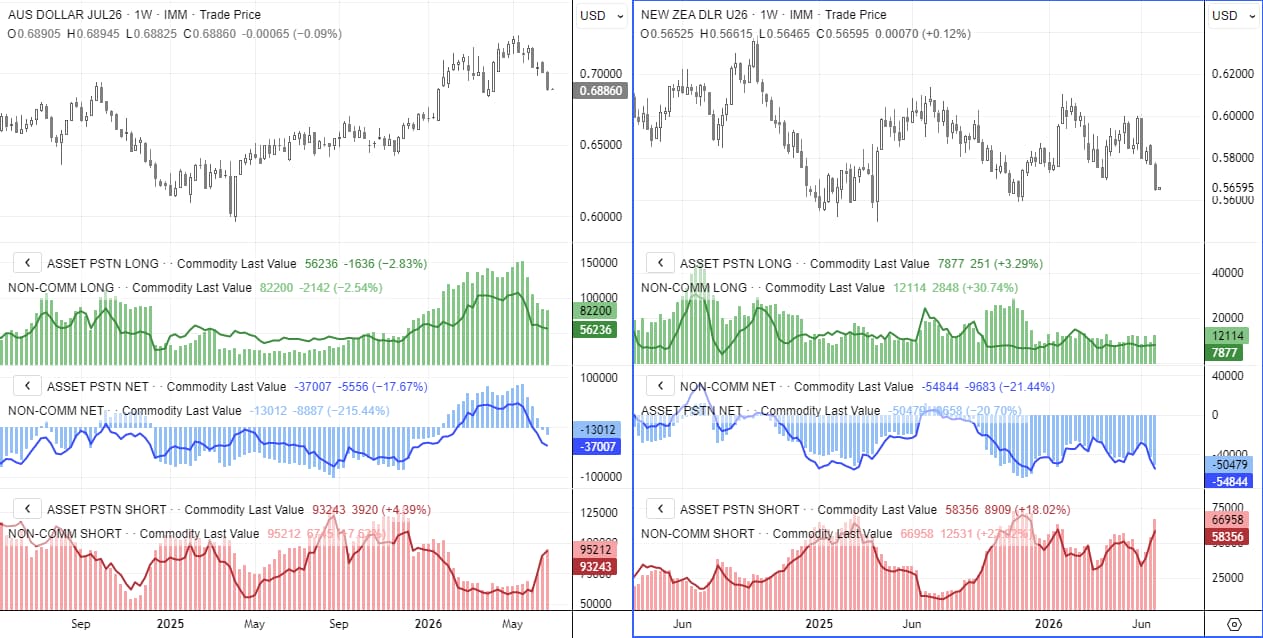
- AUD/USD: Net-short exposure rose to a combined 50,000 contracts across both trader groups, although the pace of new short selling slowed.
- NZD/USD: Bearish bets against the New Zealand dollar continued to build, with net-short exposure reaching a 28-week high among large speculators and a 22-week high among asset managers.
Asset Manager Positioning | COT Report
Source: CFTC (COT), LSEG
FX Futures Positioning | COT Report (IMM Data)
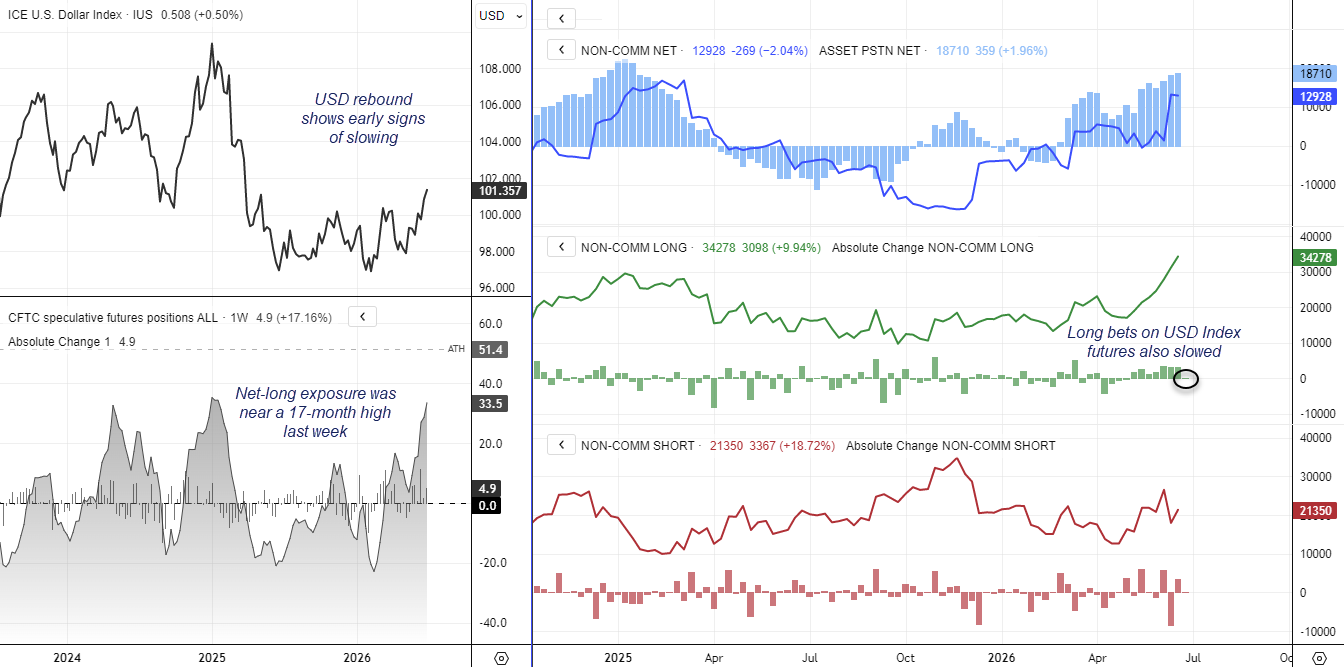
US Dollar Index (DXY) Futures Positioning | COT Report
While bulls continue to control the US dollar amid a hawkish Fed environment, the rally is losing steam. Last week's range was around half that of the previous week and left an upper wick. Net-long exposure also rose to a 17-month high of $33.5 billion, but the $4.9 billion weekly increase was less than half that of the previous week.
Asset managers increased their gross longs for a seventh consecutive week, but overall bullish appetite for the US dollar appears to be waning. Net longs rose only modestly as a 3,000-contract increase in gross shorts offset much of the buying, while asset managers increased their net-long exposure by less than 1,000 contracts after adding just 500 gross longs. These are by no means particularly bearish figures, but neither are they especially bullish.
While there is no imminent threat of a US dollar reversal or compelling case for a deep pullback, I am mindful that the current uptrend could be maturing to the point where it at least requires a pause over the near term.
Source: CFTC (COT), ICE, LSEG

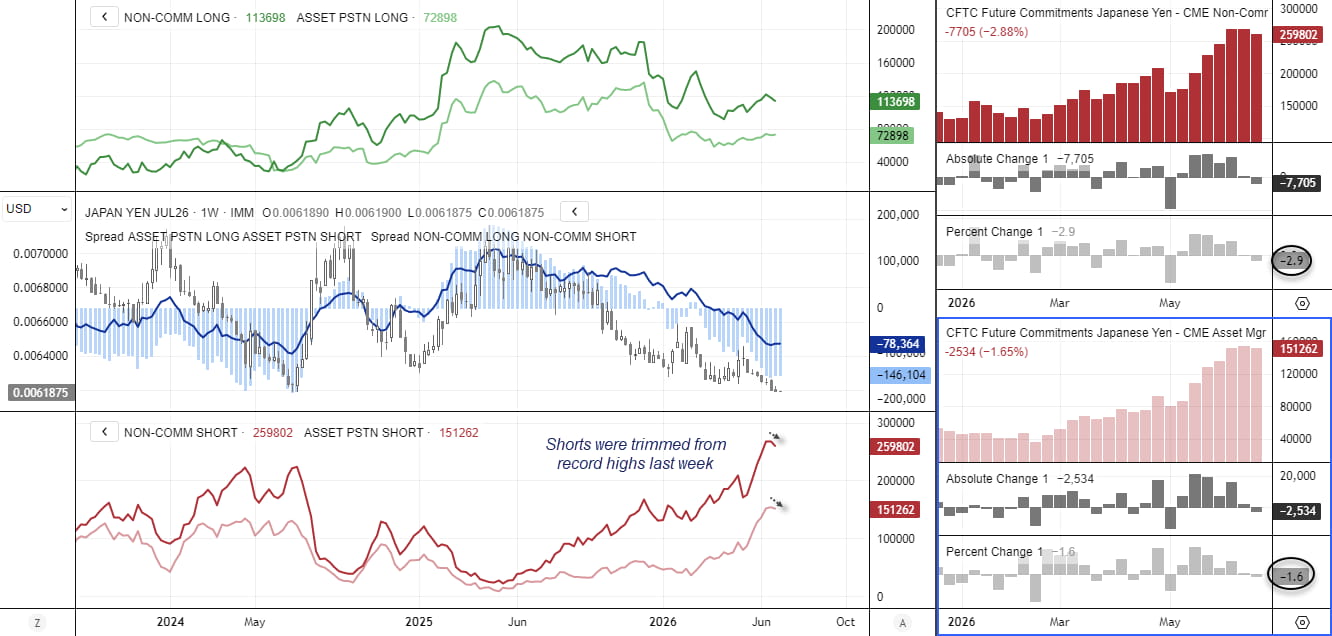
USD/JPY Futures Positioning | COT Report
I have been flagging a potential sentiment extreme on the Japanese yen for several weeks, and it seems futures traders are beginning to question the trade as well. Gross long exposure reached a record high two weeks ago among both large speculators and asset managers, yet both groups reduced their exposure by a combined 10k contracts last week.
While this is far from a mass exodus, it does suggest some caution among traders who have happily piled into bullish yen bets over the past year. That said, gross shorts were also trimmed, so traders are not exactly positioning for a strong yen recovery either. Instead, it appears they are simply lightening their exposure at what could be a sentiment extreme for the yen.
Source: CFTC (COT), CME, LSEG
GBP/USD Futures Positioning | COT Report
Political uncertainty also intensified ahead of last Tuesday's COT reporting cutoff, with speculation mounting over Keir Starmer's leadership and expectations that Andy Burnham would win the Makerfield by-election. While broader drivers such as US dollar strength and dovish BoE expectations remained the dominant themes, the political backdrop likely reinforced bearish sentiment towards sterling.
Gross short exposure surged by 32.8k contracts from the previous week to a record high of 163k contracts—a 25% increase from levels that were already just shy of record highs. Large speculators also increased gross longs by more than 32k contracts to a six-year high of 147k contracts.
Yet the fact that GBP/USD went on to print a narrow-range doji above the April low screams sentiment extreme to me, particularly at a time when I am already questioning whether the US dollar rally is beginning to lose momentum.
Source: CFTC (COT), CME, LSEG

USD/CAD Futures Positioning | COT Report
Bears continued to dominate the Canadian dollar, sending USD/CAD higher for a fourth consecutive week (and the ninth time in the past ten weeks). Large speculators increased gross shorts to a 33-week high of 186.2k contracts, while gross longs remained broadly unchanged. That said, asset managers trimmed gross shorts by fewer than 1k contracts, although they remain heavily net short alongside large speculators—just perhaps not quite at a sentiment extreme.
Source: CFTC (COT), CME, LSEG
AUD/USD, NZD/USD Futures Positioning | COT Report
Bearish momentum accelerated for AUD/USD and NZD/USD last week, although their futures positioning tells slightly different stories. Short bets increased against the Australian dollar, though the pace of selling slowed to little more than a crawl among both large speculators and asset managers. Meanwhile, shorts surged against the New Zealand dollar across both groups.
It is difficult to argue that AUD/USD futures have reached a sentiment extreme, given traders have only recently turned modestly net short. Yet traders have remained net short the Kiwi since mid-2025, suggesting positioning is much closer to a sentiment extreme.
Regardless, support resides around 0.5600 on NZD/USD and 0.6800 on AUD/USD. Given my hunch that the US dollar rally could slow, I suspect both AUD/USD and NZD/USD may be approaching a near-term inflection point.
Source: CFTC (COT), CME, LSEG
This content was created by an affiliate of FOREX.com and represents the views and opinions of the author/speakers, not the views and opinions of FOREX.com, StoneX Group Inc., or its subsidiaries. The content has not been independently reviewed by FOREX.com.
View the full economic calendar
-- Written by Matt Simpson
Follow Matt on Twitter @cLeverEdge
How to trade with City Index
You can trade with City Index by following these four easy steps:
- Open an account, or log in if you’re already a customer
• Open an account in the UK
• Open an account in Australia
• Open an account in Singapore
- Search for the market you want to trade in our award-winning platform
- Choose your position and size, and your stop and limit levels
- Place the trade
Related tags:







Web Trader platform
Our sophisticated web-based platform is packed with features.
Open an account today
Experience award-winning platforms with fast and secure execution.
Economic calendar
Related articles

Canadian Dollar Forecast: USD/CAD Weekly Reversal Puts Yearly Uptrend Back in Focus 8 29 2026
USD/CAD has staged its strongest weekly advance since June, shifting the focus to whether a more durable low is finally taking shape.


USD/JPY weekly outlook: Payrolls may challenge the Fed’s hawkish reset
USD/JPY has finally woken from its slumber. Payrolls now loom as the key test of whether the latest hawkish repricing sticks or sinks.


Euro Short-term Outlook: EUR/USD Pullback Nears Pivotal Uptrend Support 8 28 2026
Warsh's comments accelerated the EUR/USD selloff, raising the stakes as buyers look to stabilize the broader recovery.