


FX Futures Positioning: US Dollar Bulls Return, Yen Bears Tease MOF
US dollar bulls regained traction while yen bears pushed USD/JPY towards intervention territory. AUD longs unwound and CAD sentiment deteriorated.
Written by
Matt Simpson
Market Analyst
US dollar sentiment improved for a second consecutive week, with futures traders increasing bullish exposure and asset managers lifting net-long positions to a 15-month high. At the same time, Japanese yen bears continued to add short exposure as USD/JPY edged back towards levels associated with Ministry of Finance intervention. Elsewhere, Australian dollar bulls trimmed exposure after a strong rally, while bearish sentiment towards the Canadian dollar intensified.
View related analysis:
US Dollar Gains Support as Yen Bears Challenge Intervention Risks
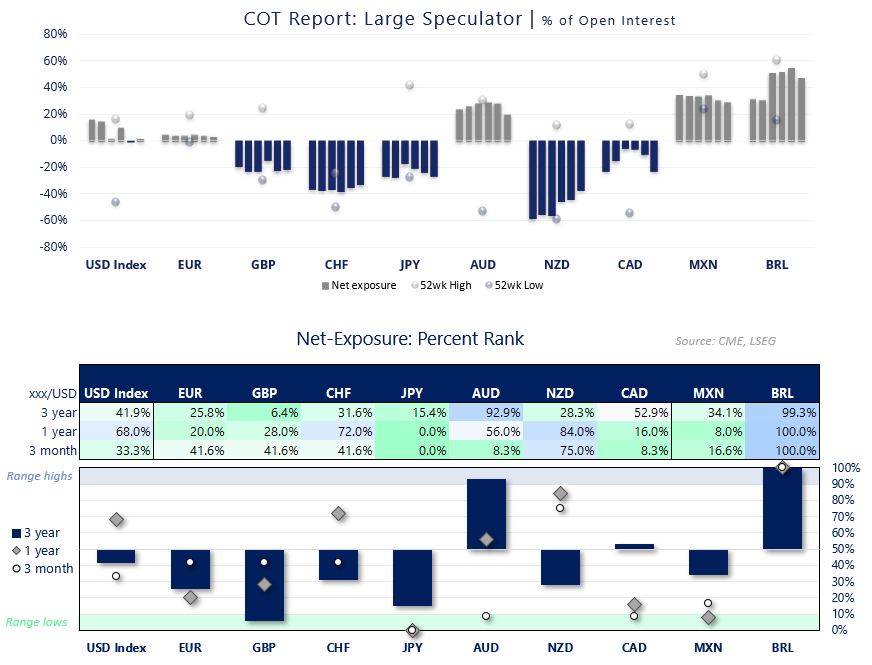
Large Speculator Positioning from the COT report
Source: CFTC (COT), LSEG
For traders wanting a deeper understanding of futures positioning, I’ve also published a guide on how to read and interpret weekly COT data in forex markets.
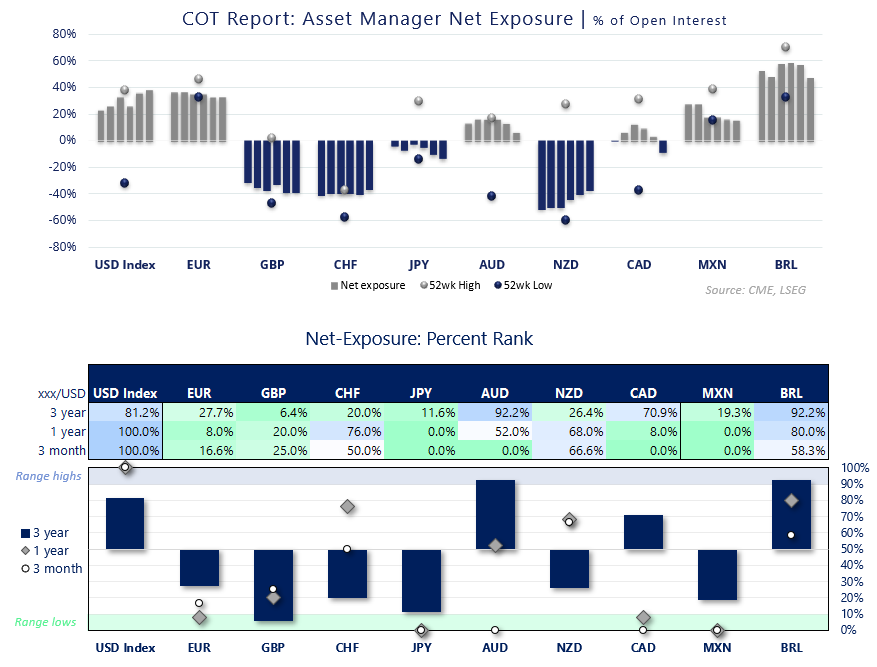
- US Dollar (DXY): Net-long US dollar exposure increased by $5.9 billion to $15 billion last week, while asset managers lifted net-long exposure to a 15-month high of 16.2k contracts.
- EUR/USD: Futures positioning was largely unchanged, with large speculators holding 29.4k net-long contracts and asset managers maintaining a sizeable 270k net-long position.
- GBP/USD: Positioning in the British pound saw little change, with traders reducing net-short exposure by around 4,000 contracts.
- USD/JPY: Elevated gross-short exposure alongside persistently high long positions suggests sentiment towards the Japanese yen may be approaching an extreme.
- USD/CHF: Combined net-short exposure to the Swiss franc declined by 3.7k contracts across large speculators and asset managers.
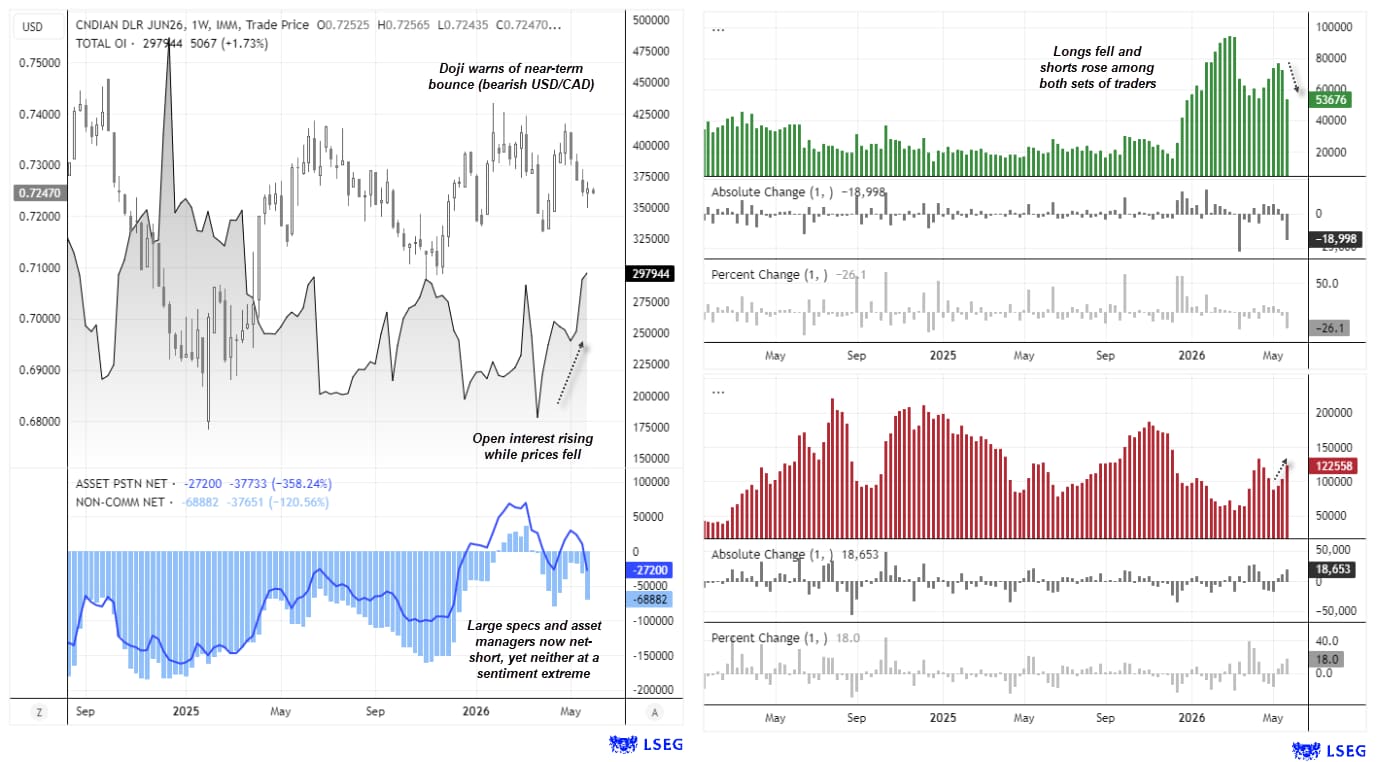
- USD/CAD: Rising open interest and falling Canadian dollar futures prices point to ongoing downside risks for the loonie, although technical signals on the USD/CAD daily chart suggest the potential for a near-term pullback.
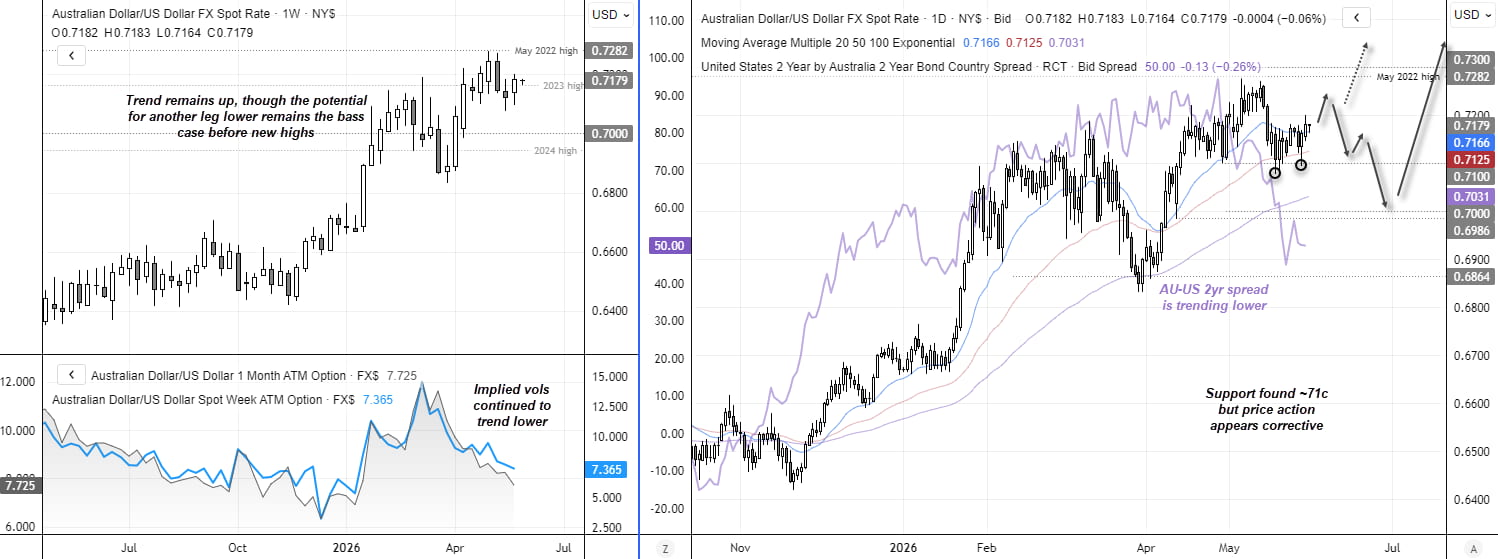
- AUD/USD: Net-long Australian dollar exposure fell by a combined 46k contracts among large speculators and asset managers, driven primarily by long liquidation following the currency's recent
Asset Manager Positioning | COT Report
Source: CFTC (COT), LSEG

FX Futures Positioning | COT Report (IMM Data)
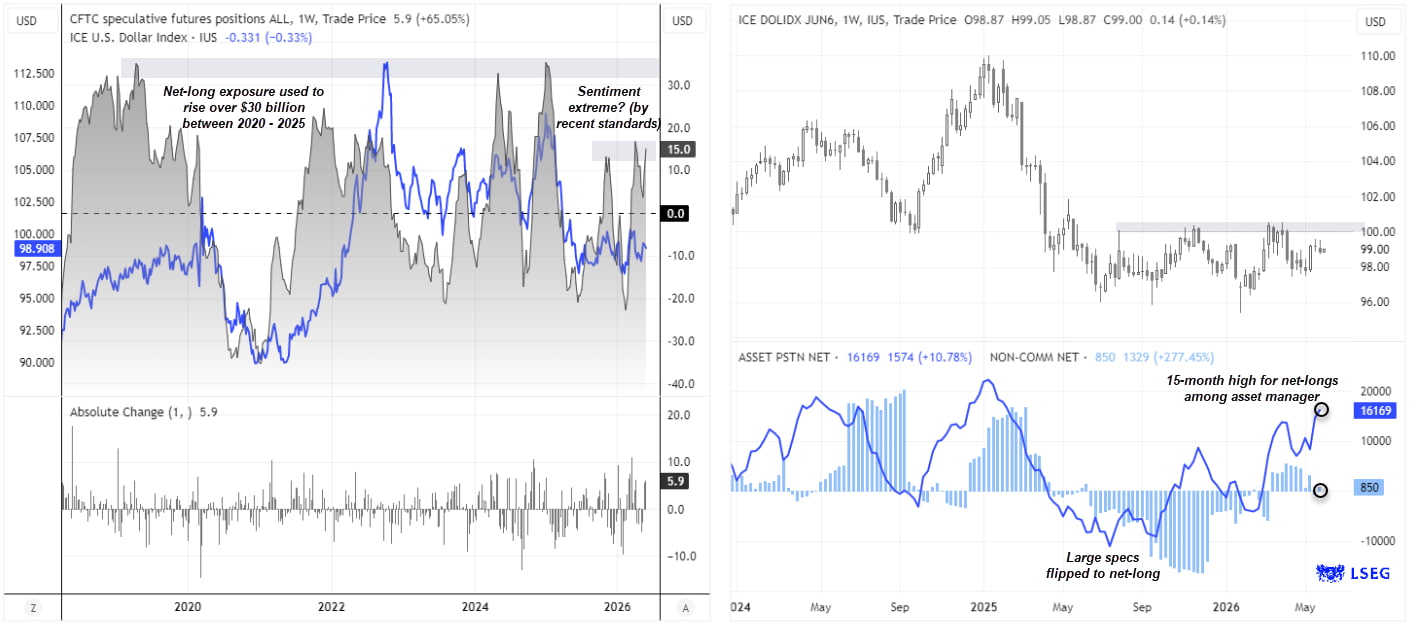
US Dollar Index (DXY) Futures Positioning | COT Report
It remains difficult to construct an overly bearish case for the US dollar while crude oil prices remain elevated and conflicting headlines continue to cloud prospects for peace in the Middle East. Futures traders appear to agree, increasing their effective net-long exposure to the US dollar to $15 billion last week. The $5.9 billion increase marked a second consecutive weekly rise and the fastest pace of accumulation in seven weeks, lifting bullish exposure to its highest level in seven weeks.
By recent standards, this could be considered a sentiment extreme among US dollar bulls. However, positioning data show that traders regularly pushed net-long exposure towards $30 billion between 2020 and 2025, suggesting current positioning is not yet stretched.
Furthermore, large speculators flipped to a net-long position in US Dollar Index (DXY) futures, while asset managers increased their net-long exposure to a 15-month high. Overall, the latest COT report points to firm support for the US dollar, with few signs that bullish sentiment has yet reached an extreme.
Source: CFTC (COT), ICE, LSEG
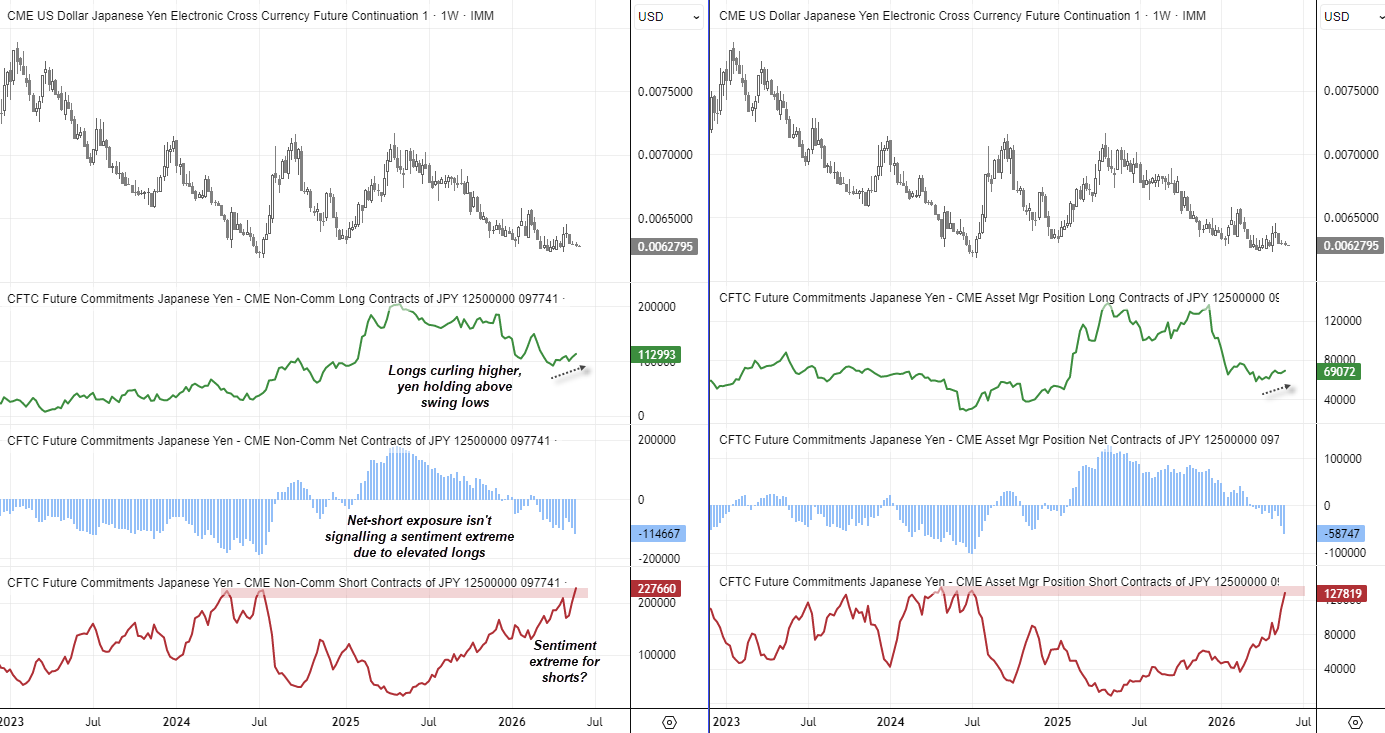
USD/JPY Futures Positioning | COT Report
Like many traders, I have continued to monitor the Japanese yen, wary of another intervention from Japan's Ministry of Finance (MOF). It has been over a month since authorities first intervened in the currency market, sending USD/JPY down around 500 pips within an hour.
USD/JPY has since recouped most of those losses, yet futures traders have continued to pile into yen shorts. In fact, it could be argued that gross-short exposure in Japanese yen futures is at, or very near, a sentiment extreme. It is only because gross-long exposure remains elevated that net-short positioning is not yet signalling an extreme from either group of traders.
With USD/JPY trading just 40 pips below 160.00—a level widely viewed as a potential trigger for MOF intervention—forex traders may want to keep a close eye on developments in Japan this week, as the risk of heightened volatility remains elevated.
Source: CFTC (COT), CME, LSEG

USD/CAD Futures Positioning | COT Report
Net-long exposure to USD/CAD effectively doubled last week to 69,000 contracts among large speculators. The 37,600-contract increase in net-short Canadian dollar exposure was the most aggressive weekly shift in nearly two years, and one of the largest seen in the past eight. Asset managers also flipped to a net-short position for the first time in six weeks, taking their bearish Canadian dollar exposure to its highest level this year.
And this was before it was revealed that Canada had entered a technical recession and that the government's budget deficit had widened sharply.
Notably, both groups of CAD futures traders increased short positions while reducing longs, leaving both cohorts net-short. Yet neither is signalling a sentiment extreme for the Canadian dollar. Furthermore, open interest has been rising while Canadian dollar futures prices have fallen in recent weeks, suggesting fresh short positions are entering the market. That could keep USD/CAD on the 'buy the dip' watchlist for bulls while the US dollar retains its bullish narrative.
That said, a key reversal on the USD/CAD daily chart near cycle highs, combined with a spinning top doji on the Canadian dollar futures weekly chart, hints at the potential for a near-term pullback.
Source: CFTC (COT), CME, LSEG
This content was created by an affiliate of FOREX.com and represents the views and opinions of the author/speakers, not the views and opinions of FOREX.com, StoneX Group Inc., or its subsidiaries. The content has not been independently reviewed by FOREX.com.
AUD/USD Futures Positioning | COT Report
AUD futures traders continued to pare back bullish exposure last week, although the move was driven far more by long liquidation than aggressive short selling. Large speculators reduced gross longs by 17.9k contracts while adding a comparatively modest 3.5k shorts, suggesting traders were taking profits and reducing risk rather than establishing outright bearish bets.
The imbalance between falling longs and rising shorts is notable. When traders rush to the exits by cutting longs rather than aggressively building shorts, it often points to a corrective phase rather than the start of a major trend reversal. That could leave any AUD/USD pullback relatively orderly, even if near-term downside risks remain.
After briefly probing just below 73 cents, a retreat towards the 70-cent area would not be unusual and could easily unfold within a broader bullish framework. At this stage, futures positioning appears more consistent with a market taking a breather than one preparing for a sustained bearish trend.
Source: CFTC (COT), CME, LSEG
View the full economic calendar
-- Written by Matt Simpson
Follow Matt on Twitter @cLeverEdge
How to trade with City Index
You can trade with City Index by following these four easy steps:
- Open an account, or log in if you’re already a customer
• Open an account in the UK
• Open an account in Australia
• Open an account in Singapore
- Search for the market you want to trade in our award-winning platform
- Choose your position and size, and your stop and limit levels
- Place the trade
Related tags:







Web Trader platform
Our sophisticated web-based platform is packed with features.
Open an account today
Experience award-winning platforms with fast and secure execution.
Economic calendar
Related articles

Euro Short-term Outlook: EUR/USD Pullback Nears Pivotal Uptrend Support 8 28 2026
Warsh's comments accelerated the EUR/USD selloff, raising the stakes as buyers look to stabilize the broader recovery.


EUR/USD forecast: All eyes on Warsh at Jackson Hole - Forex Friday
For much of this week, the EUR/USD has been edging lower with the US dollar regaining some ground after last week’s sell-off that was triggered, in part, by the bond market worries. Investors have been unwilling to bet further against the US dollar so far this week ahead of Kevin Warsh’s keynote speech at the Jackson Hole summit, due later today.


AUD/CAD breakout puts the Bradman barrier in sight
A bullish breakout has pushed AUD/CAD to its highest level since early 2021. Whether it can clear 0.9994 may determine if the move extends well above parity.
