


USD/CAD Analysis: A Stronger U.S. Dollar Keeps Pressure on the CAD
Recent trading sessions have not been particularly favorable for the Canadian dollar. USD/CAD has now recorded four consecutive bullish sessions, accumulating gains of more than 1.00% in favor of the U.S. dollar. This move once again highlights a relevant bullish bias within the market and shows that buying pressure continues to dominate in the short term.
Written by
Julian Pineda
Market Analyst
Recent trading sessions have not been particularly favorable for the Canadian dollar. USD/CAD has now recorded four consecutive bullish sessions, accumulating gains of more than 1.00% in favor of the U.S. dollar. This move once again highlights a relevant bullish bias within the market and shows that buying pressure continues to dominate in the short term.
Part of this strength has been supported by growing expectations that the Federal Reserve could adopt a more aggressive stance in the near term, a situation that has helped strengthen demand for U.S. dollars. As long as these expectations continue gaining relevance, the Canadian dollar could continue facing difficulties in recovering lost ground, allowing buying pressure around USD/CAD to remain important during the coming sessions.
Is Fear of a More Aggressive Federal Reserve Returning?
Recent trading sessions have been especially important for U.S. monetary policy expectations. This follows last week's inflation data release, which showed annual inflation holding at 3.4%, a level that remains well above the Federal Reserve's 2.0% target.
The key point is that market expectations regarding the upcoming Federal Reserve decision have shifted notably. Current probability estimates suggest there is now more than a 90% chance of the benchmark interest rate being increased from the current 3.75% level to 4.00%. In contrast, the probability of leaving rates unchanged has fallen below 10%.
This change accelerated following the inflation release and reflects that markets are once again pricing in a more aggressive Federal Reserve, a dynamic that could continue influencing the strength of the U.S. dollar in the near term.
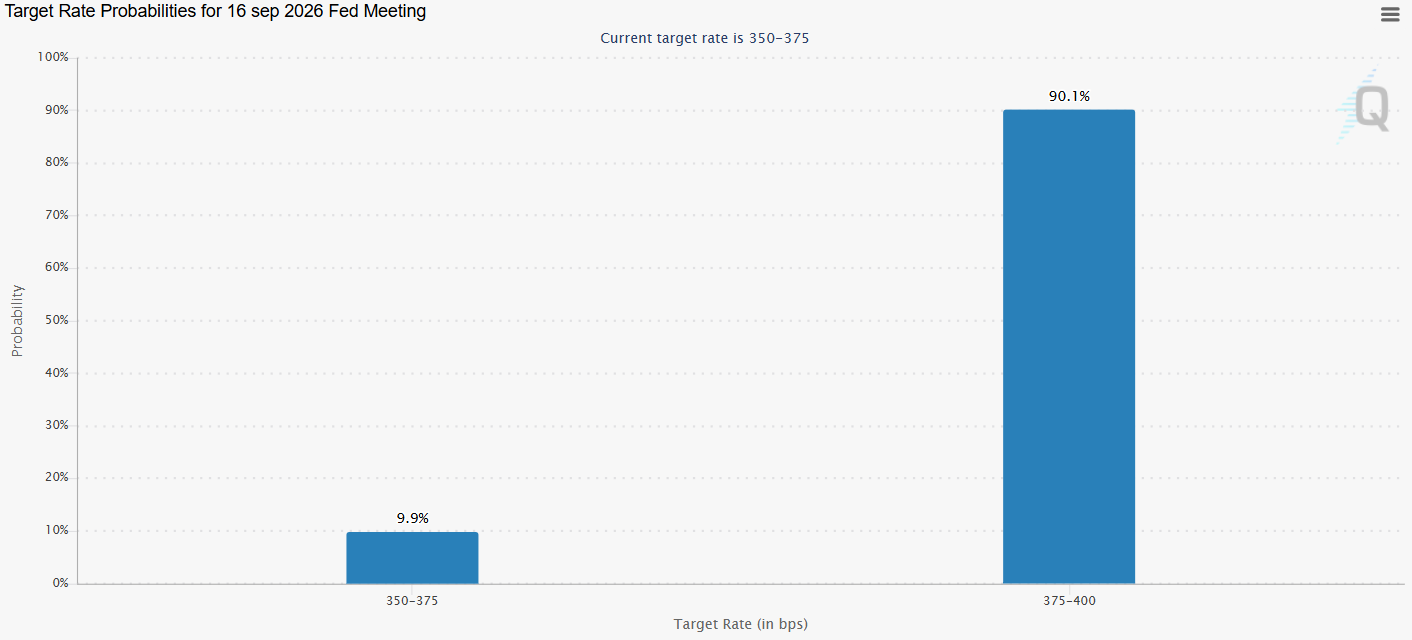
Source: CMEGROUP
This environment has become increasingly supportive for the U.S. dollar because higher interest rates tend to increase the attractiveness of USD-denominated investments. In addition, a more restrictive Federal Reserve widens the policy gap relative to the Bank of Canada.
Part of this behavior is already visible in the DXY Index, which measures the dollar's strength against its main rivals. The index has managed to recover ground in recent sessions and has moved back toward the 100-point area, highlighting a renewed recovery in demand for the U.S. dollar and reinforcing confidence around the currency.
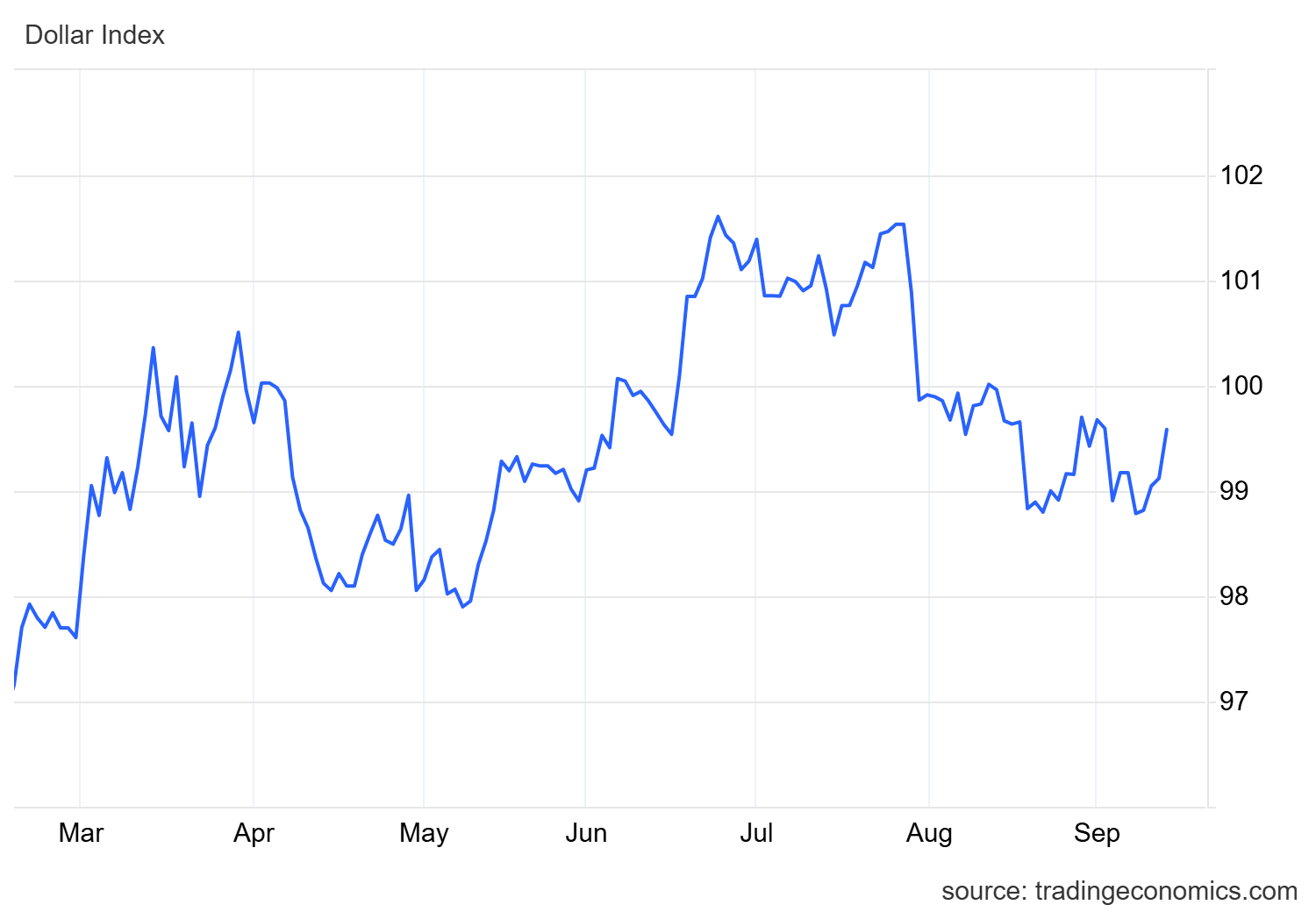
Source: TradingEconomics
This backdrop is not especially favorable for the Canadian dollar because expectations of a more aggressive Federal Reserve have begun driving demand for the U.S. dollar higher once again. As long as this dynamic remains in place, CAD may continue struggling to regain momentum, allowing the bullish bias around USD/CAD to remain dominant.
How Is the Tariff Situation Evolving?
Several weeks have now passed since trade relations between the United States and Canada deteriorated significantly on August 21. At the moment, tariffs close to 50% remain in place on approximately $20 billion worth of Canadian goods, and both economies continue responding with additional measures without a clear solution to the ongoing trade dispute.
At the same time, Mark Carney, Canada's Prime Minister, has increased efforts to attract foreign investment through the Canada Investment Summit, an event that brings together hundreds of senior executives and business leaders. Part of the strategy has involved presenting Canada as a more stable and predictable alternative compared with a more uncertain environment in the United States, highlighting an effort to diversify economic opportunities while trade negotiations remain stalled.
For now, the situation remains unresolved and continues to represent a significant challenge for Canada given the country's heavy dependence on exports to the United States. As long as retaliatory measures continue and meaningful progress fails to emerge, Canadian growth expectations could begin to deteriorate further.
This dynamic could gradually weigh on confidence around the Canadian dollar and continue limiting its recovery potential. Until meaningful progress is achieved on the trade front, buying pressure around USD/CAD may remain a relevant feature of market activity in the weeks ahead.
USD/CAD Technical Outlook
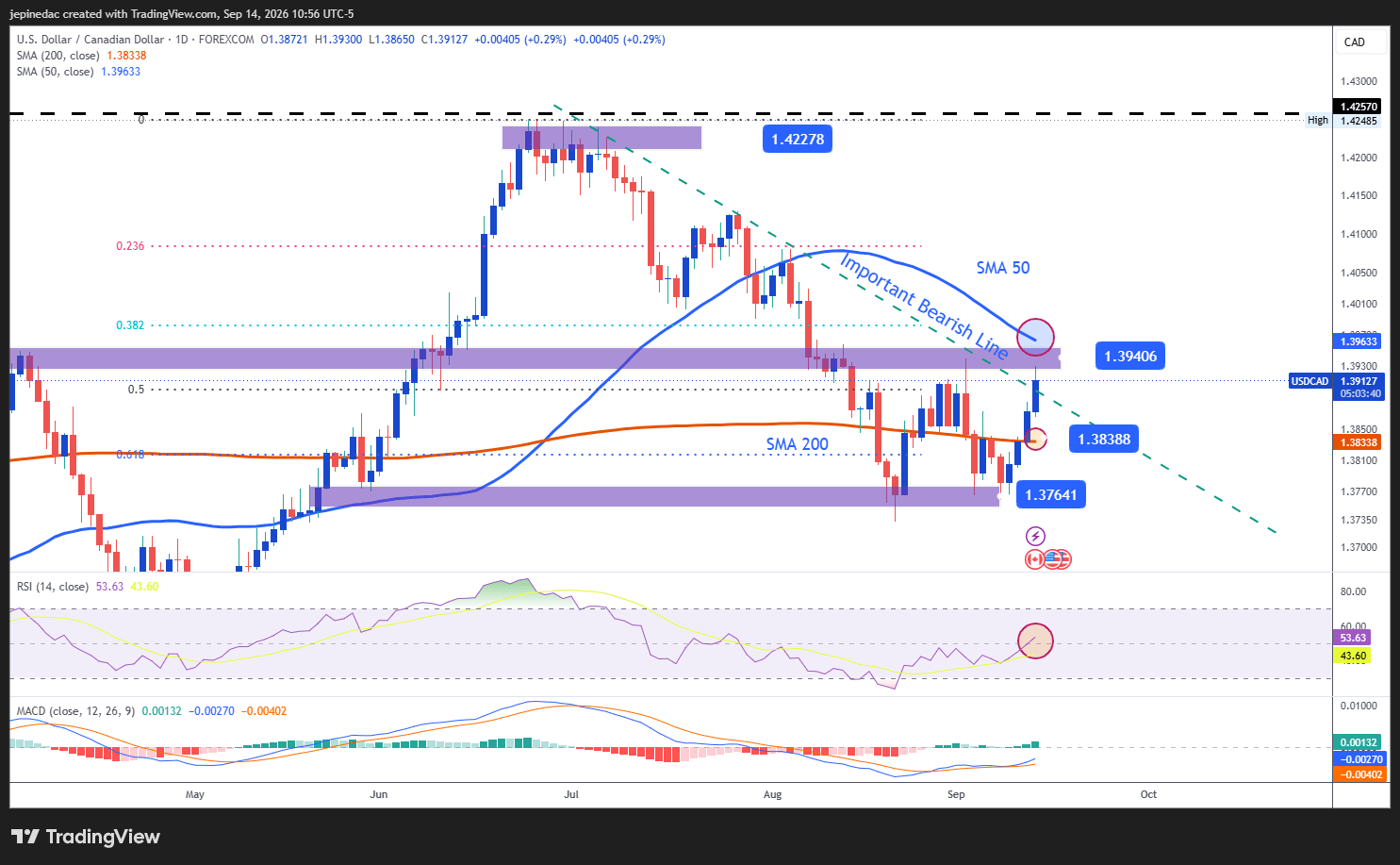
Source: StoneX, Tradingview
- Bearish Trendline Enters a Risk Zone: Although USD/CAD had managed to respect an important bearish trendline over recent weeks, the latest price action has started to put this structure at risk. If buying pressure continues gaining momentum in the coming sessions, the broader bearish trend could gradually lose relevance and open the door to a more consistent recovery within the chart.
- RSI: The RSI has moved above the 50 level, signaling that buying momentum has started to gain importance within the market. As long as this behavior remains intact, the bullish bias could continue strengthening during the short term.
- MACD: A similar picture can be observed in the MACD, as the histogram continues to develop above the neutral 0 line. This reading suggests that the average strength of short-term moving averages continues favoring bullish momentum, a dynamic that is becoming increasingly relevant on the daily chart.
Key Levels:
- 1.39406 – Key Resistance: A recent equilibrium area that also coincides with the medium-term bearish trendline and the 50-period Simple Moving Average. Price action establishing itself above this level could challenge the dominant bearish structure and create room for a stronger bullish bias in the weeks ahead.
- 1.38388 – Nearby Barrier: A level that coincides with the 200-period Simple Moving Average and the 61.8% Fibonacci retracement. It remains one of the most important equilibrium areas on the chart and, unless price manages to move decisively away from this zone, it could continue supporting a period of sideways trading.
- 1.37641 – Critical Support: This area corresponds to recent lows and remains the most important downside barrier on the chart. A sustained break below this level would reinforce bearish control and could favor a broader extension of the dominant downtrend in the weeks ahead.
Written by Julian Pineda, CFA, CMT – Market Analyst
Follow him on: @julianpineda25
Latest market news











Web Trader platform
Our sophisticated web-based platform is packed with features.
Open an account today
Experience award-winning platforms with fast and secure execution.
Economic calendar
Related articles

FX Futures Positioning: Dollar Rebound Meets Diverging Forex Bets | COT Report
US dollar longs held firm into Jackson Hole, while euro, yen and commodity FX positioning diverged ahead of ISM and NFP.


EUR/USD forecast: All eyes on Warsh at Jackson Hole - Forex Friday
For much of this week, the EUR/USD has been edging lower with the US dollar regaining some ground after last week’s sell-off that was triggered, in part, by the bond market worries. Investors have been unwilling to bet further against the US dollar so far this week ahead of Kevin Warsh’s keynote speech at the Jackson Hole summit, due later today.


DAX and EUR/USD forecast: Lower energy prices, yields offer support
But the question, of course, is how much further oil prices and bond yields can fall. For now, the combination is supportive of risk assets and is helping to sustain a relatively benign decline in the dollar. The focus today will be on US core PCE inflation, due for release shortly, while Nvidia’s second-quarter earnings will provide another test for risk appetite after the US markets close – not just for US indices but for global tech-heavy indices given the influence Nvidia has over the global tech and AI names.