


USD/JPY Analysis: NFP Eases Fed Concerns and the Yen Fails to Respond
Indecision continues to be a defining feature of the yen's recent price action. This can be seen in USD/JPY, which has posted average fluctuations of just 0.4% over the last three trading sessions, failing to establish a clear direction and reinforcing an increasingly evident neutral bias.
Written by
Julian Pineda
Market Analyst
Indecision continues to be a defining feature of the yen's recent price action. This can be seen in USD/JPY, which has posted average fluctuations of just 0.4% over the last three trading sessions, failing to establish a clear direction and reinforcing an increasingly evident neutral bias.
For now, this lack of direction persists because the yen has been unable to regain strength consistently against the U.S. dollar. Despite the release of U.S. employment data, the market has yet to reflect any meaningful weakness in the dollar in the short term. As a result, the Japanese currency continues to struggle to recover ground, a situation that may continue supporting a phase of indecision around USD/JPY in the coming sessions.
Are Expectations for a More Aggressive Fed Still in Place?
The end of last week was marked by the release of the latest U.S. Nonfarm Payrolls (NFP) report. This time, the data showed a significant slowdown in labor market growth, with only 29,000 jobs created in September, well below the nearly 90,000 jobs expected by the market and also significantly lower than the more than 100,000 jobs created in the previous month.
The result renewed concerns about a potential slowdown in the U.S. economy and reinforced expectations of a more cautious Federal Reserve heading into the October meeting. Markets currently assign more than a 70% probability to a scenario where interest rates remain unchanged. However, the report has not been enough to alter medium-term expectations. For the December 9 meeting, markets continue to price in roughly a 67% probability that the current 4.00% benchmark rate could rise toward 4.25%, highlighting that expectations for higher rates remain in place despite the recent slowdown in employment data.
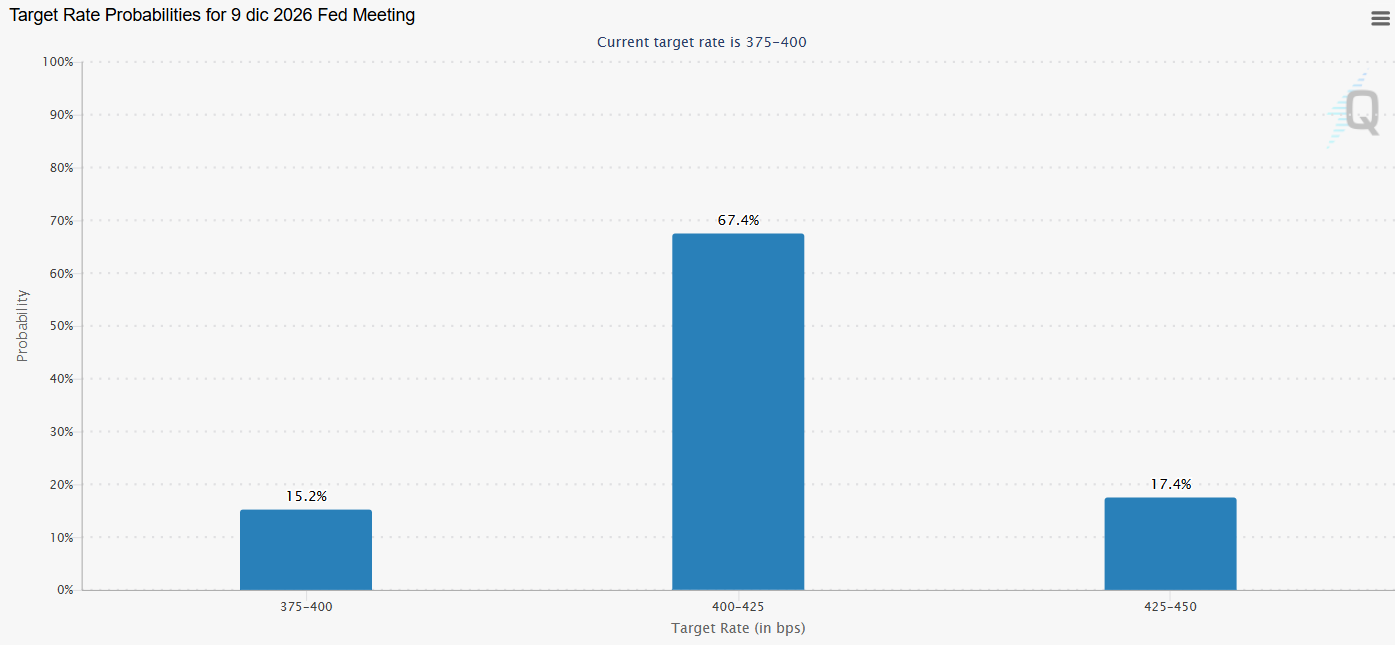
Source: CMEGROUP
This remains important because it continues to support the attractiveness of the U.S. bond market. 10-year Treasury yields remain above the 5.3% area, while 30-year Treasury yields continue to trade above 5.6%, remaining close to levels not seen in decades.
What matters most is that U.S. Treasuries continue to be viewed as some of the safest assets in the world and, as yields continue to move higher, their relative appeal to global investors also increases. This has helped sustain demand for the U.S. dollar and can be seen in the recent performance of the DXY, the index that measures the dollar's strength against its major counterparts. The index remains above the 102-point mark, trading near highs not seen in several months and highlighting that dollar strength remains a relevant factor even after the NFP release.
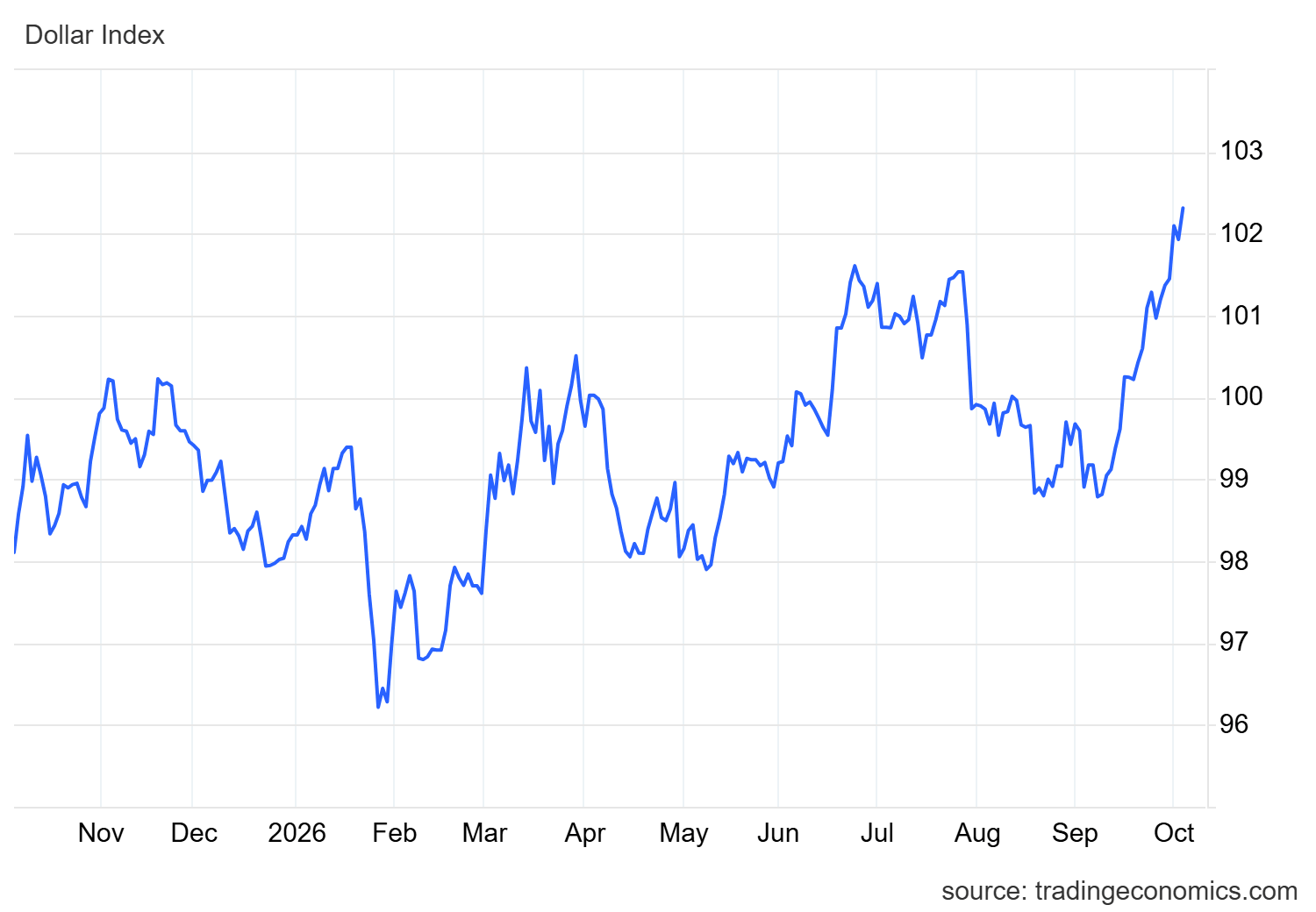
Source: TradingEconomics
This dynamic is not particularly favorable for the Japanese yen because one of the currency's biggest challenges continues to be the interest-rate differential with the United States. While Japan's policy rate remains around 1.25%, the yields offered by U.S. assets remain significantly higher.
For yen-denominated investments to regain some of their appeal, this rate differential would likely need to narrow. However, that does not currently appear to be the most probable scenario. Markets continue to assign more than a 90% probability that the Bank of Japan will leave interest rates unchanged at its October 28 meeting, reflecting a much more cautious stance than the one currently expected from the Federal Reserve. As a consequence, the gap between both monetary policies continues to limit the yen's ability to regain strength consistently against the U.S. dollar.
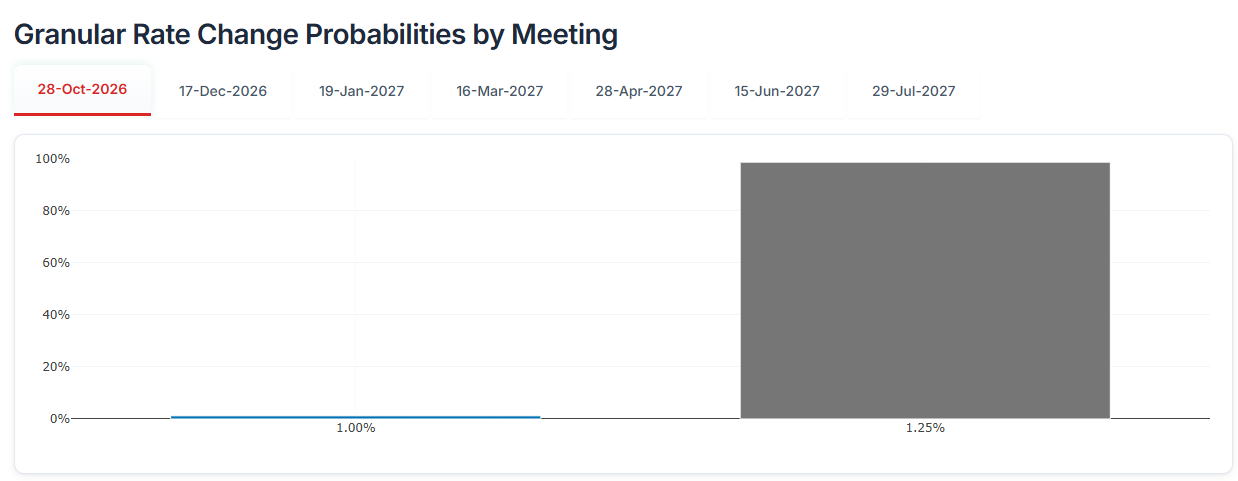
Source: CentralBankWatch
With all of this in mind, the market's focus remains centered on the United States. As long as expectations for a relatively hawkish Federal Reserve remain intact and U.S. Treasury yields continue to trade at elevated levels, demand for the dollar is likely to remain well supported. Under this scenario, the yen could continue facing difficulties in recovering ground, leaving room for either further indecision or even a more meaningful bullish bias around USD/JPY in the sessions ahead.
USD/JPY Technical Forecast
Source: StoneX, Tradingview
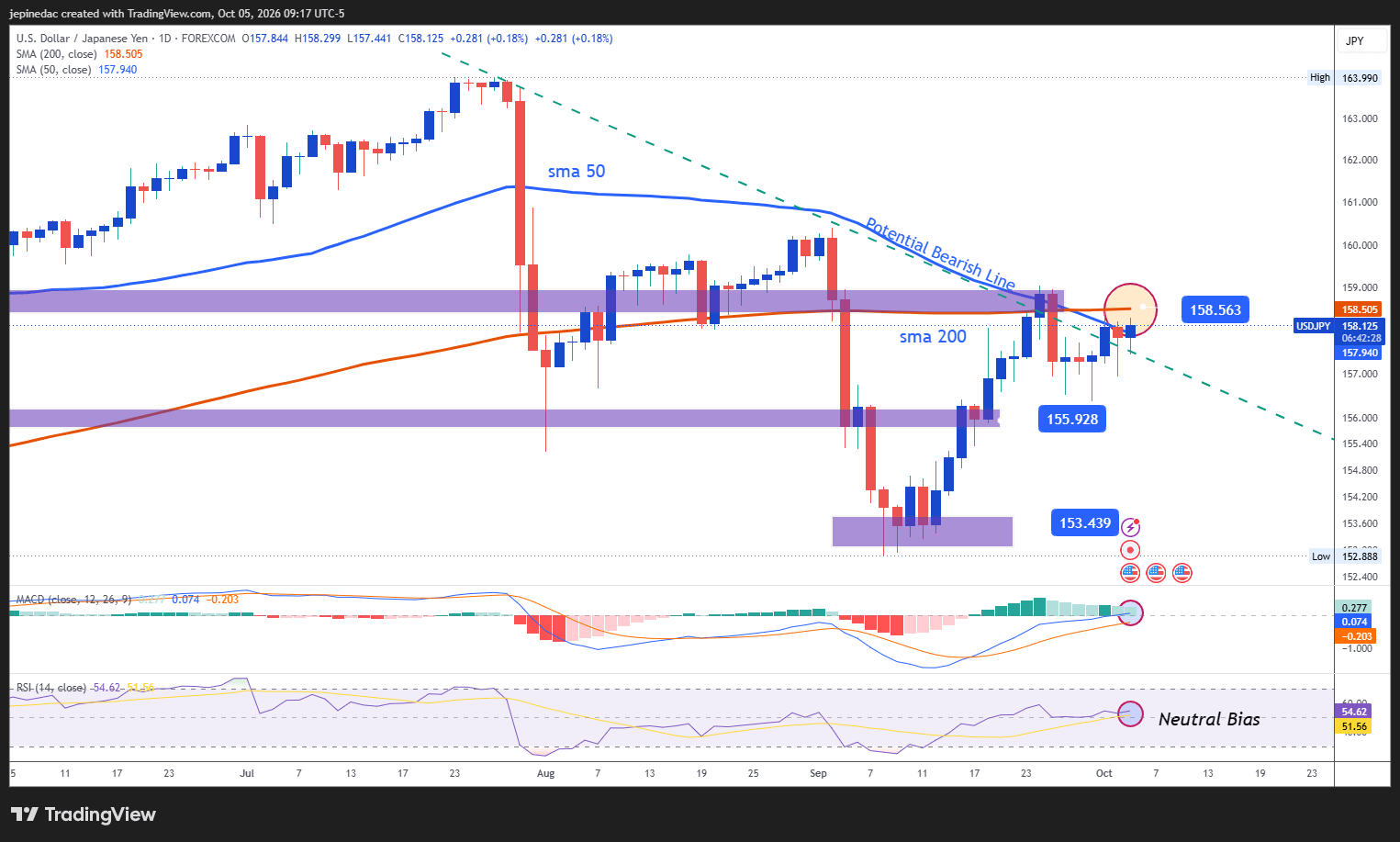
- The long-term downtrend is entering a risk zone: For several months, USD/JPY price action has respected a long-term bearish trendline that remained the dominant technical structure on the chart. However, the recent recovery in the pair has started to challenge this trendline. If buying pressure continues to build in the coming sessions, a meaningful breakout could emerge, potentially opening the door to a stronger bullish bias within the market.
- MACD: The MACD histogram continues to trade very close to the 0 neutral line, reflecting an increasingly balanced dynamic in short-term moving-average momentum. This reading also supports the idea that a lack of direction could remain an important feature of price action in the sessions ahead.
- RSI: A similar picture can be observed in the RSI, which continues to fluctuate around the 50 level, the indicator's neutral zone. This reading reflects a relatively stable balance between buyers and sellers and supports the possibility that a phase of indecision may continue dominating market behavior in the short term.
Key Levels:
- 158.50 – Key Resistance: This level coincides with important retracement areas observed in previous weeks, the 50-period and 200-period simple moving averages, and the long-term bearish trendline. Price action that manages to establish itself above this level could bring an end to the bearish structure that has dominated recent months and open the door to a more relevant bullish bias on the daily chart.
- 155.92 – Near-Term Barrier: An important retracement zone that continues to function as the market's primary equilibrium area. If price returns to this level and continues to display a lack of directional conviction, a more established consolidation phase could begin to develop in the short term.
- 153.43 – Key Support: An area of significant lows that remains one of the most important downside references of recent months. A move back toward this level could restore relevance to the bearish bias and reaffirm the long-term downtrend as the dominant market structure in the weeks ahead.
Written by Julian Pineda, CFA, CMT – Market Analyst
Follow him on: @julianpineda25
Latest market news










Web Trader platform
Our sophisticated web-based platform is packed with features.
Open an account today
Experience award-winning platforms with fast and secure execution.
Economic calendar
Related articles

EUR/USD forecast: All eyes on Warsh at Jackson Hole - Forex Friday
For much of this week, the EUR/USD has been edging lower with the US dollar regaining some ground after last week’s sell-off that was triggered, in part, by the bond market worries. Investors have been unwilling to bet further against the US dollar so far this week ahead of Kevin Warsh’s keynote speech at the Jackson Hole summit, due later today.


Bitcoin Forecast: BTC/USD Back to $80K Ahead of Warsh’s Jackson Hole Speech
After surging over $15,000 in the past 10 days alone, there is risk of a near-term pullback if Warsh says anything remotely hawkish at Jackson Hole - what are the levels to watch from here?


DAX and EUR/USD forecast: Lower energy prices, yields offer support
But the question, of course, is how much further oil prices and bond yields can fall. For now, the combination is supportive of risk assets and is helping to sustain a relatively benign decline in the dollar. The focus today will be on US core PCE inflation, due for release shortly, while Nvidia’s second-quarter earnings will provide another test for risk appetite after the US markets close – not just for US indices but for global tech-heavy indices given the influence Nvidia has over the global tech and AI names.