


USDCAD Forecast The Loonie Remains on Shaky Ground
Over the last few sessions, the USD/CAD has seen a slight appreciation of nearly 0.3% in favor of the US dollar. However, beyond this mild bias, the broader chart picture reflects a prolonged consolidation.
Written by
Julian Pineda
Market Analyst
Over the last few sessions, the USD/CAD has seen a slight appreciation of nearly 0.3% in favor of the US dollar. However, beyond this mild bias, the broader chart picture reflects a prolonged consolidation. Central bank dynamics, bond market behavior, and geopolitical caution in the Middle East are keeping volatility in check. As long as these catalysts remain in play, sideways trading could continue to dominate the pair's short-term swings.

How Are Central Bank Dynamics Holding Up?
A key factor here is the interest rate differential. While the benchmark rate in the United States holds steady at 3.75%, Canada's remains stable at 2.25%. This gap has been a major driver behind the Canadian dollar's depreciation over the past few months, simply because US dollar-denominated assets remain much more attractive to investors.
Meanwhile, the Bank of Canada isn't signaling any surprise pivots. Following its latest decision, the central bank acknowledged a slight economic improvement that rules out any drastic shifts in monetary policy. In fact, the market is pricing in an 80% probability that the rate will stay put at 2.25% during the September meeting, reflecting expectations of a neutral stance with no major short-term adjustments.
In the United States, while the odds of aggressive hikes have also cooled off, the picture looks a bit different. According to CMEGROUP, there is still a 56.9% chance that the Federal Reserve will opt for a rate hike in September, pushing the benchmark rate toward the 4.00% zone. This keeps the prospect alive that the US central bank could turn out to be more hawkish than its Canadian counterpart in the coming months.
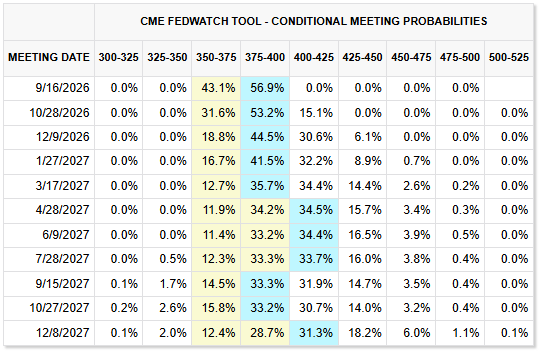
Source: CMEGROUP
Given the caution from both institutions, bond market dynamics in the two countries have largely converged. Over the last few sessions, the 10-year bond yield in the United States has dropped from the 4.7% area, while Canada is seeing a similar slide from its peak of 3.66%. Moving in the same direction, neither market offers the kind of standout appeal that would trigger a massive capital flow into either currency. Still, the yield spread continues to favor the United States, which keeps a lid on any sustained rally for the Canadian dollar.
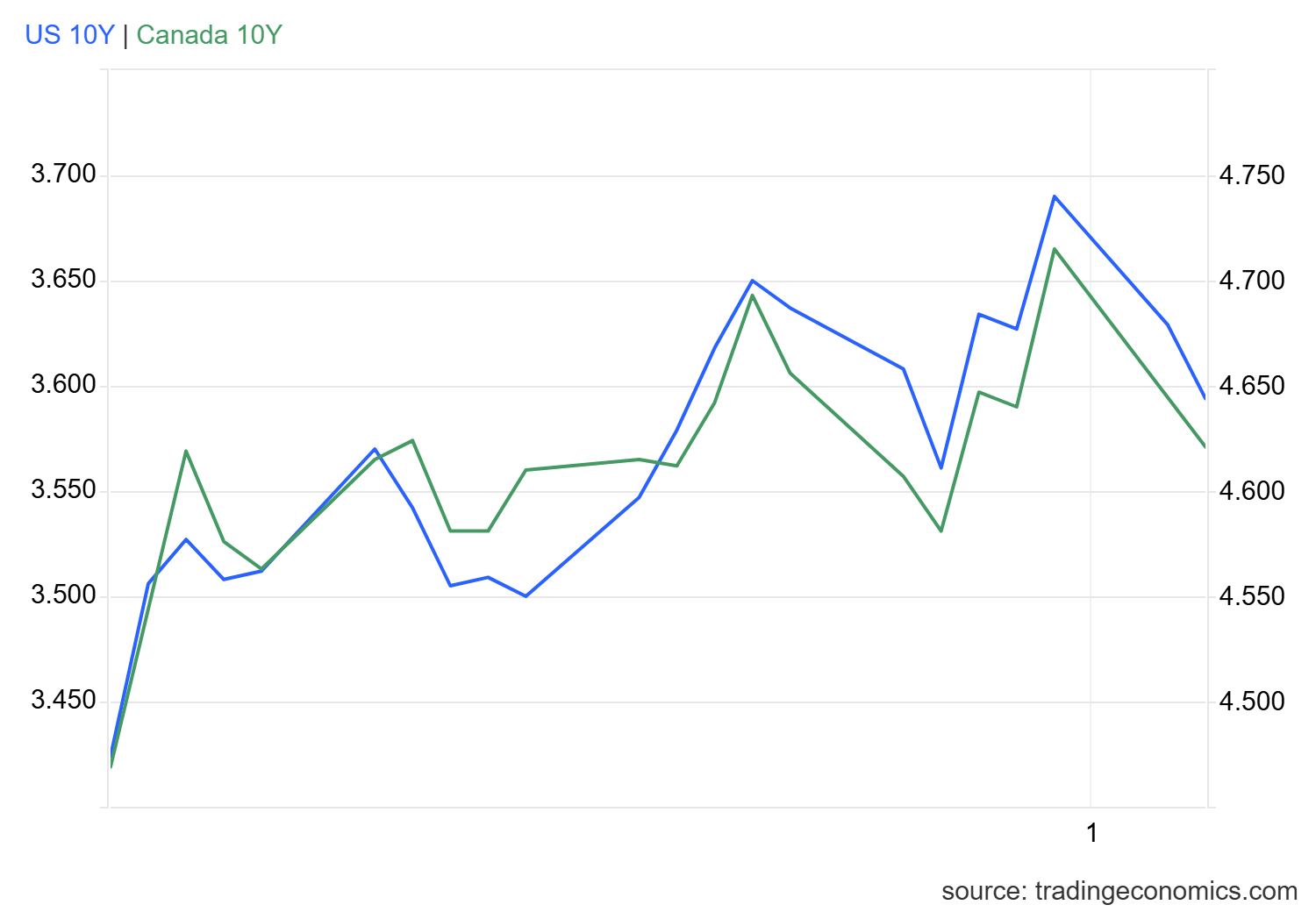
Source: TradingEconomics
All in all, the cross remains stuck in a cautious holding pattern. The lack of bond market catalysts and the conservative tone from central banks suggest that consolidation could continue to dominate the USD/CAD. That said, if the Federal Reserve adopts a more hawkish tone, the rate differential would widen, making it harder for the Canadian dollar to recover and potentially reigniting buying pressure on the pair in the coming weeks.
Is the Middle East Becoming Relevant Again?
The geopolitical backdrop is also playing a major role. The US government, under President Trump, decided to pause strikes and resume negotiations in the Middle East, with countries like Qatar announcing progress in the talks. This de-escalation has pushed WTI crude back below the $80 mark, easing the global risk premium.
Rather than giving the USD/CAD a clear direction, this event has actually deepened the sideways trend. On one hand, lower risk aversion cuts down the demand for the US dollar as a safe haven, which would theoretically favor the Canadian dollar. On the flip side, cheaper oil hurts Canada, where crude exports make up nearly 20% of its trade balance. This drop weighs on the country's economic outlook for 2026 and dampens confidence in its currency.
Bottom line, geopolitical tensions are breeding more caution than aggressive moves. As long as negotiations keep rolling without any major hiccups, indecision could keep setting the pace for the USD/CAD, at least until a heavier macroeconomic data release manages to grab the market's attention.
USD/CAD Technical Outlook
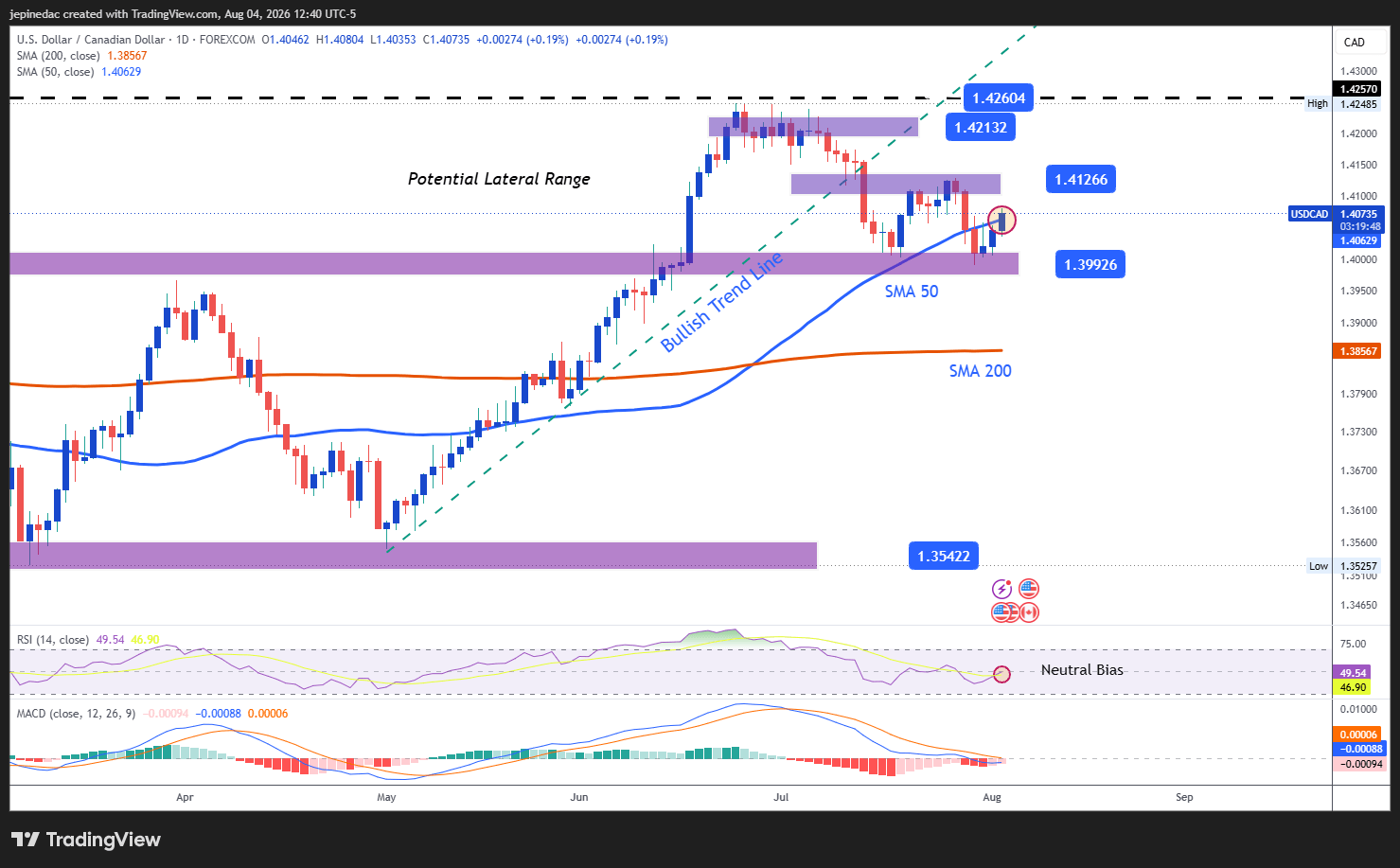
Source: StoneX, Tradingview
- Lack of clear direction becoming evident: Despite recent recovery attempts, the broader USD/CAD picture remains trapped in indecision. Price action is failing to define a clear trend, paving the way for a potential sideways range. Until a stronger directional push emerges, this consolidation could remain the dominant theme on the chart.
- RSI: The indicator is hovering near the neutral 50 level and showing a noticeable flattening. This reflects a balance between buying and selling momentum over the last few sessions. If this behavior persists, it could continue to highlight a potential phase of sideways trading or relevant neutrality on the chart.
- MACD: The histogram sits right near the neutral 0 line, suggesting a balance in short-term moving average momentum. This technical reading reinforces the expectation that indecision could remain a key feature in the upcoming trading sessions.
Key Levels:
- 1.42132 (Key Resistance): The 2026 high zone and the chart's main bullish barrier. A sustained move toward this level could reignite the bullish bias and open the door to reclaiming the uptrend line that dominated a few weeks back.
- 1.41266 (Nearby Barrier): Aligns with recent highs and acts as a key retracement zone. If the price fails to break cleanly away from this level, it could exacerbate the sideways chop and confirm a short-term consolidation range.
- 1.39926 (Crucial Support): A major support level matching recent lows below the 50-period moving average. A breakdown below this point could trigger a sharper bearish phase and activate a short-term downtrend line.
Written by Julian Pineda, CFA, CMT – Market Analyst
Follow him on: @julianpineda25
Latest market news










Web Trader platform
Our sophisticated web-based platform is packed with features.
Open an account today
Experience award-winning platforms with fast and secure execution.
Economic calendar
Related articles

EUR/USD forecast: All eyes on Warsh at Jackson Hole - Forex Friday
For much of this week, the EUR/USD has been edging lower with the US dollar regaining some ground after last week’s sell-off that was triggered, in part, by the bond market worries. Investors have been unwilling to bet further against the US dollar so far this week ahead of Kevin Warsh’s keynote speech at the Jackson Hole summit, due later today.


DAX and EUR/USD forecast: Lower energy prices, yields offer support
But the question, of course, is how much further oil prices and bond yields can fall. For now, the combination is supportive of risk assets and is helping to sustain a relatively benign decline in the dollar. The focus today will be on US core PCE inflation, due for release shortly, while Nvidia’s second-quarter earnings will provide another test for risk appetite after the US markets close – not just for US indices but for global tech-heavy indices given the influence Nvidia has over the global tech and AI names.

AUD/USD Shorts Bear the Brunt of Hot CPI, Renewed RBA Hike Bets
Hot Australian CPI revives RBA hike bets, lifts bond yields and adds fresh pressure to crowded AUD/USD short positions.
