



USD/JPY Outlook: Japanese Yen Gains as Risk-Off Mood Lifts Safe Havens
The Japanese yen and Swiss franc outperformed on Thursday as rising geopolitical tensions drove safe-haven flows, weighing on USD/JPY and supporting further downside risk.
Written by
Matt Simpson
Market Analyst
USD/JPY Under Pressure as Safe-Haven Demand Lifts Japanese Yen
The Swiss franc (CHF) and Japanese yen (JPY) are the strongest-performing currencies in Asia today, benefiting from a mild risk-off tone. Escalating tensions between the United States and Iran drove crude oil prices 4.8% higher on Wednesday, with an additional 2% gain seen in early Asian trade. Although those gains have since been partially retraced, the sharp price action out of the Middle East has overshadowed optimism from the US–China trade deal.
As a result, US Treasury yields have edged lower, with investors rotating into traditional safe havens such as the Japanese yen, Swiss franc, gold, and US bonds. The risk-averse mood has added further weight to the US dollar, while amplifying support for the CHF and JPY across the forex majors.
View related analysis:
USD/JPY Technical Analysis: Japanese Yen Gains as Reversal Deepens
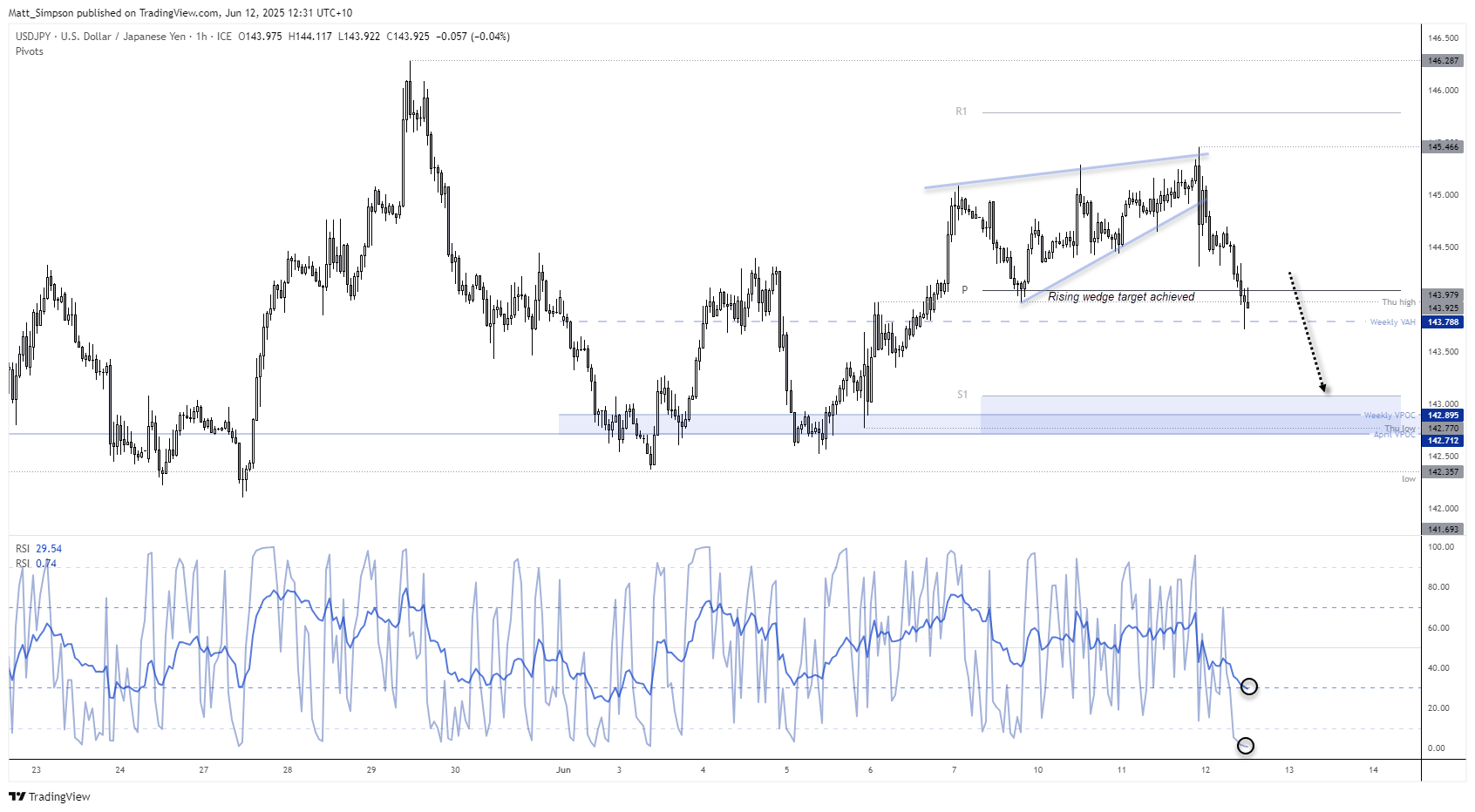
The 1-hour chart for USD/JPY reveals a strong bearish reversal candle at 146.47, followed by a sharp downside move with only a shallow pullback along the way. The US dollar has since fallen below the weekly pivot point at 144.08 and breached the key 144.00 support level, signalling increasing downside momentum for USD/JPY.
However, some support has emerged from the weekly value area high (VAH) at 143.78. Additionally, the 1-hour RSI (2) is now deeply oversold, while the RSI (14) is touching oversold territory. This suggests that Japanese yen strength may pause near current levels. Bears could seek to fade into minor bounces from current support levels or wait for a period of consolidation before entering.
But given the strength of the move from yesterday’s high, a break below 143.78 is favoured and for a run down to 143, near the weekly S1 pivot and weekly and monthly VPOCs.
USD/JPY Technical Analysis: Daily Chart
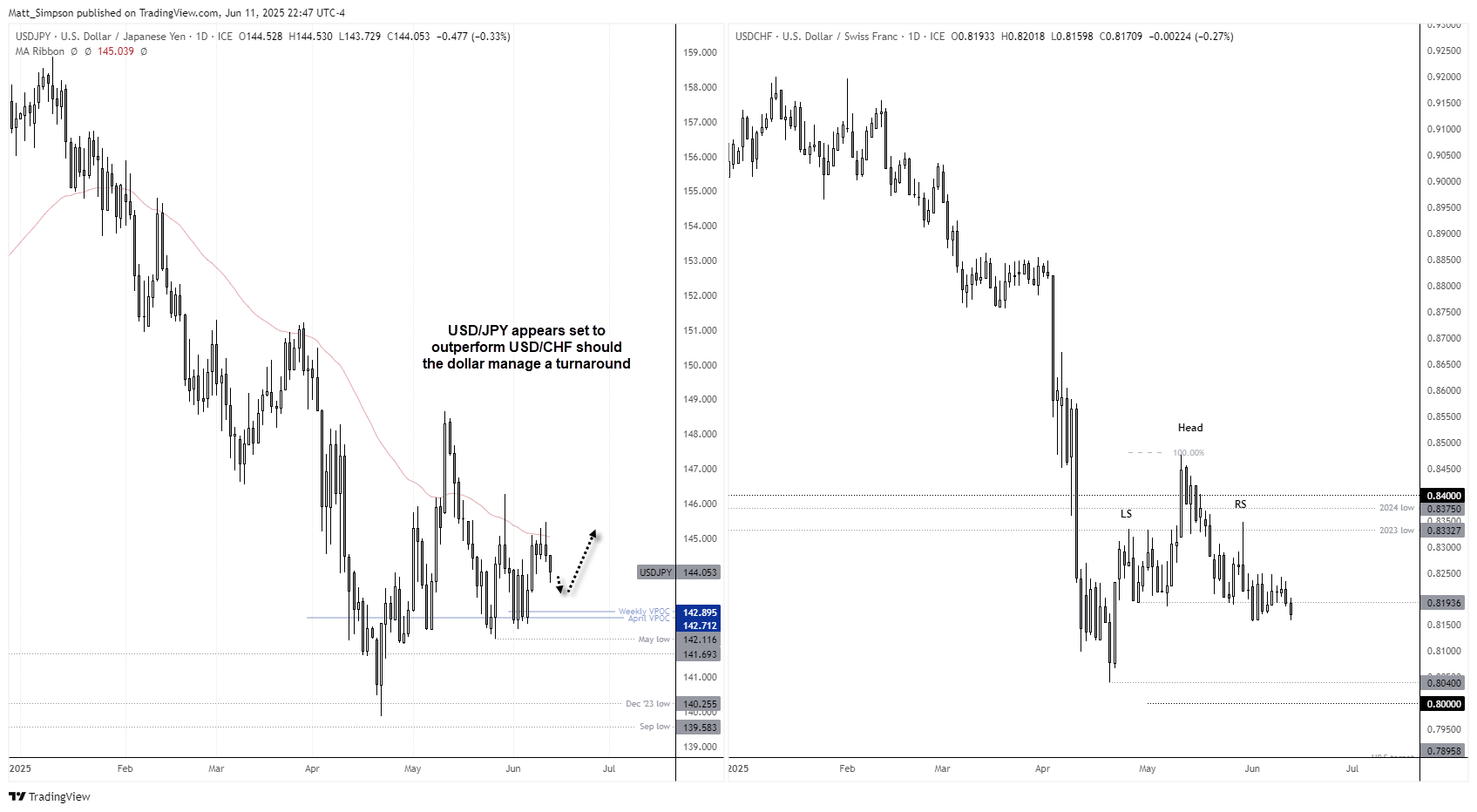
Zooming out to the bigger picture reveals a strong cluster of support levels just above the May low, below 143. Breaking through these levels would likely require a hawkish outcome from the Bank of Japan (BOJ) meeting. But with Reuters reporting that the BOJ is likely to hold steady, meaningful action on Friday appears to be a long shot.
As I noted in my article “Don’t Write Off the US Dollar Just Yet”, the USD bounce against the Japanese yen has been more successful than against the Swiss franc. My bias, therefore, remains for the US dollar to resume its recovery once the anticipated retracement lower on the 1-hour timeframe is complete.
View the full economic calendar
-- Written by Matt Simpson
Follow Matt on Twitter @cLeverEdge
How to trade with City Index
You can trade with City Index by following these four easy steps:
- Open an account, or log in if you’re already a customer
• Open an account in the UK
• Open an account in Australia
• Open an account in Singapore
- Search for the market you want to trade in our award-winning platform
- Choose your position and size, and your stop and limit levels
- Place the trade
Related tags:







Web Trader platform
Our sophisticated web-based platform is packed with features.
Open an account today
Experience award-winning platforms with fast and secure execution.
Economic calendar
Related articles

USD/JPY weekly outlook: Payrolls may challenge the Fed’s hawkish reset
USD/JPY has finally woken from its slumber. Payrolls now loom as the key test of whether the latest hawkish repricing sticks or sinks.

Euro Short-term Outlook: EUR/USD Pullback Nears Pivotal Uptrend Support 8 28 2026
Warsh's comments accelerated the EUR/USD selloff, raising the stakes as buyers look to stabilize the broader recovery.


Gold and S&P 500 analysis: What now after Warsh’s hawkish speech?
The dollar surged across the board after the Fed Chair Kevin Warsh surprised with a hawkish-leaning speech at the Jackson Hole summit. All the bearish dollar bets that had been accumulated since last Friday on the back of data weakness and bond market troubles had to be squared and that triggered a short squeeze rally for the dollar. Gold and silver dropped, as a result, as too did bitcoin, while US indices were giving back earlier gains.
