
Australian Dollar Extends Slump as RBA Rate Hikes Look Dead and Buried
Australian unemployment surges to a five-year high of 4.9%, casting further doubt on RBA rate hikes as AUD/USD sinks below 67 cents.
Written by
Matt Simpson
Market Analyst
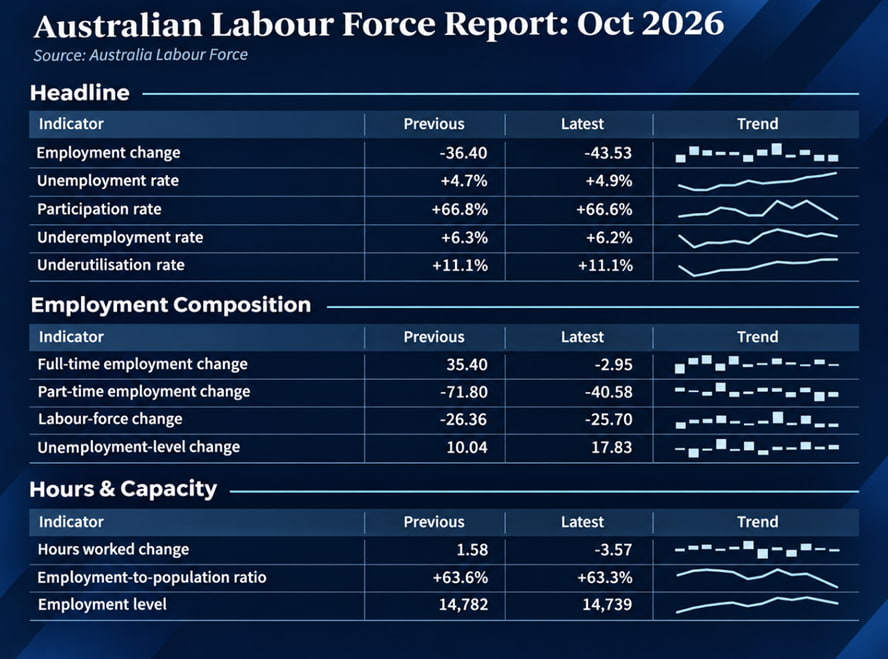
Australia's labour market deteriorated sharply in October, strengthening the argument that the Reserve Bank of Australia (RBA) has reached the end of its tightening cycle.
I have been arguing for some time that the RBA may already be done hiking, given weak business and consumer sentiment alongside falling crude oil prices. Today's employment figures have simply given Australian dollar bears another reason to celebrate, with AUD/USD falling to a fresh year-to-date low following the release.
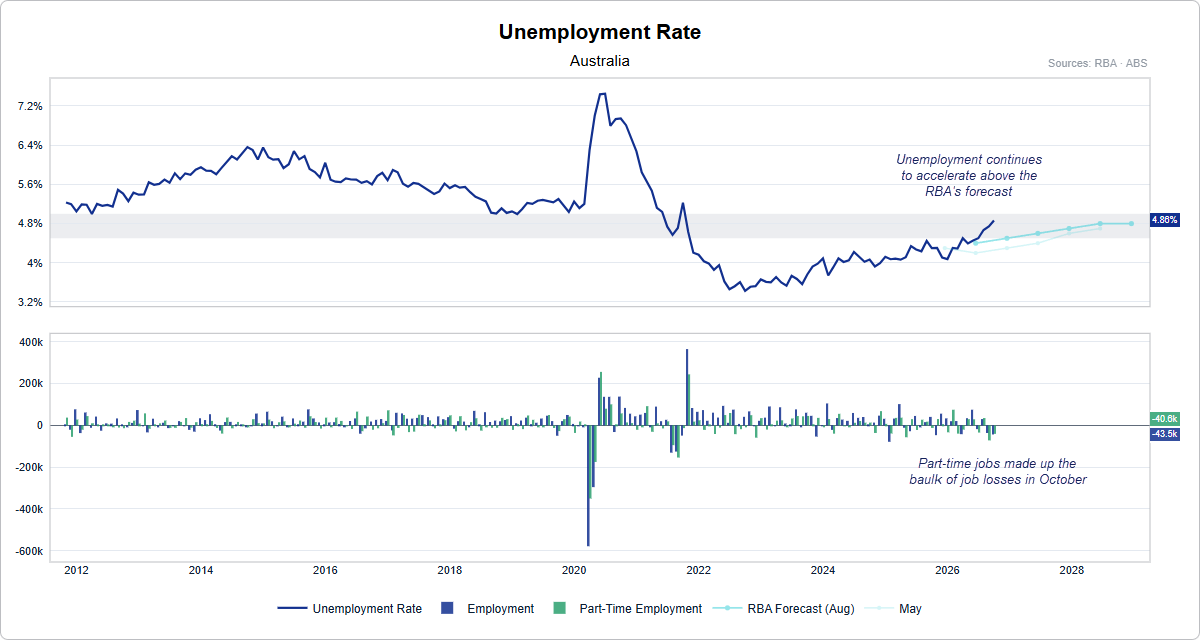
Australian Unemployment Accelerates Beyond RBA Forecasts
Unemployment has now risen to a 5-year high of 4.9%, more than 4 percentage points above the RBA’s forecast.
Employment fell by 43,500 in October, against expectations for an increase of around 20,000, following a revised decline of 36,400 in September. While most of that was part-time, it still totals nearly 80,000 jobs culled over the two months.
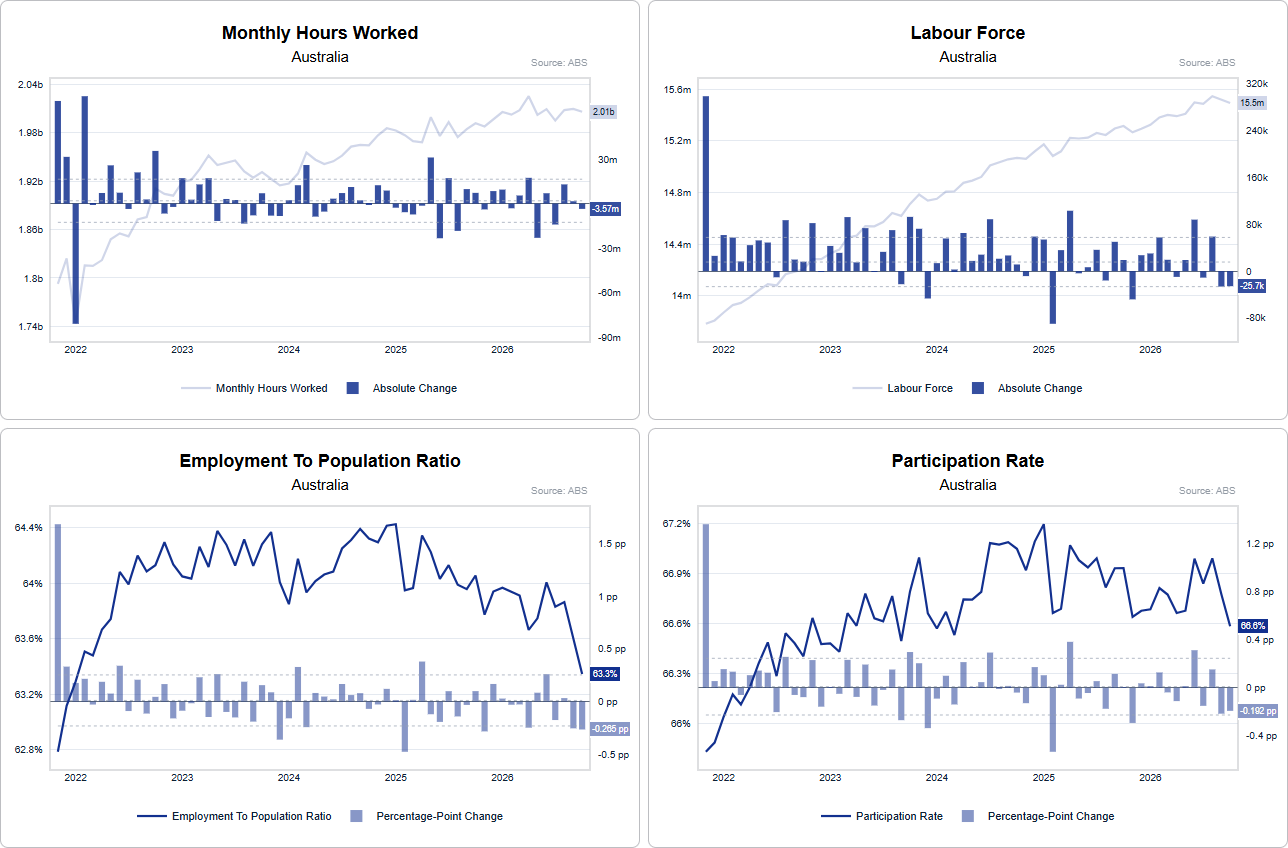
Australia's Labour Market Weakness Extends Beyond Job Losses
The weakness extended well beyond the headline employment figures. Labour force participation fell to 66.6%, while the employment-to-population ratio dropped to 63.3%, its lowest level since early 2022. The labour force itself contracted by 25,700, suggesting the rise in unemployment was driven by weakening employment rather than an influx of jobseekers.
Total hours worked also declined by 3.57 million, reinforcing signs of cooling labour demand. Full-time employment fell by nearly 3,000, while part-time employment accounted for the bulk of the losses, declining by another 40,600.
Taken together, the figures suggest labour market conditions are deteriorating more broadly, adding to concerns that further RBA tightening could unnecessarily deepen the slowdown.
Australian Dollar Selloff Accelerates as Bearish Forces Collide
The Australian dollar is in a strong decline against the major currencies as several bearish forces collide. Weak domestic data, including soft sentiment and a deteriorating labour market, have reinforced the view that the RBA is unlikely to raise rates again, even as markets continue to price a relatively hawkish Fed. That has widened interest-rate differentials against the Aussie at a time when falling commodity prices and a firmer US dollar are also weighing on sentiment. AUD/USD has now dropped below 67 cents for the first time since January, with little sign yet of a durable swing low. The weakness is also evident elsewhere, with AUD/JPY falling to a fresh year-to-date low and AUD/CAD slipping to its lowest level since April, highlighting the broad nature of the selloff.
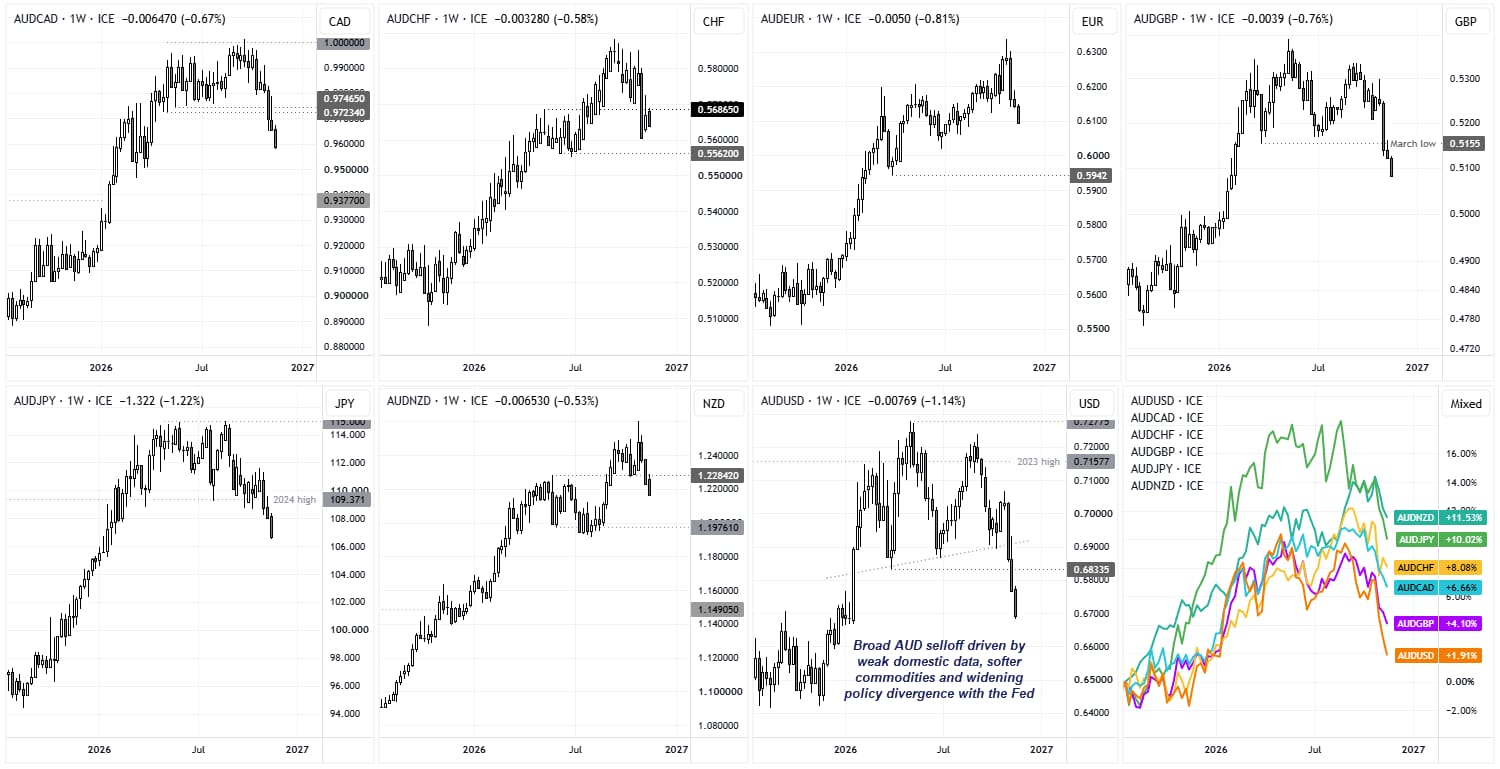
Source: ICE, TradingView
Related tags:
Latest market news






Web Trader platform
Our sophisticated web-based platform is packed with features.
Open an account today
Experience award-winning platforms with fast and secure execution.
Economic calendar
Related articles
AUD/USD Shorts Bear the Brunt of Hot CPI, Renewed RBA Hike Bets
Hot Australian CPI revives RBA hike bets, lifts bond yields and adds fresh pressure to crowded AUD/USD short positions.
AUD/USD forecast tilted to upside as focus turns to key data
The AUD/USD continues to grind higher - as it has done so ever since risk assets bottomed back in April 2025. The Aussie has benefitted from rising metals prices and a strong Chinese yuan. The US dollar meanwhile has had bouts of strength here and there, but not much against the Aussie. The recent bond market stress has further increased the US dollar debasement calls. The focus now is turning to key data from both Australia and the US, and the Jackson Hole symposium.


DXY, EUR/USD, AUD/USD, USD/CAD, Gold, Oil Weekly Technical Outlook 8 17 2026
Sr. Technical Strategist Michael Boutros highlights the levels that matter on the USD Majors this week.