


Crude oil forecast: Hezbollah and Israel ceasefire could add further pressure on oil
Crude oil prices tumbled by around $2 from their earlier highs following news of a ceasefire agreement between Hezbollah and Israel, before bouncing back slightly to still hold in the positive territory at the time of writing.
Written by
Fawad Razaqzada
Market Analyst
Crude oil prices tumbled by around $2 from their earlier highs following news of a ceasefire agreement between Hezbollah and Israel, before bouncing back slightly to still hold in the positive territory at the time of writing. Prior to that, there had been some uncertainty in the oil market after Iran once again threatened to close the Strait of Hormuz, citing continued Israeli strikes against Hezbollah targets in Lebanon. Those developments had raised doubts about broader ceasefire efforts and regional stability. However, now that a ceasefire has been agreed, we could see some fresh pressure on oil prices. I will maintain a moderately bearish view on crude oil forecast.
Crude oil forecast: Demand should offset increased supplies
The key question now is: where do oil prices go from here?
In the short term, the path of least resistance remains to the downside due to the de-escalation of tensions in the Middle East. We have already seen a significant decline in oil prices over the past several days. However, prices are now approaching levels seen before the conflict began.
On the Brent contract, oil was trading around $70 per barrel before the conflict started, and that is the area where I would expect prices to potentially find support. The reason is that we have experienced a substantial supply shortage over the past three months due to disruptions in the Strait of Hormuz. As a result, the supply-demand dynamics for oil have shifted considerably.
That said, markets are forward-looking, and traders are now anticipating the resumption of crude oil flows through the Strait of Hormuz. In addition, releases from strategic petroleum reserves have helped cushion the impact of supply shortages.
Now, with oil prices falling back, many of the inventories that were drawn down during the crisis will need to be replenished. Countries such as China, Japan, and the United States are likely to purchase oil to rebuild those reserves. That buying demand should help establish a floor under prices.
It’s important to note, however, that this demand could be offset by increased supply from producers such as Iran and Venezuela. As a result, the upside for oil prices may remain limited unless we see another major escalation in the Middle East.
Okay, so where do I think oil is headed?
Overall, I believe there is still room for further downside in oil prices – but don’t expect a crash.
How far oil prices ultimately decline from here will depend entirely on supply and demand dynamics.
From the demand side, there are reasons to expect continued strength. Strategic reserves will need to be replenished, while the U.S. summer driving season should continue to support fuel consumption and keep pressure on inventories of oil products like gasoline. This should offset raised supplies from the OPEC countries and Iran in particular.
Technical analysis: Key levels to watch
From a technical perspective, the Brent contract now faces strong resistance around $82 per barrel. This level was previously a major support area and marked the low from mid-April. It was retested on Wednesday and successfully held as resistance, with prices remaining below that level since then.
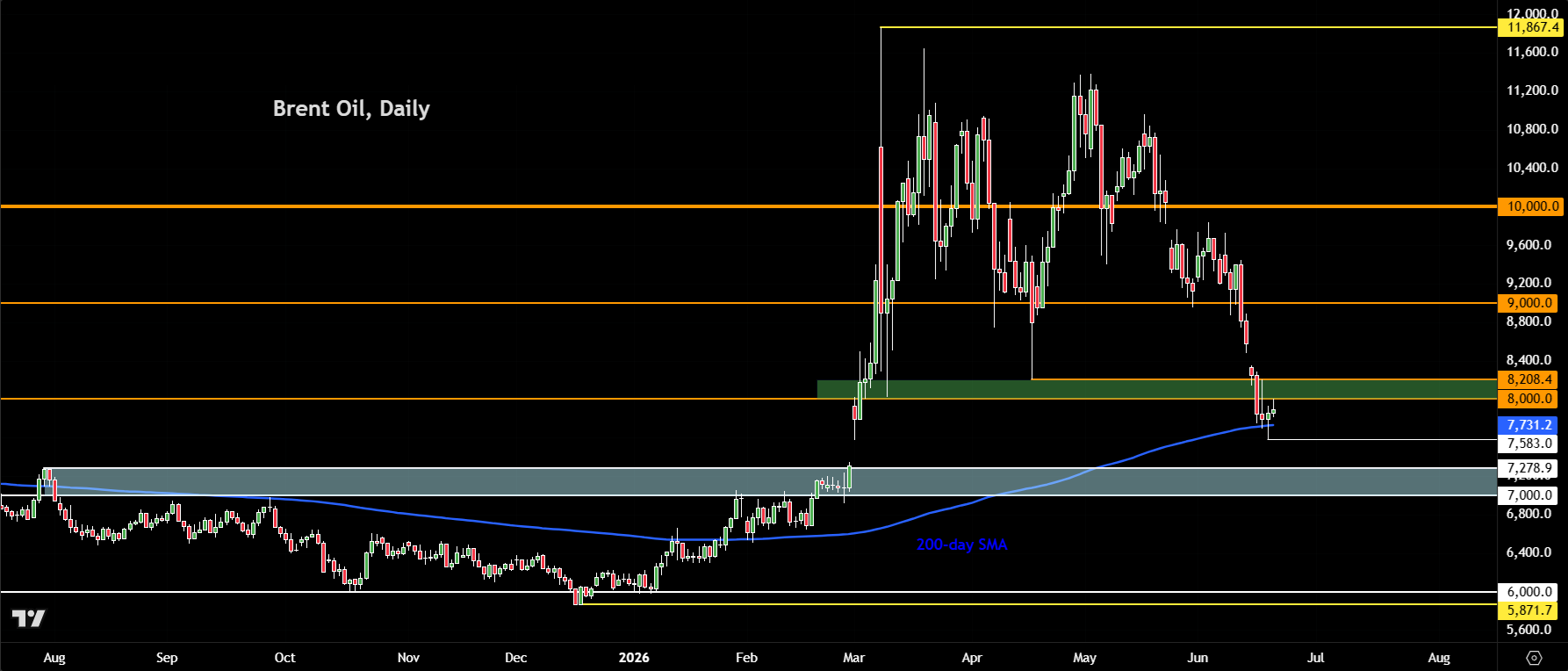
More recently, a couple of days ago, crude oil prices attempted to move higher but encountered resistance near the psychologically important $80 per barrel mark. This will be the first key resistance level to watch going forward.
As long as the $80 to $82 zone remains intact as resistance, the short-term path of least resistance for oil is likely to remain lower. However, if prices manage to break above that zone, the market would need to consider the possibility of a move back towards $90 per barrel.
On the downside, the previous breakout zone comes in around the $72 to $73 area. Below that, the psychologically important $70 level represents the next major support.
My base case is for a period of moderate additional downside, followed by consolidation before the market makes its next major move. Ultimately, I believe Brent crude is likely to find meaningful support around the $70 per barrel level.
What about gold: Is it heading below $4,000?
For a more in depth analysis, read my gold forecast here.
-- Written by Fawad Razaqzada, Market Analyst
Follow Fawad on Twitter @Trader_F_R
Related tags:







Web Trader platform
Our sophisticated web-based platform is packed with features.
Open an account today
Experience award-winning platforms with fast and secure execution.
Economic calendar
Related articles

Euro Short-term Outlook: EUR/USD Pullback Nears Pivotal Uptrend Support 8 28 2026
Warsh's comments accelerated the EUR/USD selloff, raising the stakes as buyers look to stabilize the broader recovery.


Gold and S&P 500 analysis: What now after Warsh’s hawkish speech?
The dollar surged across the board after the Fed Chair Kevin Warsh surprised with a hawkish-leaning speech at the Jackson Hole summit. All the bearish dollar bets that had been accumulated since last Friday on the back of data weakness and bond market troubles had to be squared and that triggered a short squeeze rally for the dollar. Gold and silver dropped, as a result, as too did bitcoin, while US indices were giving back earlier gains.

Nasdaq 100 Forecast: NDX slips ahead of Fed Chair Warsh’s speech
U.S. stocks are edging lower on Friday, giving back some of yesterday's gains after Nvidia's strong outlook revived the tech trade. The focus has now shifted firmly to Fed Chair Kevin Warsh's Jackson Hole speech, with investors looking for more clarity on the outlook for interest rates.
