

Crude oil forecast: WTI threatens breakout as US-Iran tensions escalate
Oil prices have surged for a second consecutive day, after the US and Iran traded strikes for the first time in two weeks and re-escalated the tensions. WTI oil was climbing to one-month highs and threatening to break above a key bearish trend line, at the time of writing. The latest leg higher is being driven primarily by the renewed escalation in tensions between the US and Iran, with traders ignoring the controversial US-Venezuela deal for now
Written by
Fawad Razaqzada
Market Analyst
Oil prices have surged for a second consecutive day, after the US and Iran traded strikes for the first time in two weeks and re-escalated the tensions. WTI oil was climbing to one-month highs and threatening to break above a key bearish trend line, at the time of writing. The latest leg higher is being driven primarily by the renewed escalation in tensions between the US and Iran, with traders ignoring the controversial US-Venezuela deal for now. The risks to our near-term crude oil forecast remains tilted to the upside.
Venezuela deal offers little immediate relief
Donald Trump’s controversial oil agreement with Venezuela could eventually ease supply pressures, but it is unlikely to make much difference to the near-term market. For now, developments around the Strait of Hormuz remain far more important to oil traders.
Trump has said oil secured under the deal will be used to replenish the US Strategic Petroleum Reserve, which is currently at its lowest level in 44 years. That could strengthen US energy security over time, although it does little to address the immediate supply concerns underpinning prices.
The agreement is potentially bearish for crude over the longer term. If the US does provide the investment needed to repair its ageing infrastructure and lift production, additional barrels could eventually loosen the global market and put downward pressure on prices.
But Venezuela’s crude is heavy and sour, making it more technically challenging and expensive to produce and refine than the light, sweet crude produced in the US. Its oil infrastructure also requires substantial investment. Any meaningful increase in Venezuelan output is therefore more likely to take years than months.
For now, the market is focused on barrels that can reach consumers today, rather than reserves that may become productive in the future. With that in mind, it difficult to be bearish on the crude oil forecast for now.
US-Iran tensions continue to underpin prices
The near-term outlook remains heavily dependent on the supply side. Softer US and Chinese economic data point to some moderation in demand, but oil is relatively demand-inelastic: consumption tends not to fall sharply simply because prices rise.
A more meaningful demand destruction normally requires prices to remain significantly elevated for an extended period. At current levels around $85-$95, that threshold may not yet have been reached.
The bigger issue is supply. Unless the situation around the Strait of Hormuz improves, it is difficult to see what would drive a meaningful decline in crude prices in the short term.
Technical crude oil forecast: WTI attempts to break key trend line
The technical picture has meanwhile strengthened further. Across timeframes, the pattern has been one of shallow pullbacks followed by brief consolidation and another move higher, with successive resistance levels being overcome.
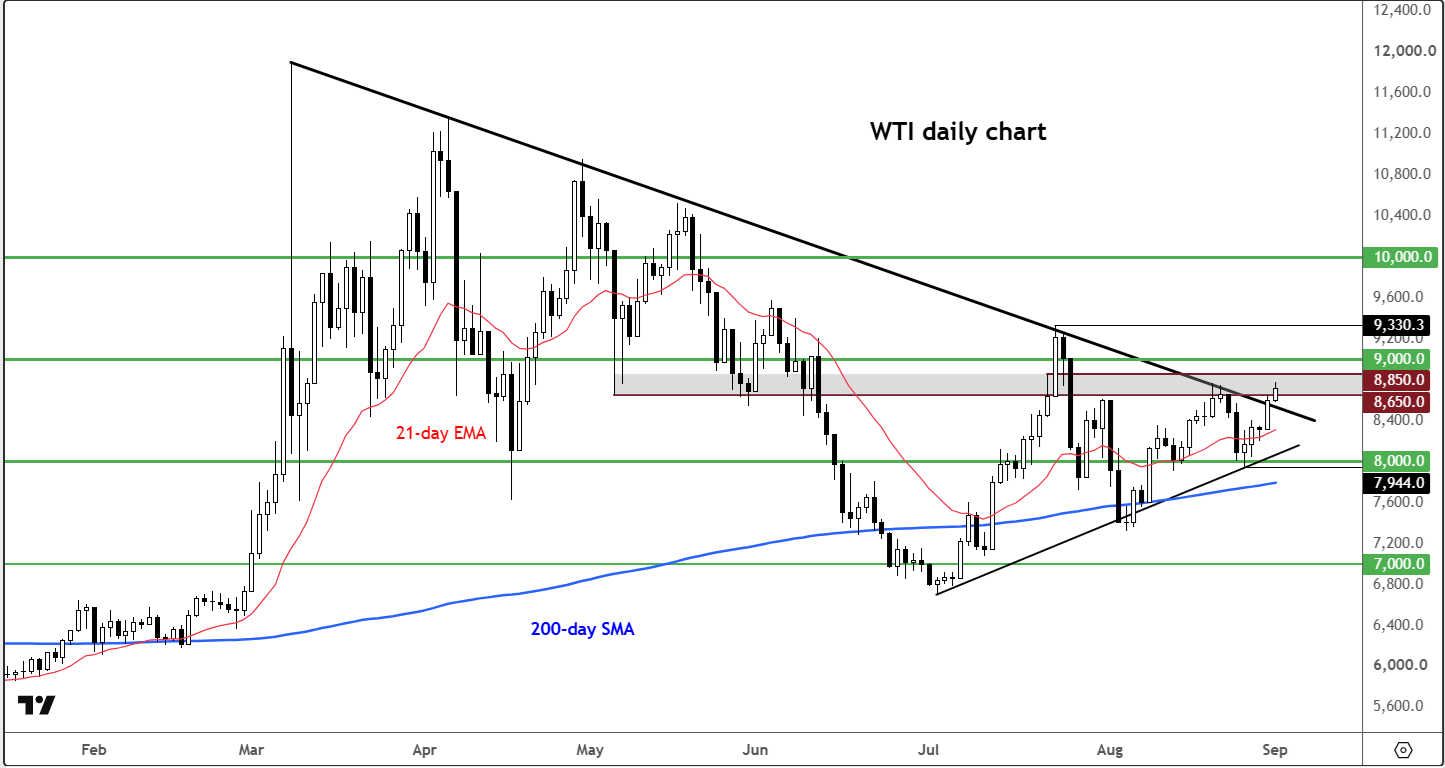
WTI is now testing the important $86.50-$88.50 region. This area has acted as resistance previously and also coincides with a long-term bearish trend line.
A sustained break above it would be technically significant and could signal the beginning of a much larger move higher for oil prices.
If WTI can hold above that region, the first major upside target is the psychological $90 level. Above that, attention would turn to the July high around $93.30, with the $100 mark becoming a realistic medium-term possibility.
On the downside, initial support is around $85, followed by roughly $83.50, where the 21-day exponential moving average comes into play. A break below the latter would weaken the bullish crude oil forecast and could open the door to a move towards $80.
Oil rally starts to hit risk appetite
Meanwhile, the renewed oil rally is also beginning to have broader market consequences. Higher crude prices have pushed bond yields further upwards, triggering selling across risk assets.
By midday in London, S&P 500 futures were down about 0.6%, with steeper losses across European equities. Gold, silver and Bitcoin were also lower.
If oil continues to rise, the pressure on risk appetite could become increasingly difficult for markets to ignore.
Related tags:
Latest market news







Web Trader platform
Our sophisticated web-based platform is packed with features.
Open an account today
Experience award-winning platforms with fast and secure execution.
Economic calendar
Related articles

Euro Short-term Outlook: EUR/USD Pullback Nears Pivotal Uptrend Support 8 28 2026
Warsh's comments accelerated the EUR/USD selloff, raising the stakes as buyers look to stabilize the broader recovery.


Gold and S&P 500 analysis: What now after Warsh’s hawkish speech?
The dollar surged across the board after the Fed Chair Kevin Warsh surprised with a hawkish-leaning speech at the Jackson Hole summit. All the bearish dollar bets that had been accumulated since last Friday on the back of data weakness and bond market troubles had to be squared and that triggered a short squeeze rally for the dollar. Gold and silver dropped, as a result, as too did bitcoin, while US indices were giving back earlier gains.

Nasdaq 100 Forecast: NDX slips ahead of Fed Chair Warsh’s speech
U.S. stocks are edging lower on Friday, giving back some of yesterday's gains after Nvidia's strong outlook revived the tech trade. The focus has now shifted firmly to Fed Chair Kevin Warsh's Jackson Hole speech, with investors looking for more clarity on the outlook for interest rates.
