


DAX forecast: Oil, bonds and the next threat to risk appetite
Volatility across financial markets continues to subside, with investors appearing surprisingly comfortable with rising oil prices and the prospect of the Fed either holding rates steady or tightening policy in September.
Written by
Fawad Razaqzada
Market Analyst
Volatility across financial markets continues to subside, with investors appearing surprisingly comfortable with rising oil prices and the prospect of the Fed either holding rates steady or tightening policy in September. But is the market under-pricing the risks? While oil prices have not risen to the same levels of earlier this year, the longer the strait of Hormuz remains shut, the higher prices will likely go and the bigger the threat to risk assets. Indices like the German DAX index could be particularly vulnerable. So far, however, strong earnings and ongoing AI optimism have helped to keep markets supported on any short-term dips. But the DAX forecast is becoming a bit more uncertain amid the oil market uncertainty.
Crude oil turns volatile after earlier surge
By lunchtime, crude oil futures turned negative, after earlier gaining more than 2%, when Bent hit $89 per barrel. Qatar ministry spokesman said the Oman-Iran talks were in advanced stage. But this doesn’t mean there will be any progress with the US. Markets are quite headline driven and I wouldn’t be surprised if prices go higher again.
Crude oil has surged over the past few days as hopes of a US-Iran agreement that would fully reopen the Strait of Hormuz have faded. We have also heard contradictory messages from Washington and Tehran.
The long and short of it is that the latest rhetoric from both sides suggests that any agreement could still be some way off. If that remains the case, the risks for oil prices appear increasingly skewed to the upside, particularly given the already tight supply backdrop.
The situation has been compounded by a sharp drawdown in US crude inventories, which have fallen to their lowest level in more than four decades, pointing to a significantly tighter oil market.
That said, the wider financial markets like stock indices such as the DAX have shown little meaningful reaction to the sharp rise in oil prices so far, while volatility in FX has continued to dwindle. But the DAX forecast could turn bearish in the near-term if we don’t see any meaningful progress and soon.
Could bonds trigger the next sell-off?
For now, the biggest threat to an otherwise relatively benign risk environment may come from the bond market. Yields have been steadily climbing alongside oil prices and have remained elevated even during periods when broader market volatility has been relatively subdued. If crude prices continue to accelerate higher, however, concerns about a renewed inflationary impulse could become harder for investors to ignore.
That would typically put further upward pressure on bond yields and weigh on bond prices, potentially creating a much less favourable backdrop for equities.
This raises an important question for the weeks ahead: could a renewed sell-off in bonds, driven by rising oil prices and inflation fears, provide the next catalyst for a correction in stocks?
So far, equity markets appear willing to look through the rise in crude. But if higher oil prices begin feeding into inflation expectations and pushing yields materially higher, that complacency could be tested rather quickly.
Technical DAX forecast and levels to watch
From a technical analysis point of view, the German DAX forecast remains positive for now. The index remains in a strong bullish trend, as highlighted by the fact that the index is holding near its all-time highs after breaking out to successive new highs in recent trade. The moving averages are also in the correct order, while the series of higher highs and higher lows remains intact. So, from that point of view, not much has changed. But that doesn’t mean the trend will necessarily stay as it is, given the heightened risks surrounding the Middle East situation and the potential for oil prices to move significantly higher.
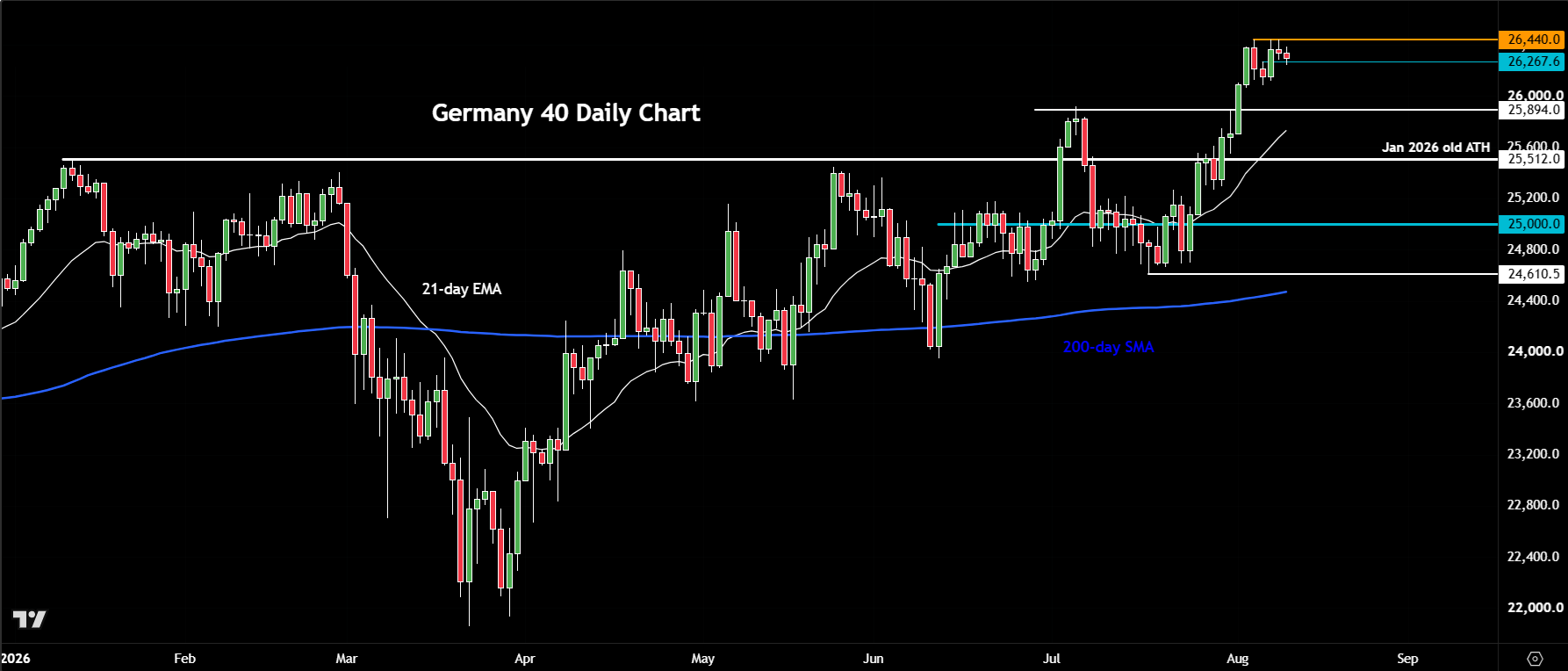
From a technical analysis point of view, though, for me to turn bearish, we’ll have to see a breakdown of some key short-term levels, and so far that hasn’t materialised. Short-term support is around 26,265, which was tested earlier today before we saw a bit of a bounce. Below that, there’s not much in the way of obvious support until the highs around early July, at roughly 25,900.
Then we have the old all-time high from January 2026, which comes in around 25,500.
So, there are plenty of levels to target on the way down in the event that we see a proper breakdown in the index.
Let’s see if that will materialise, but there is certainly a risk that we could see a potential pullback if some of these key support levels begin to give way.






Web Trader platform
Our sophisticated web-based platform is packed with features.
Open an account today
Experience award-winning platforms with fast and secure execution.
Economic calendar
Related articles

Euro Short-term Outlook: EUR/USD Pullback Nears Pivotal Uptrend Support 8 28 2026
Warsh's comments accelerated the EUR/USD selloff, raising the stakes as buyers look to stabilize the broader recovery.


Gold and S&P 500 analysis: What now after Warsh’s hawkish speech?
The dollar surged across the board after the Fed Chair Kevin Warsh surprised with a hawkish-leaning speech at the Jackson Hole summit. All the bearish dollar bets that had been accumulated since last Friday on the back of data weakness and bond market troubles had to be squared and that triggered a short squeeze rally for the dollar. Gold and silver dropped, as a result, as too did bitcoin, while US indices were giving back earlier gains.

EUR/USD forecast: All eyes on Warsh at Jackson Hole - Forex Friday
For much of this week, the EUR/USD has been edging lower with the US dollar regaining some ground after last week’s sell-off that was triggered, in part, by the bond market worries. Investors have been unwilling to bet further against the US dollar so far this week ahead of Kevin Warsh’s keynote speech at the Jackson Hole summit, due later today.