


Dow Jones Forecast DJIA Nears AllTime Highs Once Again
As the new trading week kicks off, a renewed bullish bias is taking hold of the Dow Jones. The index has already rallied nearly 3.00% over the last 3 sessions, creeping back toward key all-time highs.
Written by
Julian Pineda
Market Analyst
As the new trading week kicks off, a renewed bullish bias is taking hold of the Dow Jones. The index has already rallied nearly 3.00% over the last 3 sessions, creeping back toward key all-time highs. Buying pressure remains strong, fueled by easing geopolitical tensions and falling bond yields, both of which have boosted market confidence. If these tailwinds persist, demand for the DJIA should remain solid in the coming sessions.

Short-Term Confidence Stages a Comeback
The week opened on an optimistic note as Middle East tensions cooled. The US decided to hold off on a new wave of strikes against Iran, while President Trump announced that negotiations would resume this Monday, hoping for concrete breakthroughs in the weeks ahead. If these talks gain traction, further military action could be off the table for now.
This diplomatic shift has worked wonders for market sentiment. The immediate reaction was visible in WTI crude, which dropped notably below the $80 mark, signaling a lower risk premium. This eases uncertainty and shifts appetite back toward risk assets while cooling the demand for safe havens. As a risk-on asset, Dow Jones is directly benefiting from this dynamic. The boost in confidence is already showing up in the Fear and Greed Index, which kicked off the week hovering around 45 points. This pushes the gauge back into "neutral" territory and out of "fear," confirming a mild but meaningful short-term recovery in sentiment.
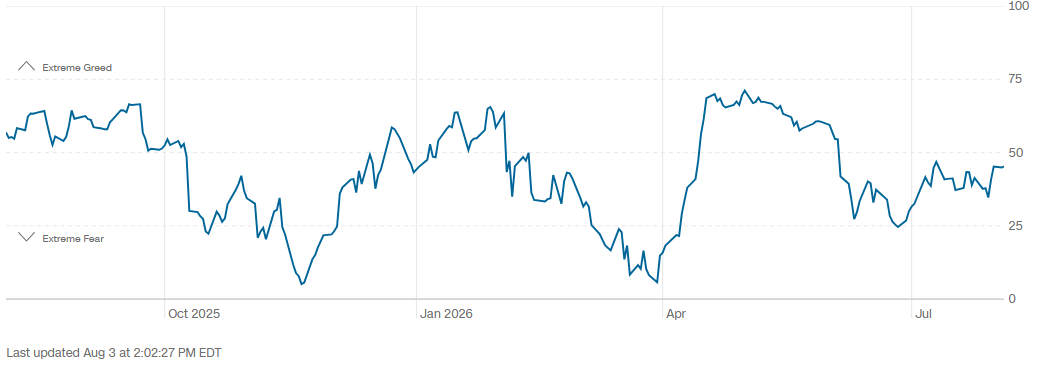
Source: CNN
Bond market dynamics are also playing a major role, especially since fixed income often acts as a safe-haven alternative to Dow Jones. Following last week's Federal Reserve decision, the 10-year Treasury yield continues to slide from its 2026 peaks, now trading below 4.7%. This tells us that the bond market is losing some of its short-term yield appeal, freeing up capital for investors to explore alternatives like equities. A sustained drop in yields reduces the urge to park money in stable assets, paving the way for stronger demand for indices like the Dow Jones. On top of that, bonds are typically used as an inflation hedge, and the positive updates from the Middle East might be further dampening the appetite for these defensive plays.
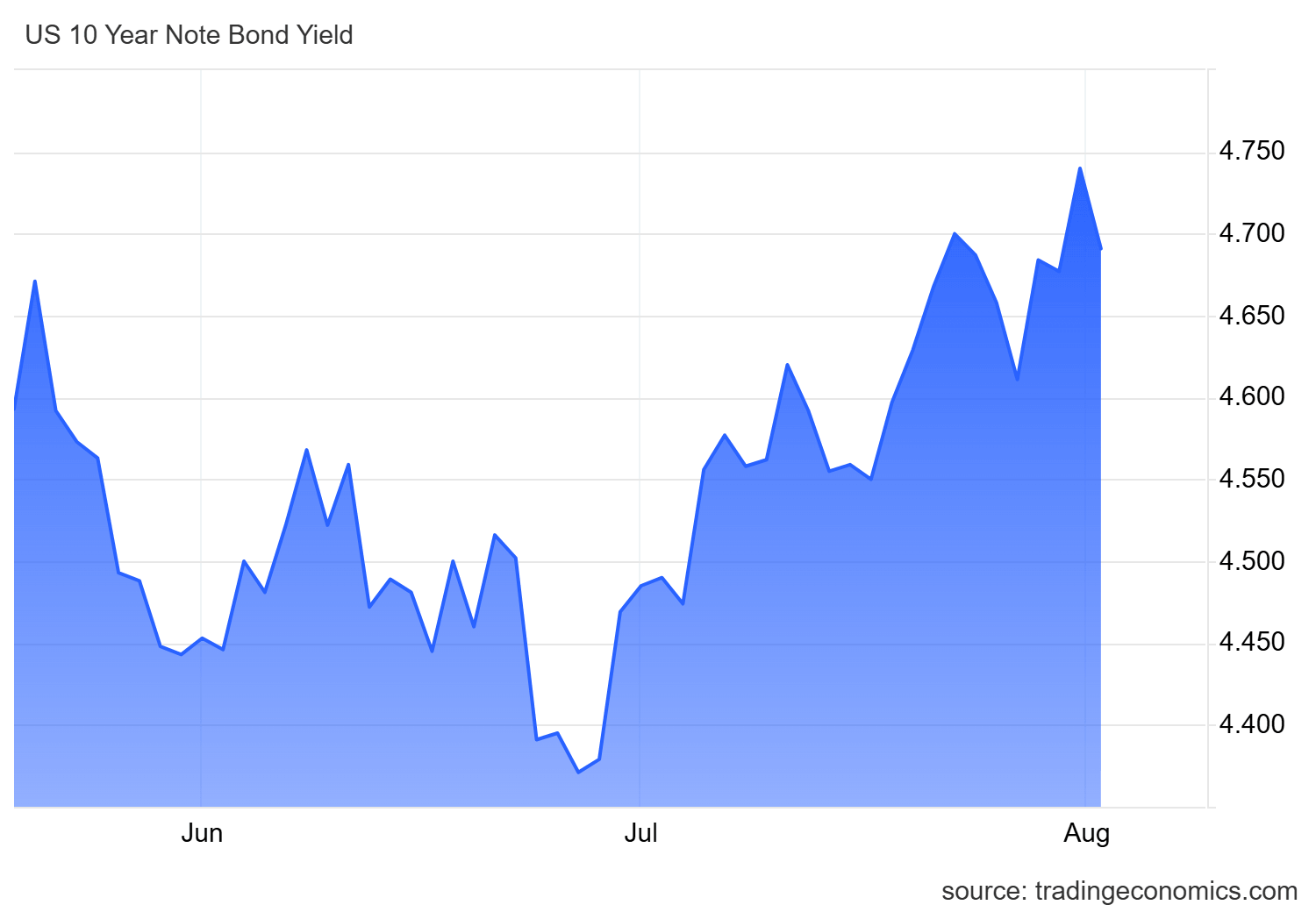
Source: TradingEconomics
With this in mind, the heavyweights in the Dow Jones are holding up quite well. Among the top five most influential stocks in the index, only Amgen is seeing a notable dip of around -1.95%. The rest showing steady resilience, even ahead of tomorrow's Caterpillar earnings report. Strong performances from names like Microsoft, up 5.3% on the day, continue to underpin the index. This stability is largely driven by the short-term confidence boost, which has successfully snapped the losing streak that weighed on the stock market in recent weeks.
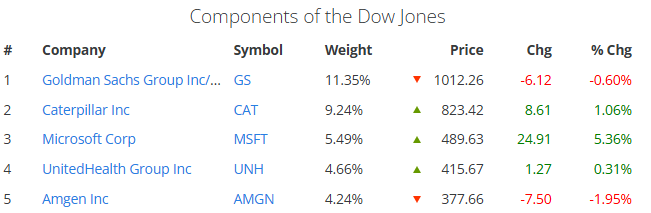
Source: SlickCharts
Moving forward, if falling bond yields and geopolitical optimism hold steady, the need to hide out in safe-haven assets will keep shrinking, leaving plenty of room for equity demand to thrive. This could keep the buying pressure on Dow Jones alive in the coming days. That said, solid corporate earnings are still a must, particularly from Caterpillar. If the index's top performers start flashing noticeable financial red flags, it could trigger a phase of hesitation that stalls the current confidence-driven rally.
Dow Jones Technical Outlook
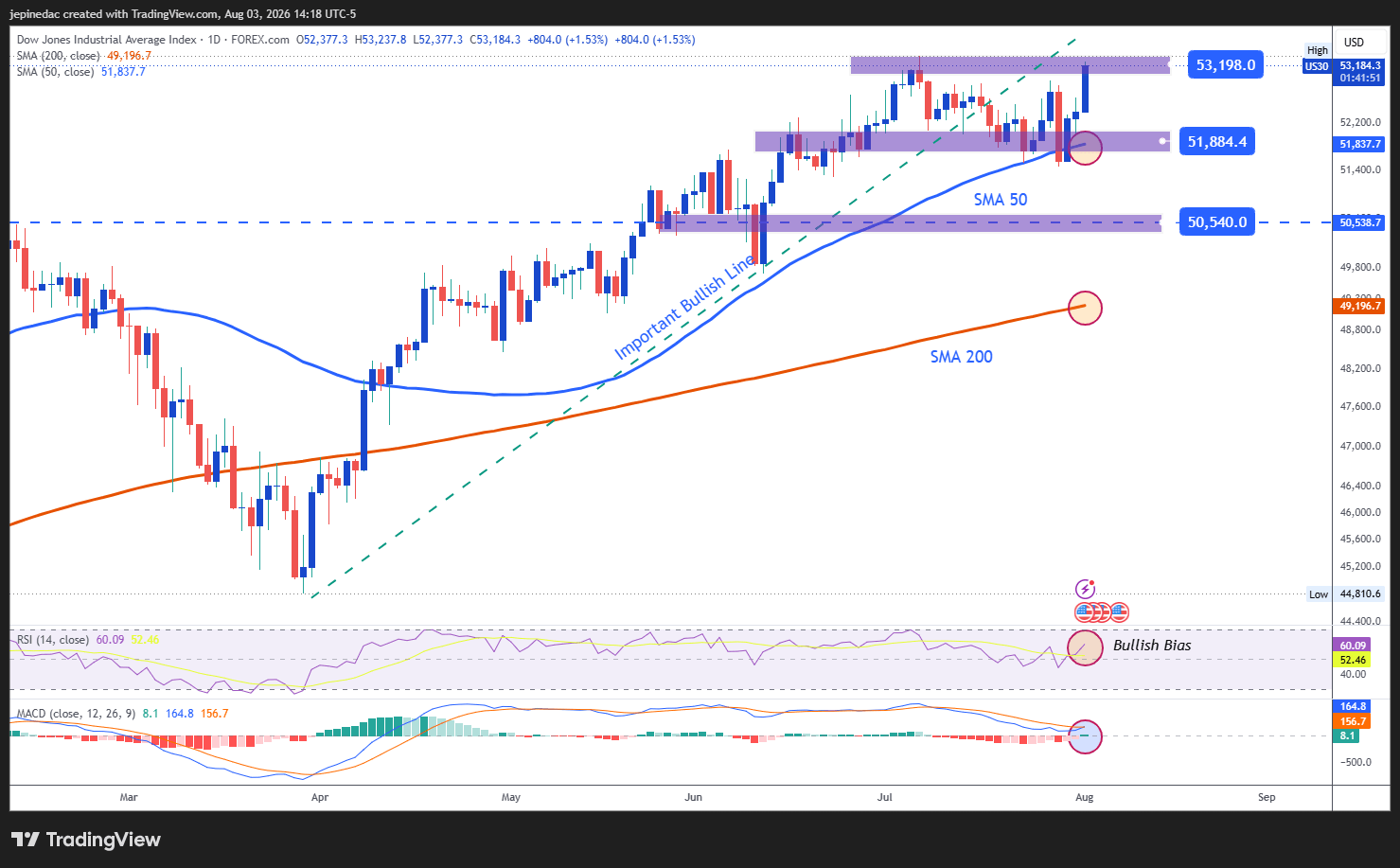
Source: StoneX, Tradingview
- Bullish momentum sets the tone: The recent price recovery has sparked significant short-term buying pressure. As Dow Jones approaches record highs, this renewed bullish bias could bring a previously relevant uptrend line back into play. If the momentum holds, this technical structure could firm up in the coming sessions.
- RSI: The RSI remains comfortably above the 50 level, reflecting dominant buying momentum over the last 14 sessions. If this holds, short-term bullish pressure should stay intact.
- MACD: However, the MACD histogram is hovering right near the 0 line. This suggests that short-term moving average momentum is in a holding pattern, meaning a slight undercurrent of indecision hasn't entirely left the chart.
Key Levels:
- 53,200 points (Key Resistance): The all-time high zone and the most critical bullish barrier on the chart. A decisive break above this level could unleash a stronger bullish bias and reactivate the uptrend line as the dominant pattern for the coming weeks.
- 51,800 points (Nearby Barrier): This level aligns with the 50-period simple moving average. If price action fails to break cleanly away from this zone, it could lead to persistent neutrality and potentially open space to a short-term sideways range.
- 50,500 points (Key Support): A former resistance zone from previous weeks, now sitting just below the 50-period moving average. A drop to this level could invite a more consistent bearish bias in the weeks ahead.
Written by Julian Pineda, CFA, CMT – Market Analyst
Follow him on: @julianpineda25
Related tags:
Latest market news










Web Trader platform
Our sophisticated web-based platform is packed with features.
Open an account today
Experience award-winning platforms with fast and secure execution.
Economic calendar
Related articles

Gold and S&P 500 analysis: What now after Warsh’s hawkish speech?
The dollar surged across the board after the Fed Chair Kevin Warsh surprised with a hawkish-leaning speech at the Jackson Hole summit. All the bearish dollar bets that had been accumulated since last Friday on the back of data weakness and bond market troubles had to be squared and that triggered a short squeeze rally for the dollar. Gold and silver dropped, as a result, as too did bitcoin, while US indices were giving back earlier gains.


DAX and EUR/USD forecast: Lower energy prices, yields offer support
But the question, of course, is how much further oil prices and bond yields can fall. For now, the combination is supportive of risk assets and is helping to sustain a relatively benign decline in the dollar. The focus today will be on US core PCE inflation, due for release shortly, while Nvidia’s second-quarter earnings will provide another test for risk appetite after the US markets close – not just for US indices but for global tech-heavy indices given the influence Nvidia has over the global tech and AI names.

ASX 200 Outlook: Jackson Hole Puts Monday Volatility in Focus
ASX 200 volatility tends to rise after Jackson Hole, while sector correlations highlight the clearest support, resistance and leadership signals.
