

EUR/USD Forecast: Euro Faces Levels Not Seen Since April 2025
Trading conditions continue to be quite challenging for the euro in the short term. The European currency remains under considerable pressure against the U.S. dollar, a dynamic that can be clearly seen in the behavior of EUR/USD, which has started the week down nearly 0.7%.
Written by
Julian Pineda
Market Analyst
Trading conditions continue to be quite challenging for the euro in the short term. The European currency remains under considerable pressure against the U.S. dollar, a dynamic that can be clearly seen in the behavior of EUR/USD, which has started the week down nearly 0.7%. This continues to highlight that the selling pressure observed over recent weeks remains relevant and that market participants are still favoring the U.S. dollar for the time being.
The bearish pressure around the pair continues to be driven mainly by the divergence in expectations surrounding the central banks of both regions. Now, markets continue to view the Federal Reserve as potentially more aggressive than the European Central Bank, a situation that keeps favoring dollar strength. At the same time, the U.S. currency continues to benefit from its role as a short-term liquidity haven. If this dynamic remains in place, the selling pressure observed around EUR/USD could continue to be a relevant feature during the coming trading sessions.
Are Changing Central Bank Expectations Becoming More Evident?
When looking at the recent performance of both the euro and the U.S. dollar, it is important to keep in mind that much of the current dynamic is driven by what markets expect from central banks over the coming months. Interest rate expectations remain one of the most important drivers of a currency's relative attractiveness and, at the moment, a meaningful divergence between the Federal Reserve and the European Central Bank is becoming increasingly evident.
On one side, recent comments from the ECB continue to reflect a relatively cautious and moderate tone. On the other hand, the Federal Reserve has continued emphasizing that inflationary pressures remain relevant, leaving the door open to a higher interest rate environment in the months ahead. As a result, markets have started to consider that there is room for the U.S. central bank to maintain a more aggressive stance than its European counterpart.
This difference in expectations can be seen in current market pricing. In Europe, the deposit rate remains around 2.50%, with more than a 90% probability of moving toward 2.75% during the December 17 meeting. However, when looking at expectations for the February 2027 meeting, markets currently expect rates to remain relatively unchanged. This suggests that investors still see room for one final rate hike before year-end, but do not expect a prolonged tightening cycle afterward, highlighting a relatively neutral outlook for the European Central Bank.
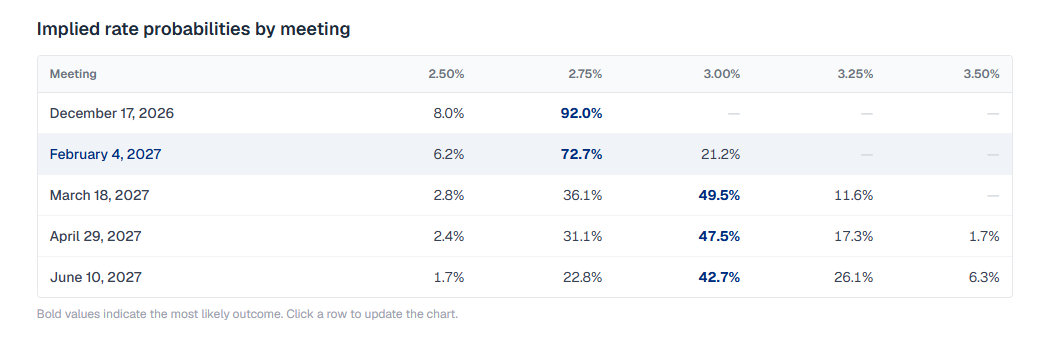
Source: ECBWATCH
The outlook surrounding the Federal Reserve, however, is considerably different. While, just as in Europe, more than a 95% probability is currently assigned to a December rate hike that would move the benchmark rate from 4.00% toward 4.25%, what stands out is what comes next. For the January 27, 2027 meeting, markets are currently pricing in nearly a 70% probability of another rate increase, which would take the benchmark rate toward the 4.50% area during the first months of next year.
This expectation creates a meaningful divergence compared to the European Central Bank because, while Europe is expected to move toward a relatively stable monetary policy environment, the United States is increasingly being viewed as entering another phase of rate increases. As a result, expectations for a more aggressive Fed continue to gain traction.
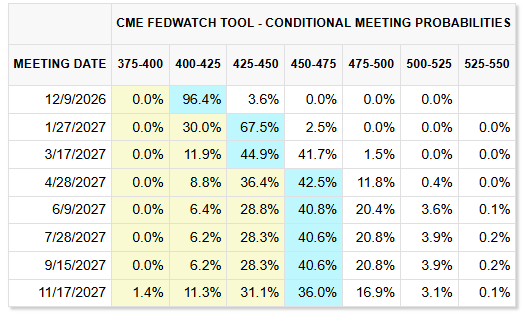
Source: CMEGROUP
What is important to keep in mind is that an environment of increasingly higher interest rates in the United States may continue favoring demand for dollar-denominated investments. At the same time, the uncertainty observed across several markets in recent weeks has also helped the dollar regain importance as a short-term liquidity safe haven.
Beyond expectations for higher rates, it is also important to remember that the U.S. dollar remains the world's primary reserve and funding currency. The combination of both factors has helped generate relatively consistent demand for the currency. This dynamic can be clearly observed in the behavior of the DXY Index, which measures the strength of the dollar against its major peers and continues to trade at 2026 highs above the 104-point area while maintaining a relatively consistent upward slope. Altogether, this suggests that demand for the U.S. dollar remains relevant in the short term.
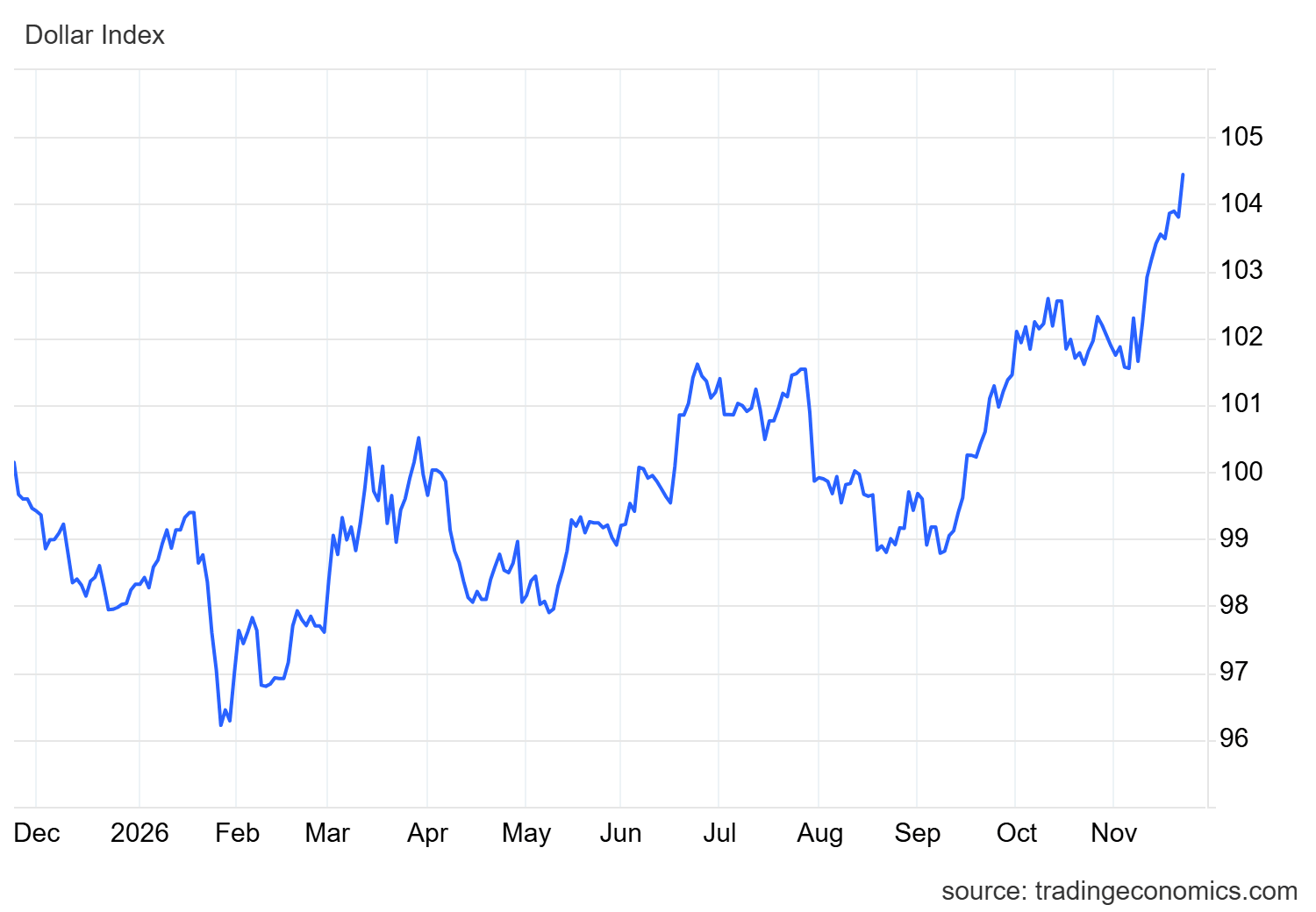
Source: TradingEconomics
The euro appears to be facing a difficult environment in the near term. As long as markets continue pricing in a European central bank that is perceived as less aggressive than the Fed, the interest rate differential could continue favoring the United States. This may keep the relative attractiveness of euro-denominated investments under pressure. In addition, the dollar continues to benefit from its role as a liquidity safe haven and, unless there are developments capable of significantly changing these fundamentals, the selling pressure observed in recent weeks could continue to be relevant around EUR/USD.
EUR/USD Technical Forecast
Source: StoneX, Tradingview
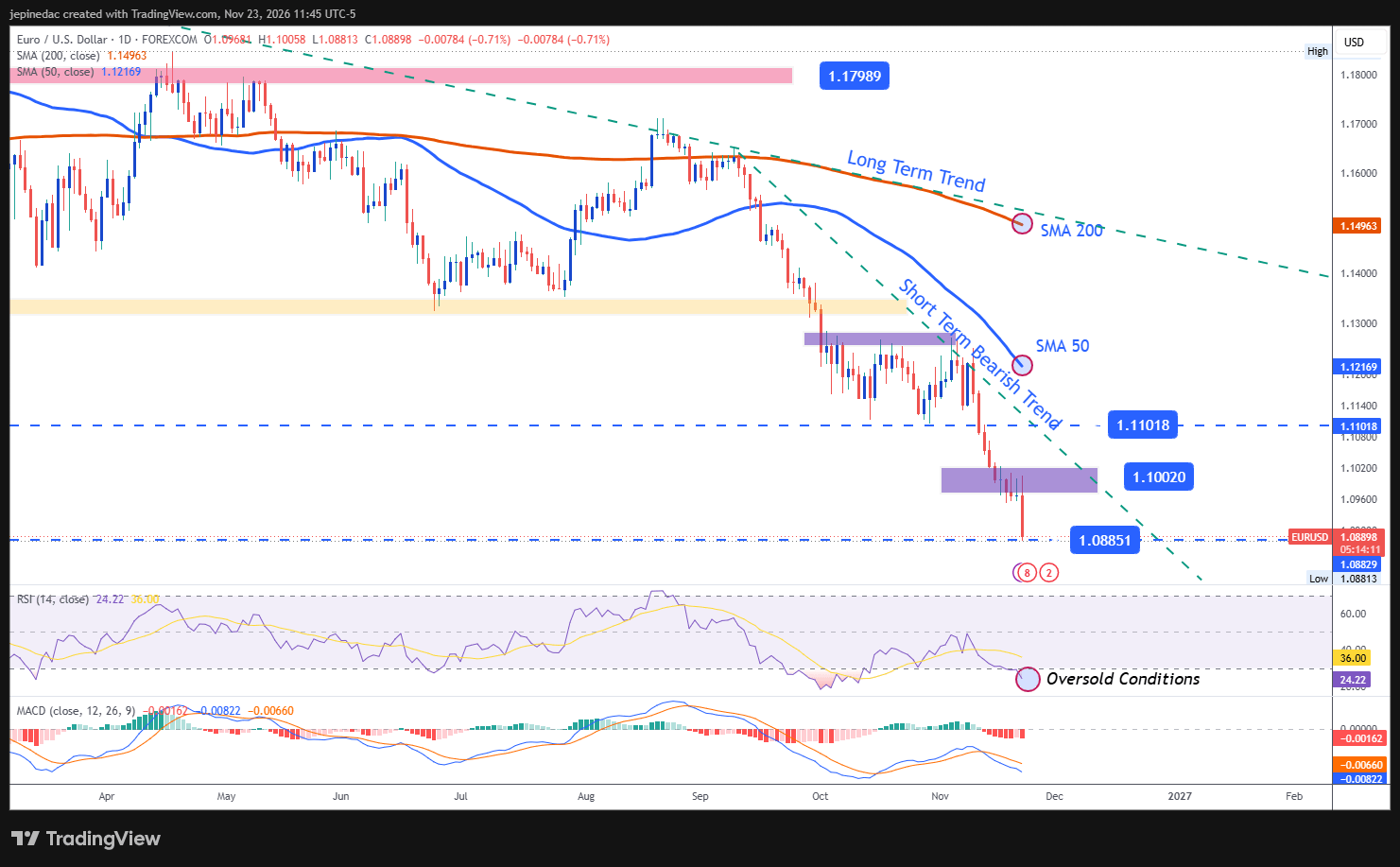
• A more aggressive bearish trend is becoming relevant: While the primary structure in EUR/USD has remained a long-term bearish trendline for several months, a more accelerated bearish phase has started to develop in recent weeks, giving shape to a potential short-term downward trendline. As selling pressure continues breaking through important downside barriers, this newer technical structure could continue gaining relevance over the coming weeks. However, it is also important to keep in mind that the recent decline has been relatively aggressive and could eventually create room for short-term bullish corrections.
• MACD: The MACD histogram remains below the indicator's neutral 0 level, reflecting continued selling pressure in short-term moving averages. As long as this reading remains intact, the current bearish bias could continue to be relevant in the weeks ahead.
• RSI: The RSI shows a similar picture as it continues to trade below its neutral level. However, it is also important to note that the indicator has started moving closer to the 30 oversold area, a situation that could be warning of excessive recent selling pressure and may eventually create room for short-term bullish corrections.
Key Levels:
• 1.11018 – Key Resistance: This level corresponds to an important retracement area seen several weeks ago and currently represents the most important upside barrier to monitor. Price action returning to this level could begin highlighting a more consistent lack of direction and may even open the door to a broader period of sideways trading over the coming weeks.
• 1.10020 – Nearby Barrier: A retracement area observed in recent sessions that also coincides with an important psychological reference around a key round number. It could become the main level to monitor if short-term bullish corrections begin to develop.
• 1.08851 – Critical Support: A level not seen since April 2025 that currently represents the most important downside barrier on the chart. Price action that continues to maintain selling pressure around this area could keep highlighting the dominance of the current bearish bias and may continue extending the short-term bearish trendline as the dominant technical structure during the coming sessions.
Written by Julian Pineda, CFA, CMT – Market Analyst
Follow him on: @julianpineda25
Latest market news










Web Trader platform
Our sophisticated web-based platform is packed with features.
Open an account today
Experience award-winning platforms with fast and secure execution.
Economic calendar
Related articles

Nasdaq 100 Forecast: NDX slips ahead of Fed Chair Warsh’s speech
U.S. stocks are edging lower on Friday, giving back some of yesterday's gains after Nvidia's strong outlook revived the tech trade. The focus has now shifted firmly to Fed Chair Kevin Warsh's Jackson Hole speech, with investors looking for more clarity on the outlook for interest rates.


EUR/USD forecast: All eyes on Warsh at Jackson Hole - Forex Friday
For much of this week, the EUR/USD has been edging lower with the US dollar regaining some ground after last week’s sell-off that was triggered, in part, by the bond market worries. Investors have been unwilling to bet further against the US dollar so far this week ahead of Kevin Warsh’s keynote speech at the Jackson Hole summit, due later today.


Bitcoin Forecast: BTC/USD Back to $80K Ahead of Warsh’s Jackson Hole Speech
After surging over $15,000 in the past 10 days alone, there is risk of a near-term pullback if Warsh says anything remotely hawkish at Jackson Hole - what are the levels to watch from here?