

FX Futures Positioning: US Dollar Longs Plunged, Yen Shorts Slashed
US dollar futures longs plunged while yen shorts were slashed, with major shifts also seen in euro, sterling and commodity currency positioning.
Written by
Matt Simpson
Market Analyst
US dollar futures positioning saw a sharp reduction in net-long exposure last week, while yen bears dramatically cut short positions following the Japanese yen intervention. Elsewhere, euro and sterling bears reduced their exposure, while positioning across the Australian, New Zealand and Canadian dollars also shifted.
View related analysis:
FX Futures Positioning: Dollar Longs Plunged and Yen Shorts Slashed
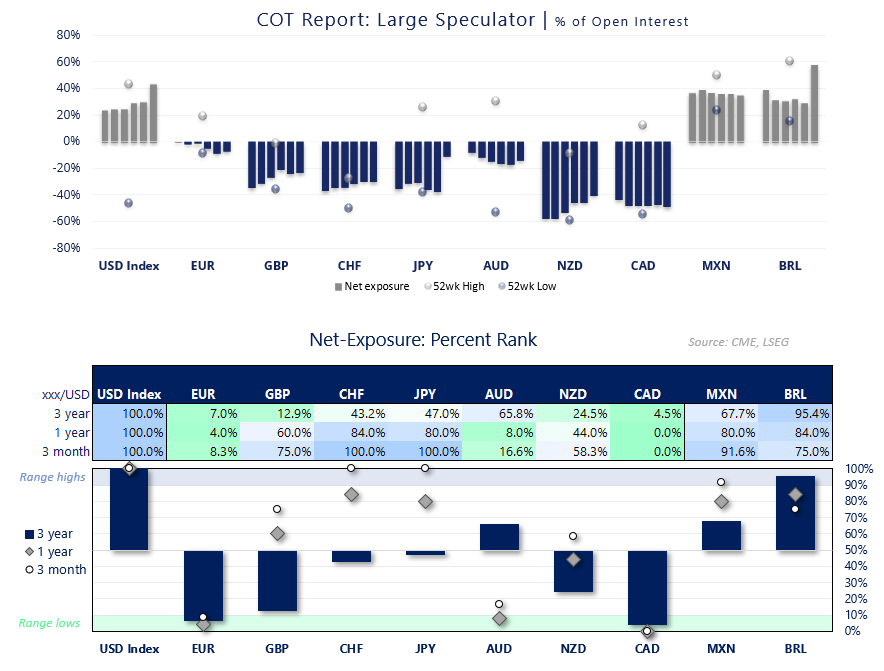
Large Speculator Positioning from the COT report
Source: CFTC (COT), LSEG
- US Dollar: Net-long exposure to the USD via futures plunged by $12.5 billion to $35.9 billion, its fastest reduction in nearly two years.
- EUR/USD: Large speculators reduced their net-short exposure to euro futures by 14.4k contracts to -58.1k contracts last week.
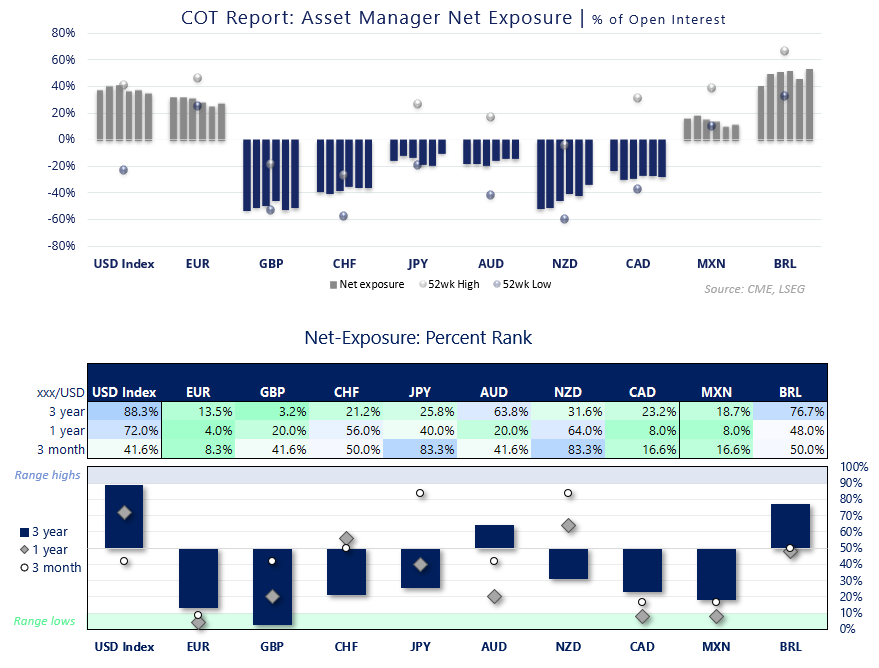
- GBP/USD: Net-short exposure was reduced by 23k contracts across large speculators and asset managers.
- USD/JPY: Yen bears slashed gross shorts by a combined 110k contracts last week.
- USD/CHF: Net-short exposure to Swiss franc futures among large speculators softened to a 16-week low.
- USD/CAD: Net-short exposure rose by 2k contracts to its most bearish level since December 2024 among large speculators.
- AUD/USD: An increase in long bets saw large speculators reduce their net-short exposure for the first week in seven.
- NZD/USD: Net-short exposure declined by 16.5k contracts across both sets of traders.
Asset Manager Positioning | COT Report
Source: CFTC (COT), LSEG
For traders wanting a deeper understanding of futures positioning, I’ve also published a guide on how to read and interpret weekly COT data in forex markets.
FX Futures Positioning | COT Report (IMM Data)
US Dollar Index (DXY) Futures Positioning | COT Report
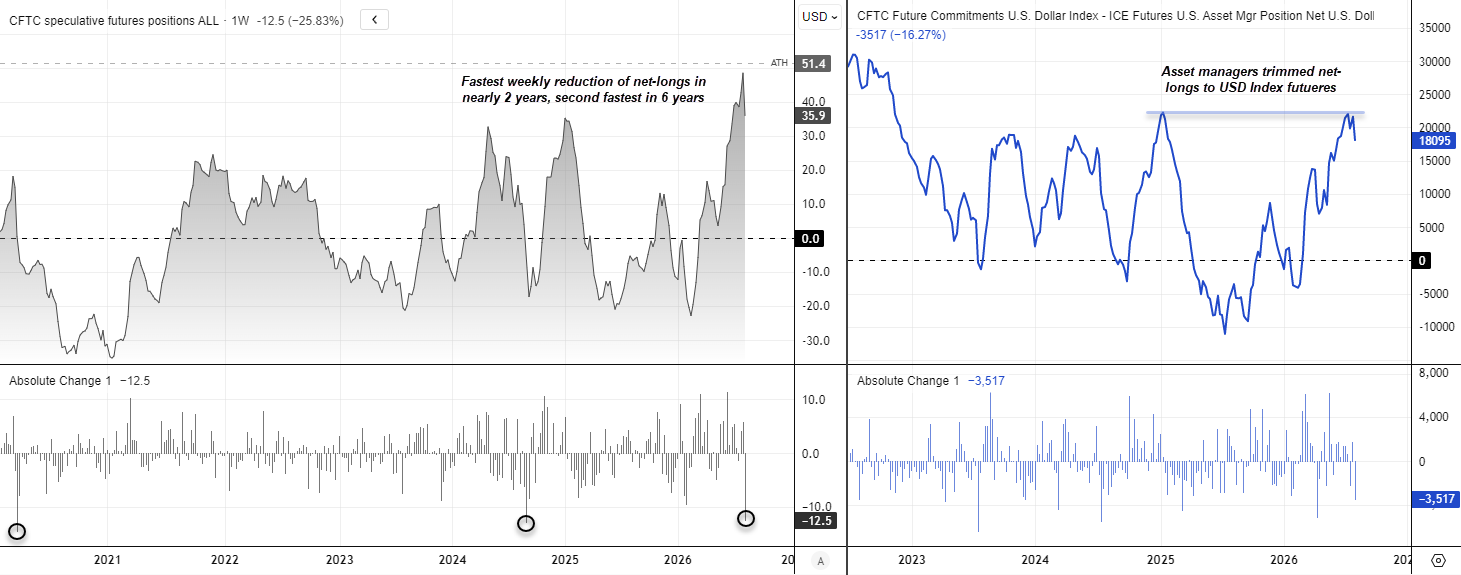
We’re finally seeing the fallout from the Japanese yen intervention and the latest FOMC meeting. Net-long exposure to the US dollar via the futures market fell by $12.5 billion in the week up to Tuesday’s close, which captures positioning during the dollar’s 1.5% decline – its worst week in two months.
Net-long exposure was still high at $35.9 billion, but its $12.5 billion reduction was the fastest in nearly two years and the second-fastest in six. Asset managers also trimmed their net-long exposure to the US dollar by 3.5k contracts, though they remained relatively bullish, with long exposure of 18k contracts.
However, the fact that the US dollar index only fell a further 0.4% last week and continues to hold above support should serve as a warning to bears, who likely need a weak inflation report this week for support to give way.
Source: CFTC (COT), ICE, LSEG
EUR/USD Futures Positioning | COT Report
It could be argued that the euro's rebound did not come without warning. Gross shorts had reached a record high among large specs and asset managers two weeks ago, while net-short exposure among large specs had risen sharply in just two weeks heading into those record levels of short bets. Clearly, it was a less-hawkish FOMC meeting and weaker US dollar which broke the camel's back, but futures exposure was indeed sending smoke signals.
Note the near-bullish outside candle on the euro weekly chart two weeks ago. Also note that gross shorts remain high despite edging lower from their record highs. Should US data come in slightly soft, it could propel the euro higher amid a weak US dollar environment.

Source: CFTC (COT), CME, LSEG

USD/JPY Futures Positioning | COT Report
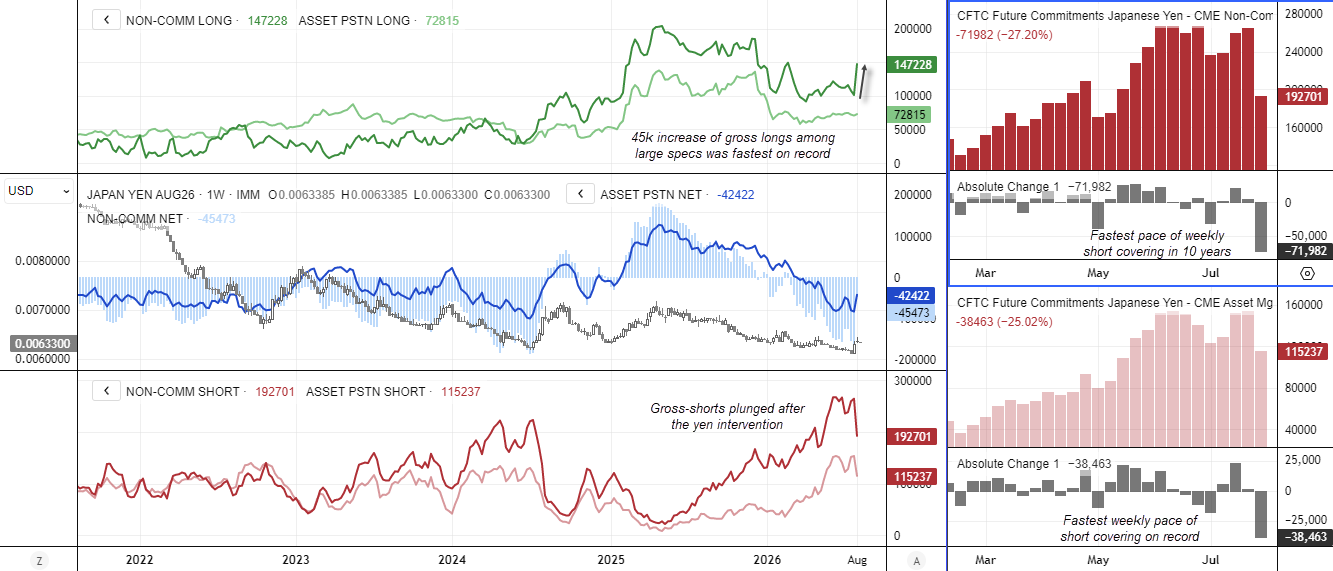
The fallout from the MOF intervention in the Japanese yen is more than apparent in the latest COT data. Over 100k gross shorts were culled among both sets of traders in the week to Tuesday’s close. The 38.4k-contract reduction from asset managers was the fastest weekly change on record and, for asset managers, the fastest pace of short covering in 10 years.
Also note that gross longs rose by 46k contracts among large speculators last week, their fastest pace on record. Yet asset managers failed to join the bullish party.
Even so, with the MOF vowing to intervene again with the might of the US Treasury behind them, USD/JPY is likely on many watchlists for short setups, with traders seeking to fade rallies in anticipation of a stronger yen.
Source: CFTC (COT), CME, LSEG
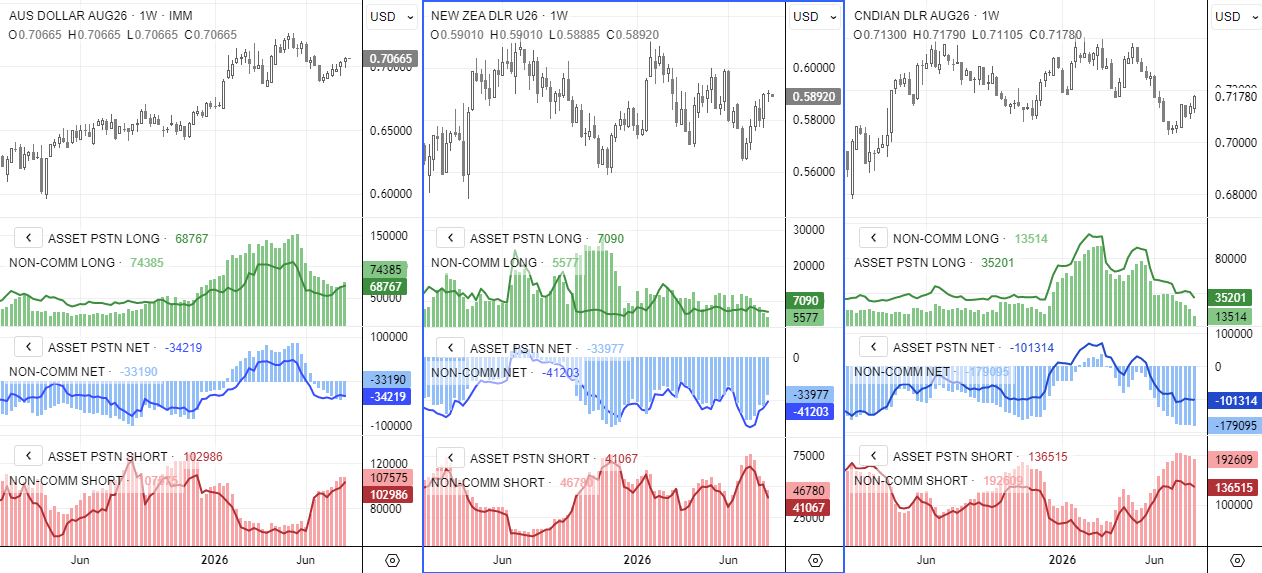
Commodity FX Futures Positioning (AUD, CAD, NZD) | COT Report
While only minor changes were made to AUD/USD futures positioning, it does tilt bullish overall. Net-short exposure declined for the first week in seven among large speculators, thanks to a 6k increase in gross longs. Gross shorts remain relatively flat among this set of traders.
Net-short exposure to NZD/USD futures has been reduced by around half over the past five weeks, closing the gap with the rising New Zealand dollar. Yet scaled-back bets on an RBNZ hike may see the rally falter and keep traders net-short for now.
The Canadian dollar is also enjoying its rally despite net-short exposure remaining firm. And should USD/CAD continue to fall, bears will surely need to cover, further fuelling the rally in the Canadian dollar.
Source: CFTC (COT), CME, LSEG
View the full economic calendar
-- Written by Matt Simpson
Follow Matt on Twitter @cLeverEdge
How to trade with City Index
You can trade with City Index by following these four easy steps:
- Open an account, or log in if you’re already a customer
• Open an account in the UK
• Open an account in Australia
• Open an account in Singapore
- Search for the market you want to trade in our award-winning platform
- Choose your position and size, and your stop and limit levels
- Place the trade
Related tags:
Latest market news











Web Trader platform
Our sophisticated web-based platform is packed with features.
Open an account today
Experience award-winning platforms with fast and secure execution.
Economic calendar
Related articles

EUR/USD forecast: All eyes on Warsh at Jackson Hole - Forex Friday
For much of this week, the EUR/USD has been edging lower with the US dollar regaining some ground after last week’s sell-off that was triggered, in part, by the bond market worries. Investors have been unwilling to bet further against the US dollar so far this week ahead of Kevin Warsh’s keynote speech at the Jackson Hole summit, due later today.


DAX and EUR/USD forecast: Lower energy prices, yields offer support
But the question, of course, is how much further oil prices and bond yields can fall. For now, the combination is supportive of risk assets and is helping to sustain a relatively benign decline in the dollar. The focus today will be on US core PCE inflation, due for release shortly, while Nvidia’s second-quarter earnings will provide another test for risk appetite after the US markets close – not just for US indices but for global tech-heavy indices given the influence Nvidia has over the global tech and AI names.

Oil, EUR/USD Forecast: Two trades to watch 2608
Oil falls further on diplomatic hopes for a Middle East resolution. EUR/USD consolidates ahead of U.S. inflation and Jackson Hole.
