


Nasdaq 100 Update NDX pulls back as tech caution grows
These continue to be difficult sessions for the Nasdaq 100. Over the last 4 trading sessions, the index has accumulated a decline of nearly -3.8%, once again highlighting a relevant short-term selling bias.
Written by
Julian Pineda
Market Analyst
These continue to be difficult sessions for the Nasdaq 100. Over the last 4 trading sessions, the index has accumulated a decline of nearly -3.8%, once again highlighting a relevant short-term selling bias.
For now, selling pressure remains in place as some important components of the index have failed to deliver sufficiently strong results. This has also been accompanied by the appeal of safer substitute markets, such as U.S. Treasuries, where yields remain elevated. These factors could continue to affect confidence and maintain a possible phase of weakness or indecision in the Nasdaq over the next few trading sessions.

Are earnings disappointing investors?
Since last week, the U.S. technology equity market has shown greater caution after results from Tesla and Alphabet, two relevant components of the Nasdaq, failed to convincingly exceed market expectations.
In the case of Alphabet, the company showed solid operating margins, but also announced that capital expenditures could rise in 2026 to 205 billion dollars, compared with a previous estimate of nearly 180 billion dollars. This increase raised concerns over growing spending on artificial intelligence, which could pressure available cash flow, increase costs and limit profit margins. Since these announcements, the stock has fallen more than 5.00%.
For Tesla, the reaction was even more negative. The stock fell almost 15% after the company reported earnings per share of 33 cents, below the 51 cents expected. Although revenue reached nearly 28 billion dollars, above the 25 billion dollars estimated, the market interpreted that the company is selling more than expected, but with lower profitability. This increased doubts about the stability of its earnings over the coming months.
Together, these reports have reinforced concerns over elevated spending, margins and capital flow among major technology companies, especially in a context where artificial intelligence investment continues to increase. For this reason, market attention now remains focused on the upcoming results from Microsoft, Meta, Apple and Amazon, which are also among the most important companies in the index.
So far, the behavior of the main Nasdaq components reflects relevant caution. Although Microsoft is up nearly 2.72%, stocks such as Nvidia are showing weakness, with a decline of more than -4.00% during the session, amid concerns over margins and artificial intelligence spending.
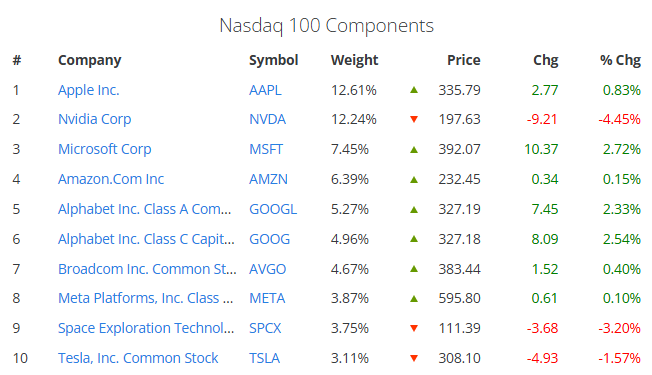
Source: Slickcharts
Market dynamics continue to depend heavily on the results of the largest technology companies. If other companies in the index’s top 10 show similar signals to Alphabet and Tesla, concerns over the sector could increase, affecting investor confidence and maintaining a phase of weakness or indecision in the Nasdaq 100 over the next few trading sessions.
Do substitute markets remain relevant?
Another important event this week is the U.S. interest rate decision. So far, the market has started to consider the possibility of a more aggressive Federal Reserve over the coming months, which has continued to support U.S. 10-year Treasury yields.
Now, these yields maintain an upward slope and remain above the 4.6% area, near 2026 highs. This keeps the fixed income market relatively attractive in the short term.
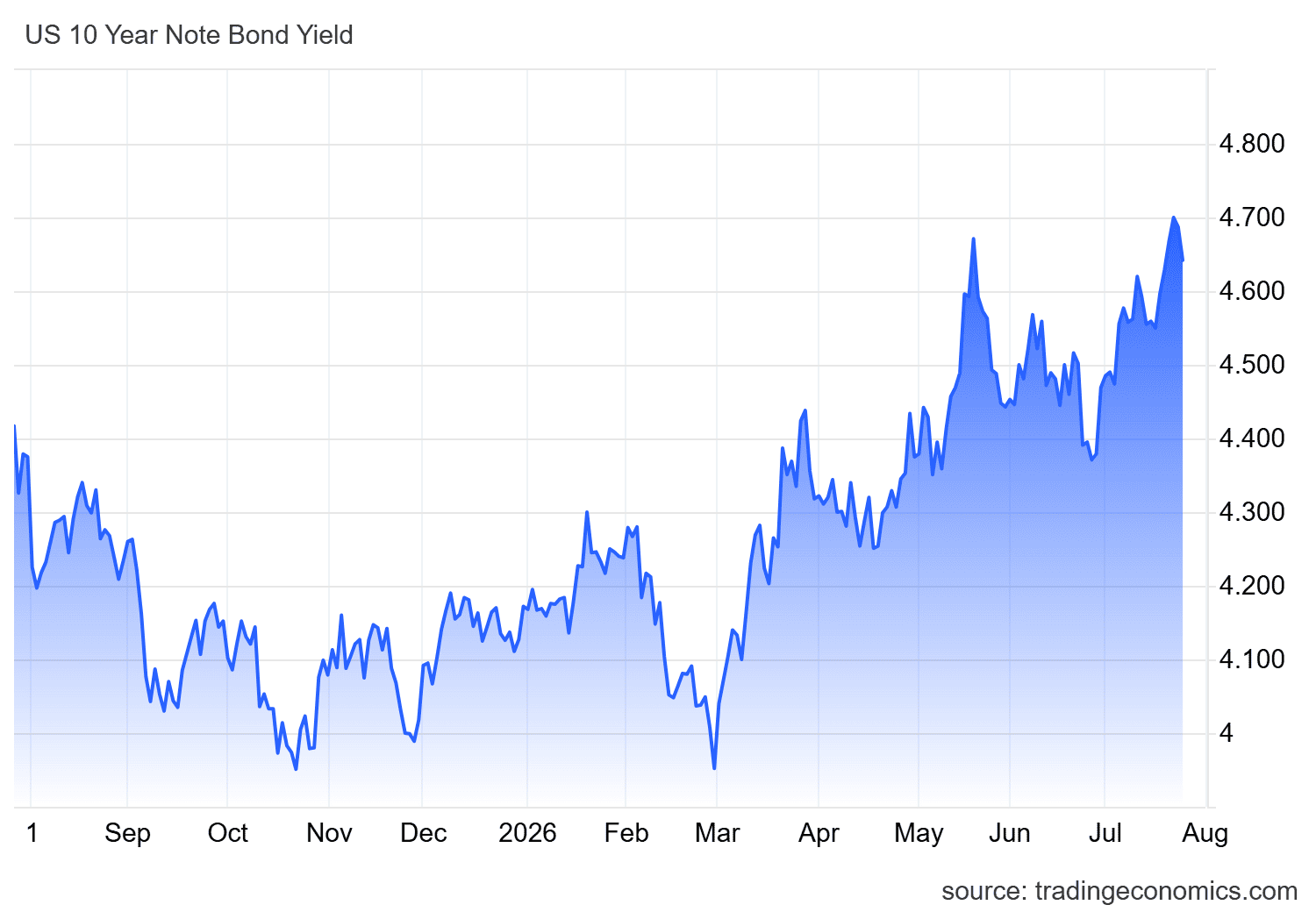
Source: TradingEconomics
This dynamic is important for Nasdaq, as bonds are considered a more stable market than equities. When yields remain elevated, the appeal of fixed income can increase and reduce flows into higher-risk assets such as equity indices.
For this reason, if expectations of higher rates in the United States continue to strengthen the bond market, appetite for the Nasdaq could remain limited. This scenario could also keep pressure on investor confidence and reinforce a possible selling bias over the next few trading sessions.
Technical forecast for the Nasdaq 100
Source: StoneX, Tradingview
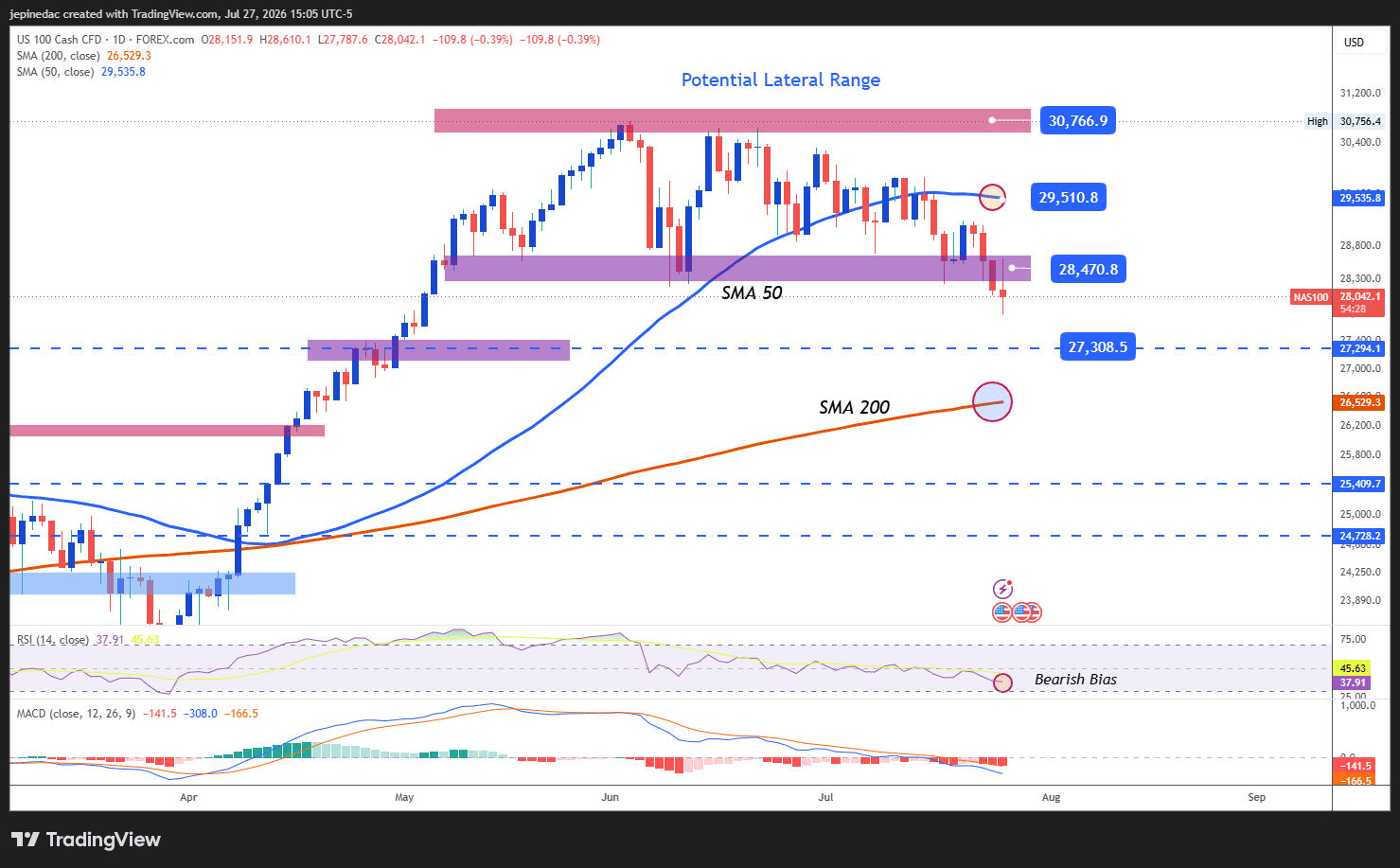
- Sideways range begins to lose relevance: Over the last few weeks, the Nasdaq 100 had attempted to sustain a sideways range. However, in recent sessions, selling pressure has started to put that structure at risk. If selling strength remains in place, the break of the neutrality seen in previous weeks could open room for a more relevant bearish bias over the next few sessions.
- RSI: Now, the RSI shows a bearish slope and remains below the neutral 50 level. This suggests that selling impulses have started to gain relevance in the average of the last 14 sessions. If this behavior continues, the indicator could keep highlighting a selling bias in the Nasdaq over the next few sessions.
- MACD: A similar scenario is visible in the MACD, whose histogram has started to show downward movements below the neutral 0 line. This suggests dominance of bearish strength in short-term moving averages and reinforces the possibility that the selling bias could remain relevant on the Nasdaq daily chart.
Key levels:
- 29,510 points – Relevant resistance: This area corresponds to the most important bullish barrier to watch and aligns with the 50-period simple moving average. Price movements toward this level could begin to highlight a lack of clear direction and extend the sideways channel as the dominant structure over the coming weeks.
- 28,470 points – Near-term barrier: This level corresponds to the nearest retracement area on the chart. This reference could act as a tentative barrier in the event of possible bullish corrections over the next few sessions.
- 27,308 points – Key support: This relevant bearish barrier coincides with a phase of indecision observed in April of this year. If price maintains consistent selling pressure toward this area, a dominant bearish bias could gain relevance and even open room for a possible short-term bearish trend line.
Written by Julian Pineda, CFA, CMT – Market Analyst
Follow him on: @julianpineda25







Web Trader platform
Our sophisticated web-based platform is packed with features.
Open an account today
Experience award-winning platforms with fast and secure execution.
Economic calendar
Related articles

Gold and S&P 500 analysis: What now after Warsh’s hawkish speech?
The dollar surged across the board after the Fed Chair Kevin Warsh surprised with a hawkish-leaning speech at the Jackson Hole summit. All the bearish dollar bets that had been accumulated since last Friday on the back of data weakness and bond market troubles had to be squared and that triggered a short squeeze rally for the dollar. Gold and silver dropped, as a result, as too did bitcoin, while US indices were giving back earlier gains.


Nasdaq 100 Forecast: NDX slips ahead of Fed Chair Warsh’s speech
U.S. stocks are edging lower on Friday, giving back some of yesterday's gains after Nvidia's strong outlook revived the tech trade. The focus has now shifted firmly to Fed Chair Kevin Warsh's Jackson Hole speech, with investors looking for more clarity on the outlook for interest rates.


Jackson Hole Returns: Nikkei 225 and Nasdaq 100 Volatility in Focus
Historical Jackson Hole returns point to elevated Nikkei 225 volatility around Fed speech day, with Nasdaq 100 direction hinging on Kevin Warsh.
