


USD/CAD Analysis: Canadian Dollar Extends Gains Despite Soft Inflation Data
The trading week is just getting underway, and one of the most notable developments in the currency market has been the renewed strength of the Canadian dollar. This can be seen in the recent performance of USD/CAD, which has now declined for three consecutive sessions and is down approximately 1.0% over the period, highlighting the CAD's growing strength against the U.S. dollar.
Written by
Julian Pineda
Market Analyst
The trading week is just getting underway, and one of the most notable developments in the currency market has been the renewed strength of the Canadian dollar. This can be seen in the recent performance of USD/CAD, which has now declined for three consecutive sessions and is down approximately 1.0% over the period, highlighting the CAD's growing strength against the U.S. dollar.
For now, selling pressure around the pair remains relevant even after the release of Canadian inflation data. This is largely because the Canadian bond market has maintained relatively stable yields, helping to support demand for Canadian dollar-denominated assets. At the same time, the relationship between oil prices and the CAD has begun to regain importance in recent sessions. As long as these factors remain in place and the U.S. dollar continues to move through a corrective phase, selling pressure on USD/CAD could remain an important theme in the days ahead.
Canada Inflation Day Arrives
Canada's latest inflation figures were released during today's session. Overall, the main core inflation measures came in slightly below market expectations. The Trimmed CPI y/y, which excludes more volatile components, was reported at 1.8% versus an expected 1.9%, while Median CPI y/y, a measure used to track underlying inflation trends, came in at 1.9% compared to the 2.0% forecast.
However, annual CPI remains near 3.1%, highlighting that inflation pressures are still relatively elevated. Although some indicators came in below expectations, the data does not yet point to a sufficiently consistent slowdown that would justify a significantly more dovish stance from the Bank of Canada in the coming months. Current inflation levels also remain well above the lows seen in February, when annual CPI was close to 1.8%.
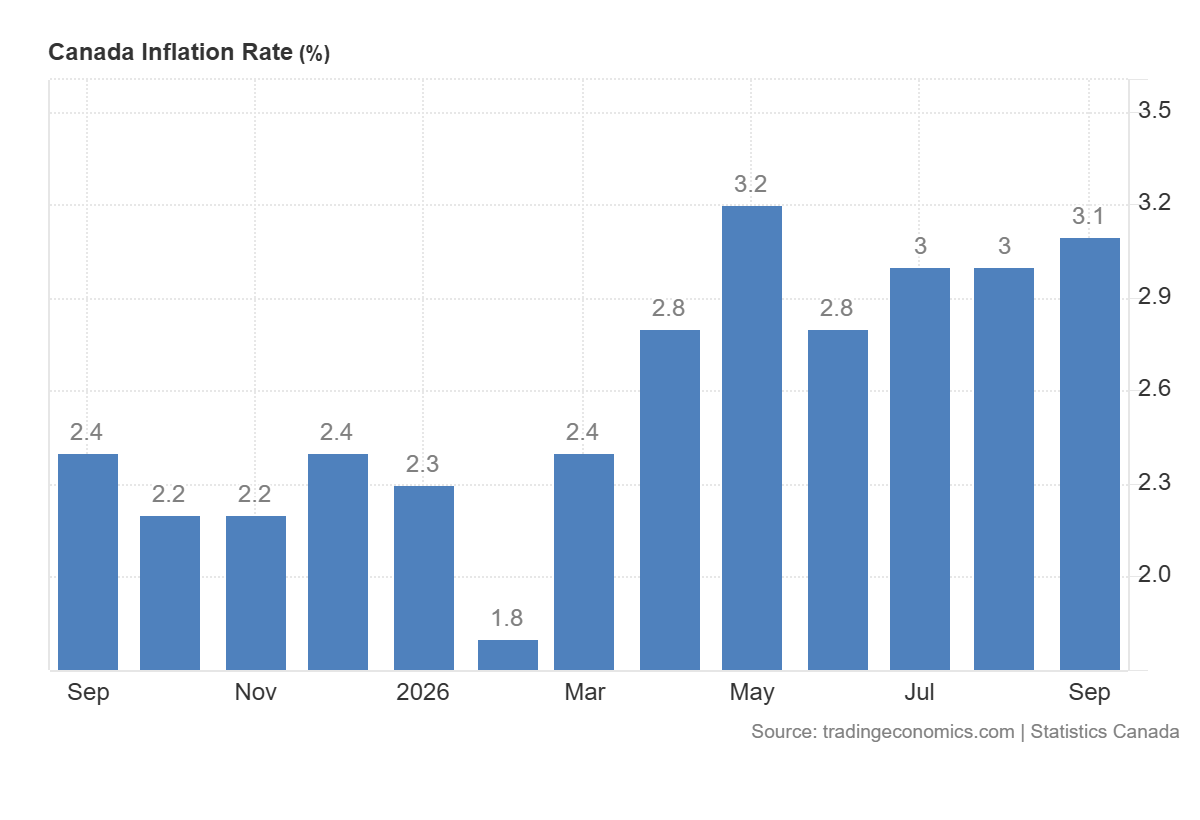
Source: TradingEconomics
This remains important because, even after the inflation release, Canadian 10-year government bond yields have shown little sign of weakness. Instead, yields continue to develop near the 4.0% area, maintaining a relatively stable environment that continues to support the attractiveness of Canadian dollar-denominated investments.
At the same time, U.S. dollar strength has begun to moderate. The DXY, which measures the dollar against its main peers, continues to trade near the 102-point area without being able to establish a sustained bullish trend. As a result, CAD has found room to recover part of the ground lost in previous weeks.
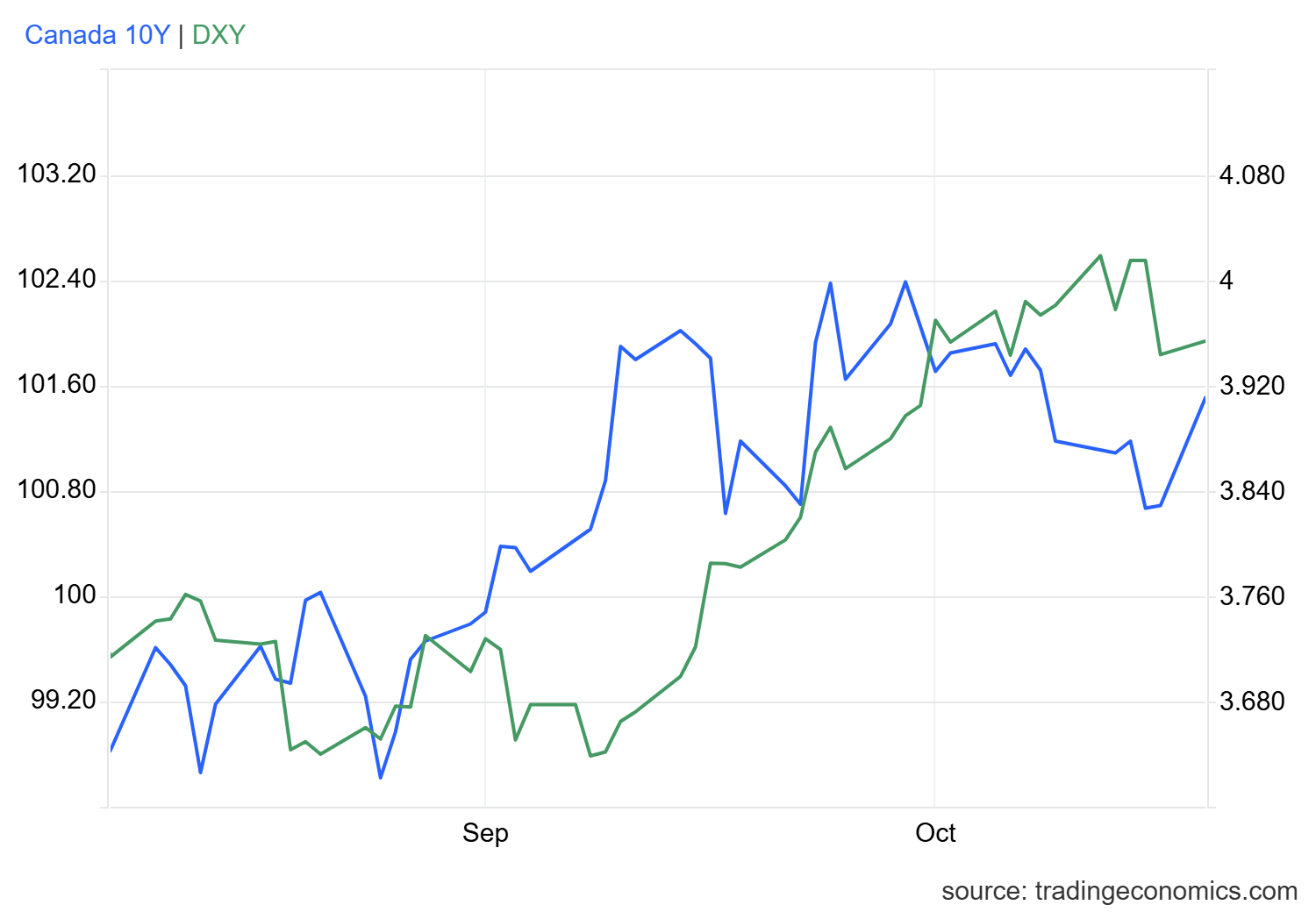
Source: TradingEconomics
Taking all of this into account, it is important to note that while inflation data did not surprise to the upside, it also failed to show a meaningful slowdown in price pressures. This has helped preserve stability in Canada's bond market and, combined with the recent loss of momentum in the U.S. dollar, has allowed the Canadian dollar to regain relevance in the short term. As long as this dynamic remains in place, selling pressure around USD/CAD could continue to be a dominant theme.
Is the Relationship with Oil Becoming Relevant Again?
Another important factor to consider is the close relationship between the Canadian economy and the energy sector. Canada remains one of the world's largest oil producers and exporters, meaning that significant moves in crude oil prices often have an important impact on demand for the Canadian dollar. As oil prices rise, export revenues tend to increase, supporting stronger capital inflows and helping strengthen the CAD in the short term.
Over recent sessions, this relationship has begun to regain relevance. The CXY, an index that measures the strength of the Canadian dollar, continues to advance while WTI crude oil maintains a bullish trend that has pushed prices increasingly closer to the $100 per barrel area.
The most interesting element emerges when looking at the short-term correlation between both markets. The correlation coefficient currently stands near 0.56, reflecting a meaningful positive relationship between recent movements in oil and the Canadian dollar. This suggests that rising crude prices may be providing additional support to CAD’s recent recovery. It is important to remember that correlation can change over time.
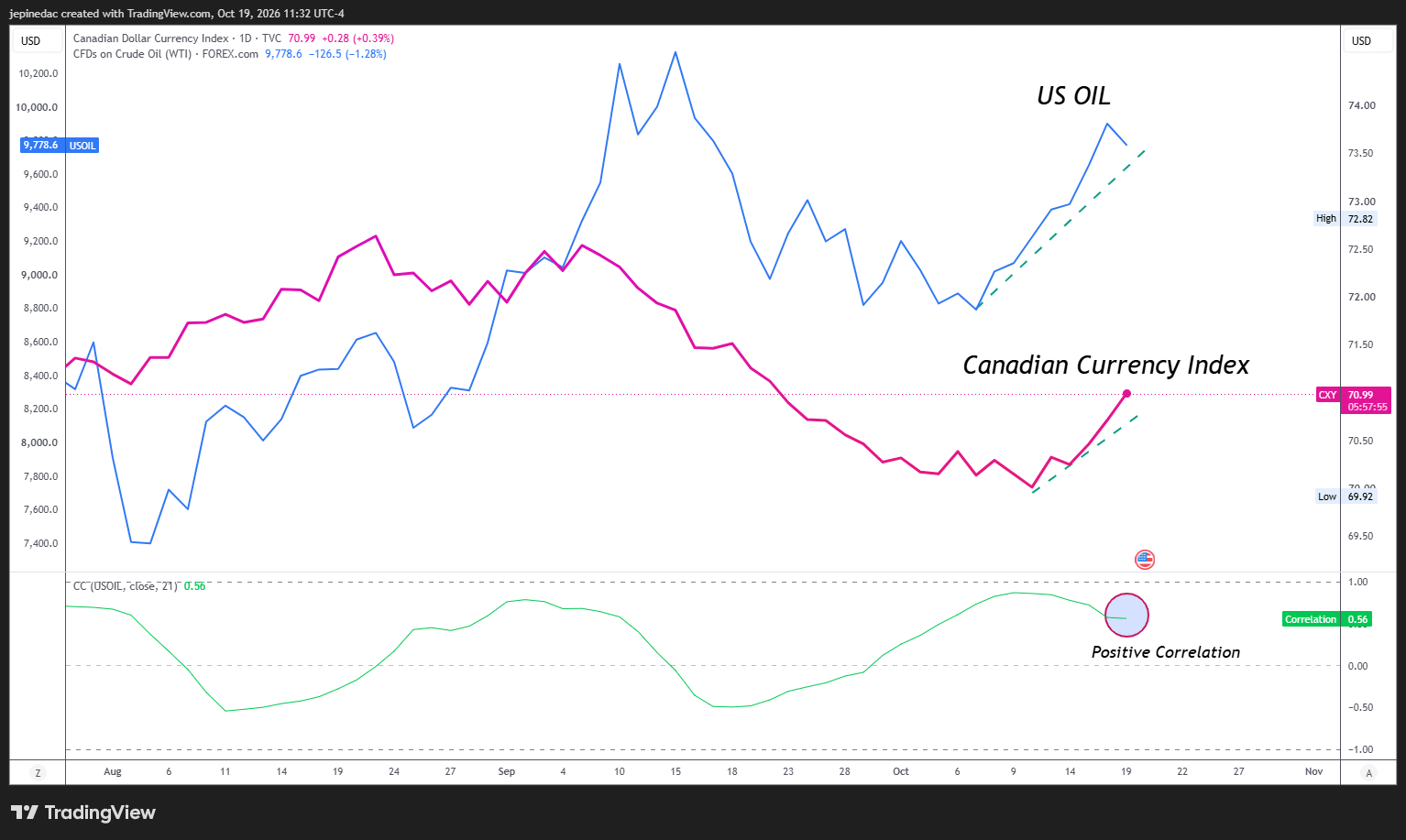
Source: TVC, StoneX, Tradingview
This relationship is particularly important because it had weakened during previous months. However, the recent strength in oil prices appears to be bringing it back into focus and may help explain part of the resilience currently being displayed by the Canadian dollar against the USD. As long as oil remains in an upward trend and the positive correlation persists, this factor could continue supporting downside pressure on USD/CAD in the coming sessions.
USD/CAD Technical Forecast
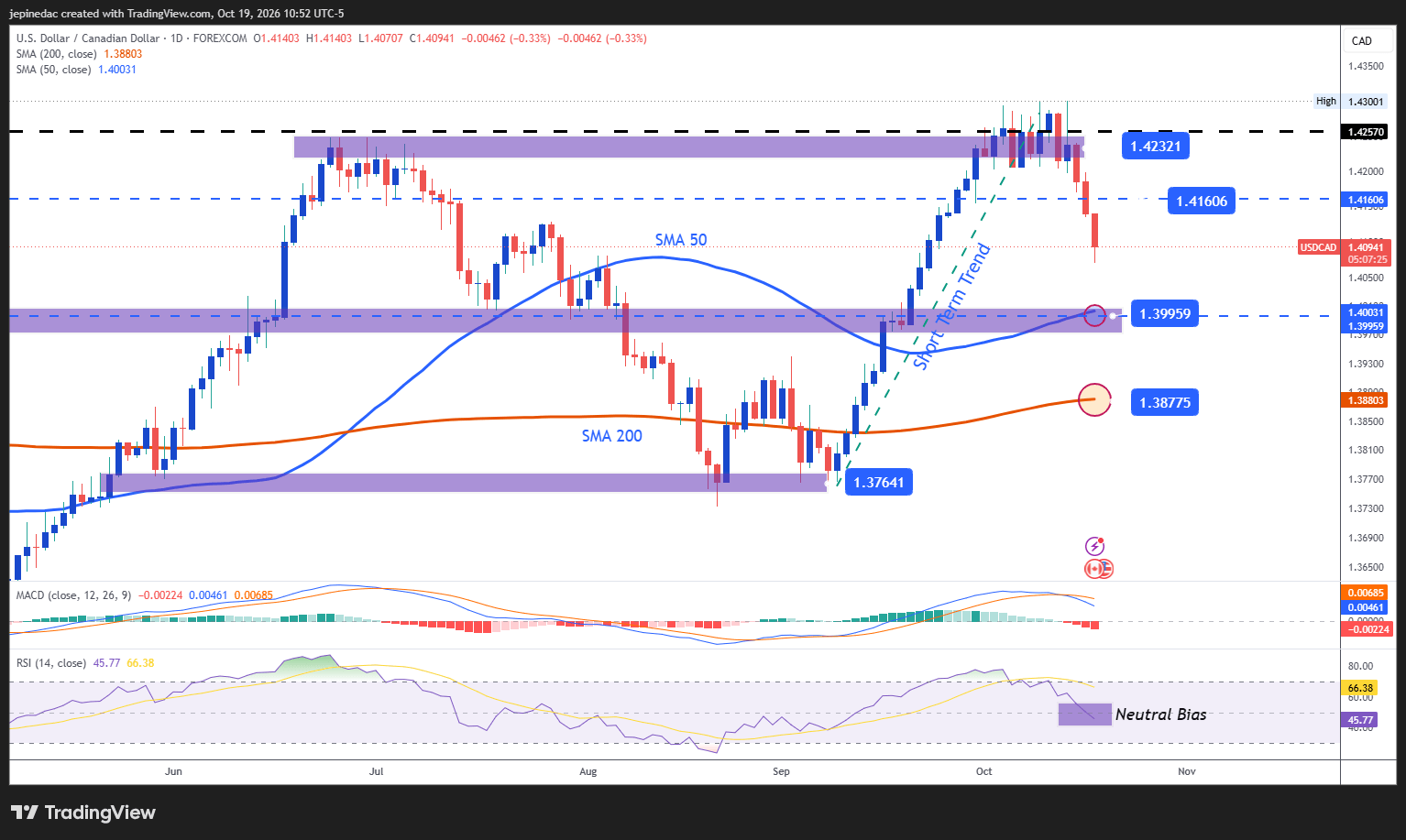
Source: StoneX, Tradingview
- The bearish bias is regaining relevance: Although USD/CAD attempted to develop a short-term bullish trendline in recent weeks, that structure gradually lost momentum as price approached highs not seen for several months. A renewed bearish bias is now beginning to emerge on the chart. However, it is important to remember that a lack of direction remains a key characteristic of the market and, unless important support levels are broken, a broader period of consolidation could still develop over the coming weeks.
- MACD: The MACD histogram continues to fluctuate very close to the 0 neutral line, reflecting a relatively balanced dynamic in short-term moving-average momentum. This reading continues to support the possibility that a phase of indecision remains relevant on the chart.
- RSI: A similar picture can be observed in the RSI, which continues to trade near the 50 neutral level. This behavior reflects a relatively balanced momentum environment and suggests that the recent lack of direction remains an important feature of price action.
Key Levels:
- 1.42321 – Key Resistance: A major high observed over recent months and the most important upside barrier on the chart. A move back toward this level could restore relevance to the bullish bias and support a more consistent bullish structure.
- 1.41606 – Near-Term Barrier: A level that aligns with significant retracement zones observed several weeks ago and could become the main area to monitor in the event of short-term bullish corrections.
- 1.39959 – Critical Support: The last major support barrier on the daily chart and a level that coincides with the 50-period simple moving average. Sustained moves below this area could reinforce the bearish bias and open the door to a more established downtrend in the weeks ahead.
Written by Julian Pineda, CFA, CMT – Market Analyst
Follow him on: @julianpineda25
Latest market news











Web Trader platform
Our sophisticated web-based platform is packed with features.
Open an account today
Experience award-winning platforms with fast and secure execution.
Economic calendar
Related articles

EUR/USD forecast: All eyes on Warsh at Jackson Hole - Forex Friday
For much of this week, the EUR/USD has been edging lower with the US dollar regaining some ground after last week’s sell-off that was triggered, in part, by the bond market worries. Investors have been unwilling to bet further against the US dollar so far this week ahead of Kevin Warsh’s keynote speech at the Jackson Hole summit, due later today.


DAX and EUR/USD forecast: Lower energy prices, yields offer support
But the question, of course, is how much further oil prices and bond yields can fall. For now, the combination is supportive of risk assets and is helping to sustain a relatively benign decline in the dollar. The focus today will be on US core PCE inflation, due for release shortly, while Nvidia’s second-quarter earnings will provide another test for risk appetite after the US markets close – not just for US indices but for global tech-heavy indices given the influence Nvidia has over the global tech and AI names.

AUD/USD Shorts Bear the Brunt of Hot CPI, Renewed RBA Hike Bets
Hot Australian CPI revives RBA hike bets, lifts bond yields and adds fresh pressure to crowded AUD/USD short positions.
