


Canadian Dollar Analysis: USD/CAD Returns to July Highs Ahead of NFP
The Canadian dollar continues to face one of its most challenging environments in recent months when it comes to maintaining strength against the U.S. dollar. The weakness of the Canadian currency is clearly reflected in USD/CAD, which has now recorded nine consecutive bullish sessions and gained more than 1.7% during that period.
Written by
Julian Pineda
Market Analyst
The Canadian dollar continues to face one of its most challenging environments in recent months when it comes to maintaining strength against the U.S. dollar. The weakness of the Canadian currency is clearly reflected in USD/CAD, which has now recorded nine consecutive bullish sessions and gained more than 1.7% during that period. This price action highlights that buying pressure remains firmly in control of the pair in the short term.
For now, the primary driver behind this move continues to be the strength of the U.S. bond market, which remains supportive of dollar demand. As long as this backdrop persists, and even if it proves resilient to tomorrow's U.S. employment data release, buying pressure around USD/CAD could remain an important feature of the market in the sessions ahead.
Can Anything Slow the Bond Market Rally?
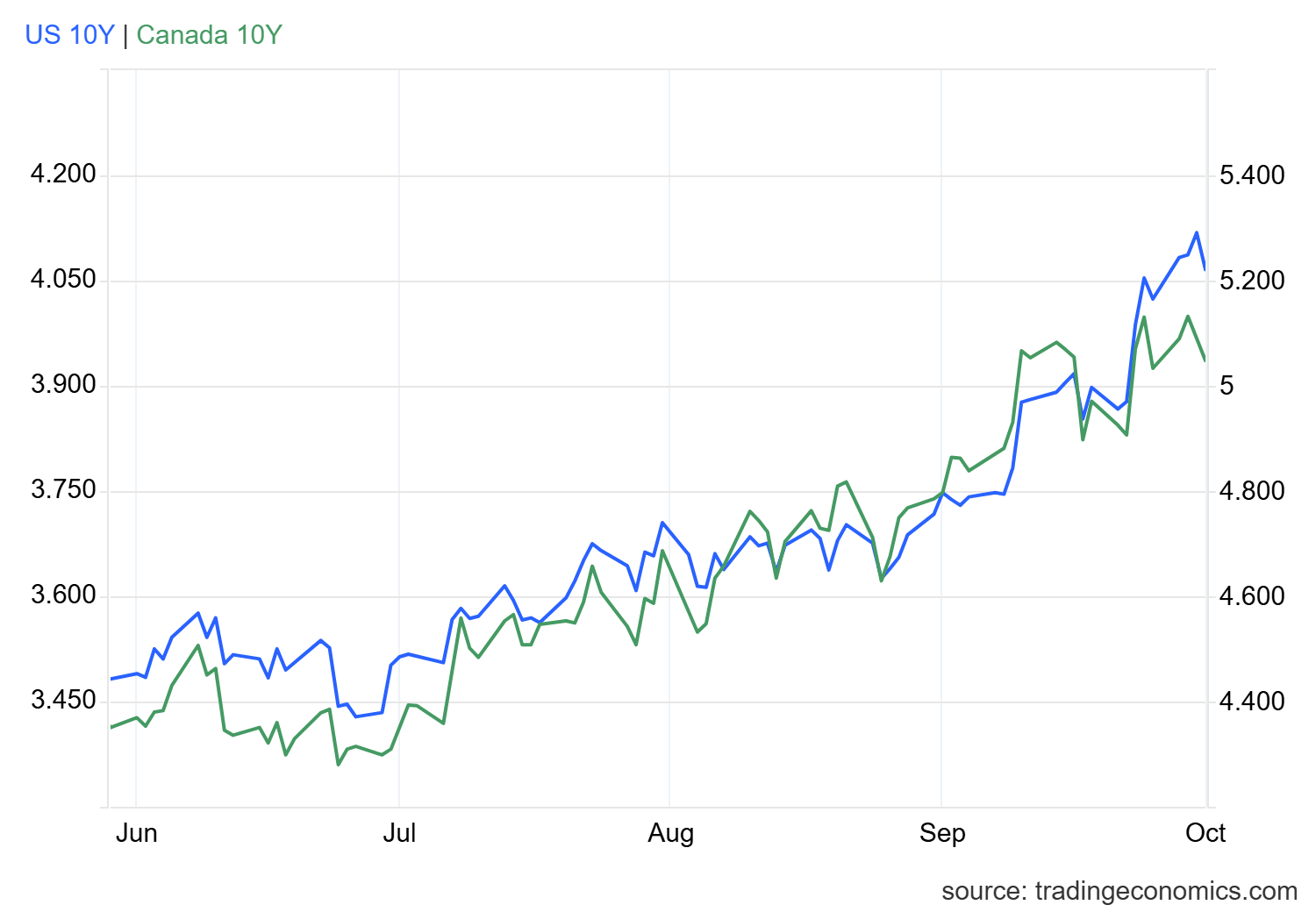
As trading continues, a similar trend remains visible across both Canadian and U.S. bond markets. Ten-year government bond yields in both countries have moved higher in recent weeks, although the gap between them remains substantial.
While U.S. 10-year Treasury yields continue to trade near 5.2%, Canadian government bond yields remain close to the 4.0% area. This spread continues to provide a meaningful advantage for U.S. assets, particularly given that Treasury bonds are perceived as lower-risk investments while also offering higher returns. As a result, U.S. dollar-denominated assets continue to enjoy a stronger relative appeal among international investors.
Source: TradingEconomics
This dynamic has been a consistent theme for several weeks and helps explain part of the weakness observed in the Canadian dollar. Even so, it is worth noting that this trend could begin to shift depending on expectations surrounding the Federal Reserve, which is precisely why tomorrow's NFP release has become such an important event.
The employment report will provide a clearer picture of labor market conditions during September and could directly influence expectations for future U.S. monetary policy. Markets currently expect approximately 90,000 jobs to have been added, compared with 162,000 in the previous report. This anticipated slowdown is important because it could begin to reduce the scope for a more aggressive Federal Reserve.
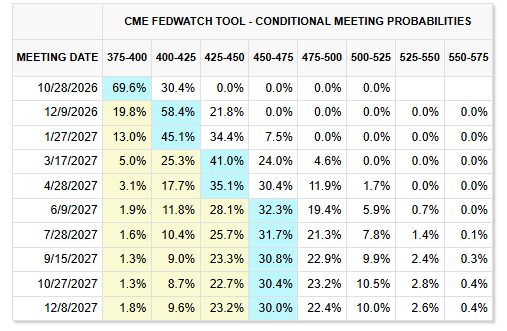
In fact, if payroll growth comes in below expectations, it could further reduce the likelihood of additional rate hikes over the coming months. This cautious outlook is already beginning to appear in market pricing, where current probabilities suggest nearly a 70% chance that interest rates will remain unchanged at the October meeting. Nevertheless, those expectations remain highly sensitive to tomorrow's employment data.
Source: CMEGROUP
With all of this in mind, the NFP release stands out as one of the most important short-term events for USD/CAD. If the report confirms a slowdown in labor market conditions and reinforces the idea of a more patient Federal Reserve, some of the recent strength in U.S. Treasury yields could begin to moderate, potentially limiting further gains in the U.S. dollar. Under that scenario, a more balanced environment could begin to develop around USD/CAD.
That said, the opposite outcome remains equally important. If employment data once again points to a resilient U.S. economy, it could continue to support expectations of restrictive monetary policy for longer. In that case, both Treasury yields and the U.S. dollar could maintain part of their current strength, allowing the buying pressure that has characterized USD/CAD in recent weeks to remain a relevant theme.
USD/CAD Technical Forecast
Source: StoneX, Tradingview
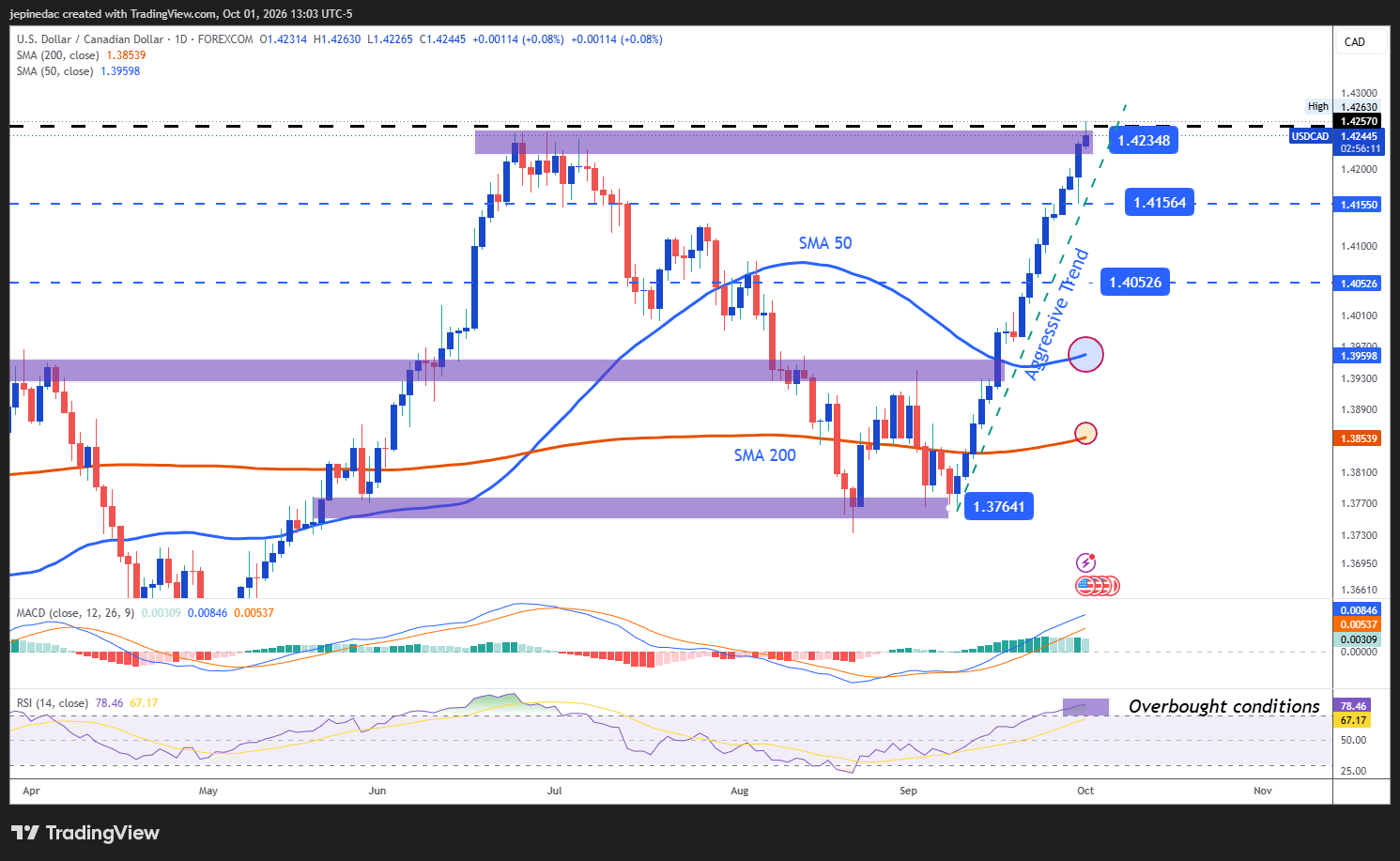
- The bullish trend remains dominant: USD/CAD price action continues to reflect a clearly dominant bullish bias. This dynamic has helped establish a short-term uptrend that continues to guide most of the pair's recent movements. However, it is also important to note that the market is approaching key resistance levels and that the recent advance has been relatively rapid, a situation that could begin to signal overstretched bullish momentum and leave room for temporary corrective pullbacks.
- MACD: The MACD histogram continues to trade above the 0 neutral line, reflecting that the average strength of short-term moving averages remains supportive of a bullish outlook. As long as this behavior persists, buying pressure may continue to dominate the chart.
- RSI: A similar picture can be observed in the RSI, which continues to develop above the 50 neutral level. However, the indicator has also moved beyond the 70 overbought threshold, a signal that is often associated with excessive recent buying momentum and could open the door to short-term corrective declines.
Key Levels:
- 1.42348 – Key Resistance: The last major barrier observed in recent months and a high not seen since July. A sustained move above this level would not only reinforce the dominance of the current bullish bias but could also confirm a more consistent higher-high structure on the daily chart. Such a scenario could pave the way for a broader and more meaningful uptrend in the weeks ahead.
- 1.41564 – Near-Term Barrier: A significant retracement level observed several weeks ago that now stands as the closest support reference to monitor. This area could become the primary level to watch in the event of short-term corrective pullbacks.
- 1.40526 – Critical Support: An important equilibrium zone observed during previous weeks that remains the most relevant downside barrier within the pair's recent price action. A move toward this level could begin to signal a loss of directional momentum, place the current uptrend under pressure, and open the door to a broader phase of indecision over the coming weeks.
Written by Julian Pineda, CFA, CMT – Market Analyst
Follow him on: @julianpineda25
Latest market news











Web Trader platform
Our sophisticated web-based platform is packed with features.
Open an account today
Experience award-winning platforms with fast and secure execution.
Economic calendar
Related articles

EUR/USD forecast: All eyes on Warsh at Jackson Hole - Forex Friday
For much of this week, the EUR/USD has been edging lower with the US dollar regaining some ground after last week’s sell-off that was triggered, in part, by the bond market worries. Investors have been unwilling to bet further against the US dollar so far this week ahead of Kevin Warsh’s keynote speech at the Jackson Hole summit, due later today.


DAX and EUR/USD forecast: Lower energy prices, yields offer support
But the question, of course, is how much further oil prices and bond yields can fall. For now, the combination is supportive of risk assets and is helping to sustain a relatively benign decline in the dollar. The focus today will be on US core PCE inflation, due for release shortly, while Nvidia’s second-quarter earnings will provide another test for risk appetite after the US markets close – not just for US indices but for global tech-heavy indices given the influence Nvidia has over the global tech and AI names.

AUD/USD Shorts Bear the Brunt of Hot CPI, Renewed RBA Hike Bets
Hot Australian CPI revives RBA hike bets, lifts bond yields and adds fresh pressure to crowded AUD/USD short positions.
