
Silver Update: XAG/USD Falls Below $40 as Selling Pressure Accelerates
Trading conditions continue to be particularly challenging for the silver market in the short term. This can be clearly seen in recent XAG/USD price action, with the metal losing more than 10% of its value over the last two trading sessions alone.
Written by
Julian Pineda
Market Analyst
Trading conditions continue to be particularly challenging for the silver market in the short term. This can be clearly seen in recent XAG/USD price action, with the metal losing more than 10% of its value over the last two trading sessions alone. The move continues to highlight a bearish bias that remains firmly in control and increasingly dominant within the market.
For now, selling pressure remains relevant as silver continues to show sensitivity to alternative markets such as the U.S. dollar. Added to this are growing concerns surrounding a potentially more aggressive Federal Reserve, even after the release of today's inflation data. Silver has struggled to consolidate a consistent role as an alternative safe-haven asset within the current environment, and these factors appear to have prevented confidence from recovering in a sustained way. As a result, the selling pressure observed in recent weeks could continue to remain an important feature of the market in the coming trading sessions.
Do Inflation Data Reinforce Silver's Weakness?
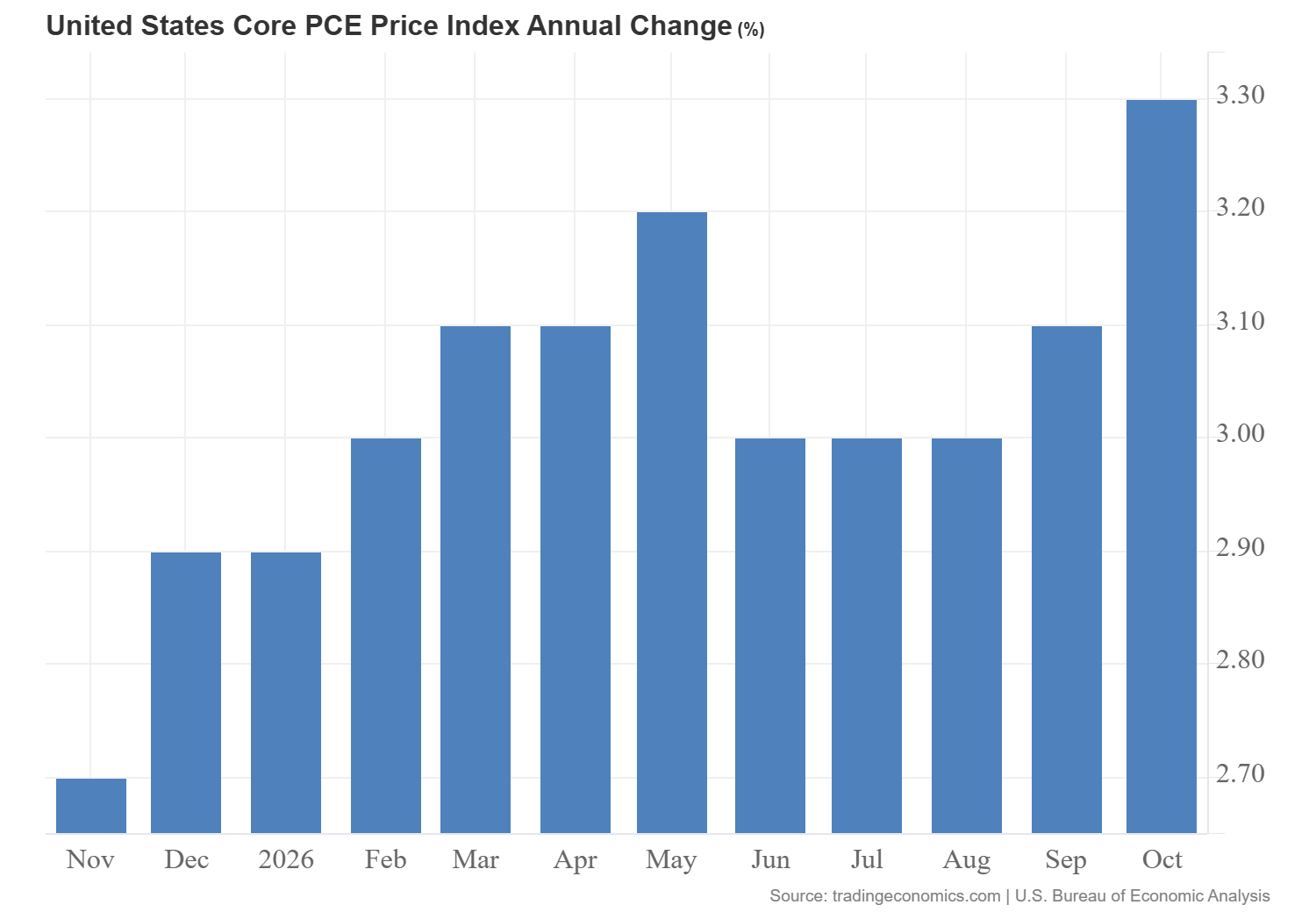
During today's session, the Core Personal Consumption Expenditures Price Index (YoY) was released in the United States. This indicator measures changes in the prices of goods and services consumed by U.S. households and serves as one of the key gauges of inflationary pressures within the economy.
Markets were expecting an annual reading of 3.2%, but the figure ultimately came in at 3.3%, above expectations and reinforcing that inflation continues to follow a relatively consistent upward trajectory. The indicator is also moving further away from the lows observed earlier this year around the 3.0% area, highlighting that inflationary pressures remain present within the U.S. economy.
Source: TradingEconomics
The importance of these figures lies in the fact that inflation continues to show difficulties slowing down and remains well above the Federal Reserve's 2.0% target. As a consequence, expectations for a more aggressive monetary policy stance into late 2026 and early 2027 could continue to gain traction.
This situation is particularly relevant for alternative safe-haven markets such as silver because persistent inflation may continue supporting a higher interest-rate environment. According to current CME Group probabilities, there is more than a 96% probability that the benchmark rate reaches the 4.25% area during December's policy decision. This dynamic remains potentially unfavorable for silver because a more aggressive Federal Reserve tends to support higher bond market yields and stronger demand for dollar-denominated assets. Both markets can function as relevant substitutes for silver within short-term capital allocation decisions.
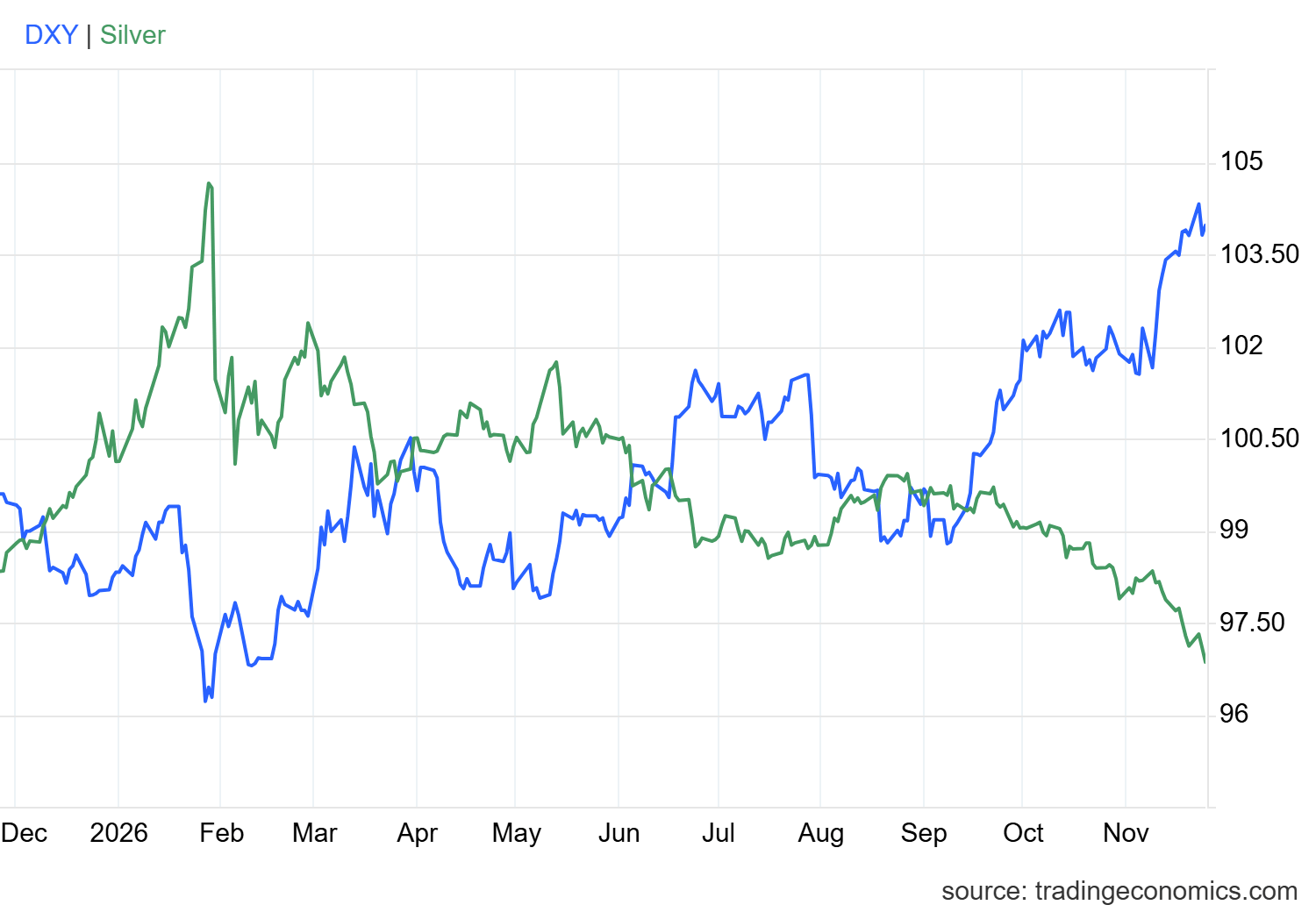
In fact, it is important to remember that over recent months silver has maintained a relatively consistent inverse relationship with the U.S. dollar. Even after today's inflation release, that dynamic remains evident. While the DXY Index, which measures dollar strength, continues to trade near yearly highs around the 104-point area, silver remains under pressure and is already trading below the important $40 per ounce reference level.
This situation reflects that, within the current search for defensive assets, markets continue to favor the dollar as the primary reserve currency and liquidity haven. As a result, silver demand appears to be losing relevance within an environment where expectations for a potentially more aggressive Federal Reserve remain firmly in place.
Source: TradingEconomics
With all of this in mind, expectations for a more aggressive Federal Reserve have begun to affect the opportunity cost of holding precious metals relative to assets that continue showing more stable strength, such as the U.S. dollar. This dynamic has become particularly evident following the inflation release and could continue limiting silver's ability to recover in the short term. As long as the dollar, and even the bond market, continue benefiting from the outlook of higher interest rates, the selling pressure around XAG/USD could remain relevant.
Gold/Silver Ratio
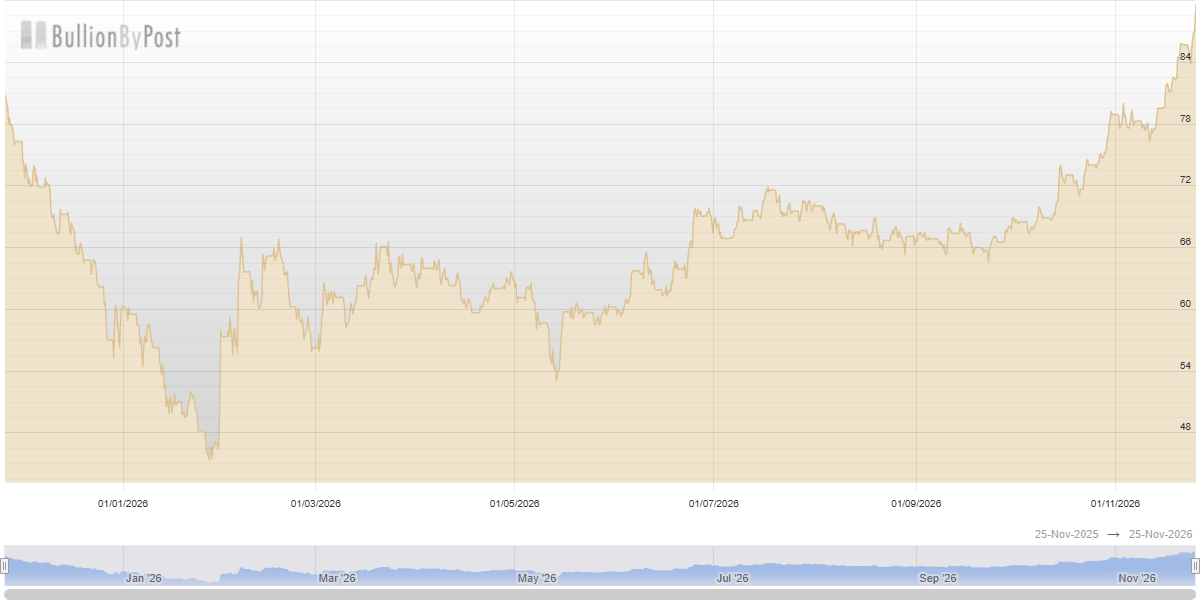
Another important factor within the metals market is the behavior of the gold-to-silver ratio, which measures how many ounces of silver are required to purchase one ounce of gold. The ratio has now advanced toward the 90 area, reaching its highest levels of 2026.
This move means that increasingly more ounces of silver are required to buy one ounce of gold and reflects silver's weaker relative performance compared to the yellow metal in recent weeks.
Source: Bullionbypost
The sustained rise in the ratio suggests that markets continue favoring gold over silver within the precious metals segment. The reaction to recent macroeconomic events also highlights that silver remains more sensitive to monetary policy expectations and broader financial market developments.
Even silver's industrial demand component has not been enough to stabilize demand in recent sessions. Instead, markets appear to be giving greater relevance to gold as the primary safe-haven asset within the sector. This reflects that silver is not only losing attractiveness relative to alternative markets such as the dollar or bonds, but also relative to a closely related asset such as gold.
As long as the ratio continues moving higher and silver's relative weakness versus gold remains evident, this situation could continue reflecting a lack of consistent confidence around the metal. As a result, the selling pressure observed in XAG/USD may remain an important factor during the coming trading sessions.
Silver Technical Forecast
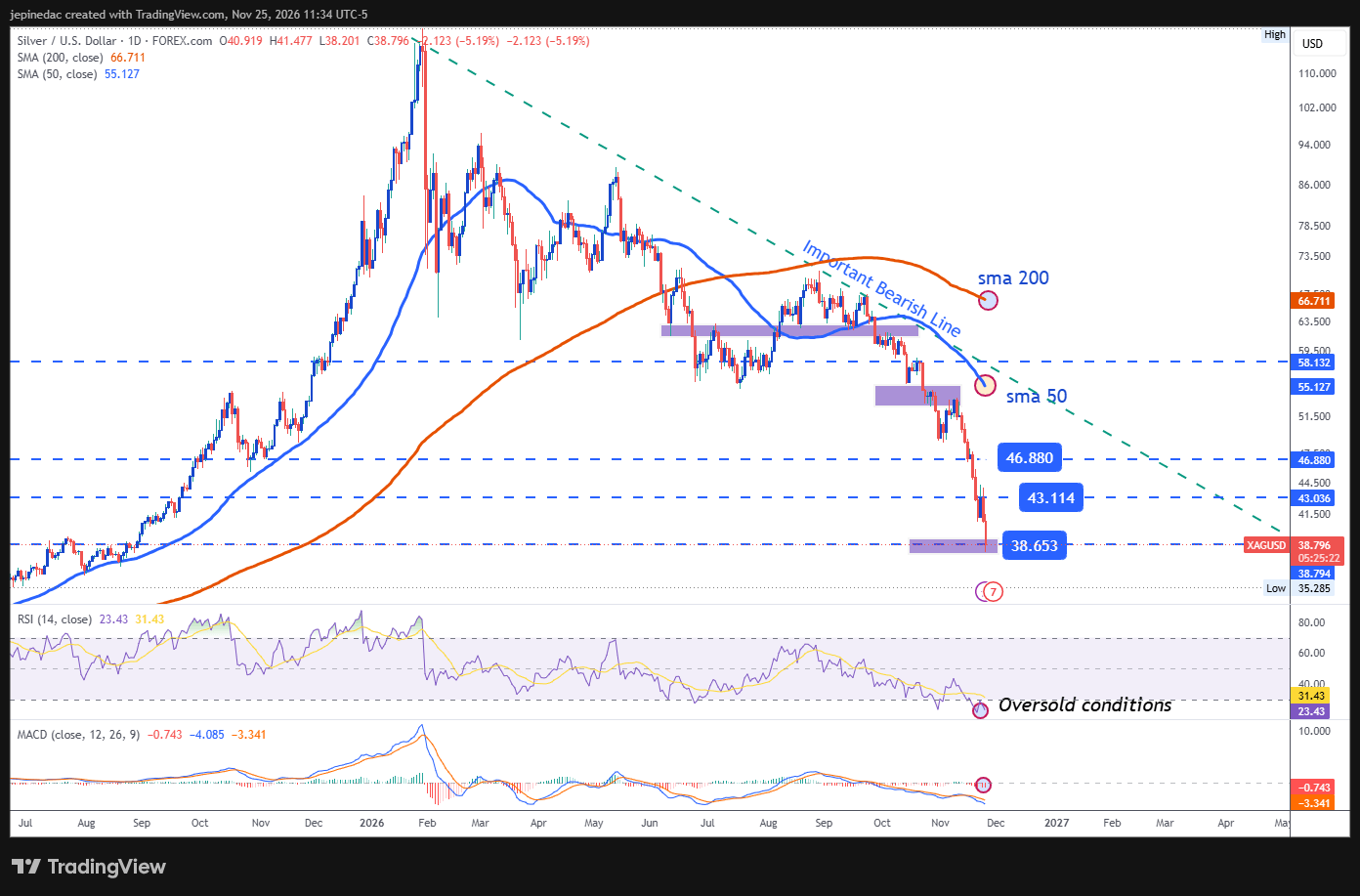
Source: StoneX, Tradingview
- Long-term bearish trendline remains dominant: Since the first months of 2026, silver has been developing a weak market structure that has allowed an important long-term bearish trendline to become established. The recent acceleration in selling pressure has once again increased the relevance of this structure and, as long as meaningful bullish corrections fail to develop, it could remain the most important technical reference during the weeks ahead. Furthermore, if silver continues breaking through relevant support levels, a more accelerated bearish trend could start gaining importance into the final part of 2026.
- MACD: The MACD histogram continues to develop below the neutral 0 line, reflecting that the average behavior of short-term moving averages continues to favor a relevant bearish bias. As long as this reading remains intact, downside pressure could continue dominating market behavior.
- RSI: The RSI displays a similar dynamic as it continues trading below the neutral 50 level. However, the indicator is also showing increasingly consistent readings near the 30 oversold area, a situation that could signal excessive recent selling pressure and eventually open room for short-term bullish corrections.
Key Levels to Watch:
- $46 - Critical Resistance: This level aligns with important retracement zones observed several months ago and currently represents the most important upside barrier on the chart. Price action returning to this area could reduce the significance of the recent decline and potentially open the door to a broader phase of indecision and lack of direction in the weeks ahead.
- $43 - Near-Term Barrier: A relevant retracement area observed over recent weeks that could become the main reference point to monitor in the event short-term bullish corrections begin to emerge.
- $38 - Critical Support: This level corresponds to a price zone not seen since August 2025 and currently represents the most important downside barrier on the chart. Although it could act as an area capable of generating short-term bullish corrections, price action that becomes established below this level would continue reinforcing the dominant bearish bias and could favor an additional extension of the broader downtrend during the coming weeks.
Written by Julian Pineda, CFA, CMT – Market Analyst
Follow him on: @julianpineda25
Latest market news









Web Trader platform
Our sophisticated web-based platform is packed with features.
Open an account today
Experience award-winning platforms with fast and secure execution.
Economic calendar
Related articles

Gold and S&P 500 analysis: What now after Warsh’s hawkish speech?
The dollar surged across the board after the Fed Chair Kevin Warsh surprised with a hawkish-leaning speech at the Jackson Hole summit. All the bearish dollar bets that had been accumulated since last Friday on the back of data weakness and bond market troubles had to be squared and that triggered a short squeeze rally for the dollar. Gold and silver dropped, as a result, as too did bitcoin, while US indices were giving back earlier gains.


Gold Falters at Resistance, Grappling With PCE, Month-End Flows and Jackson Hole
Gold has pulled back from resistance after sticky PCE data, with month-end flows and Jackson Hole now shaping the near-term outlook.


Gold forecast: XAU/USD retreats along with dollar debasement trade
Gold was down nearly 1.5% on the session, with US indices and Bitcoin also struggling. Is this a mere pause before more gains are seen, or have we already seen the end of the recent bullish advance?