


USD/MXN Analysis: Is Super Peso Starting to Fade?
Over recent trading sessions, the Mexican peso has continued to show signs of weakness against the U.S. dollar. This can already be seen in USD/MXN, which has gained more than 1.7% over the last three sessions, highlighting sustained buying pressure in favor of the dollar in the short term.
Written by
Julian Pineda
Market Analyst
Over recent trading sessions, the Mexican peso has continued to show signs of weakness against the U.S. dollar. This can already be seen in USD/MXN, which has gained more than 1.7% over the last three sessions, highlighting sustained buying pressure in favor of the dollar in the short term.
This trend has developed as markets increasingly price in a Banco de México that appears more comfortable maintaining a stable policy stance, while investors continue evaluating the future path of the Federal Reserve. As a result, the divergence in expectations between the two central banks has started to favor a stronger dollar, while the peso continues to struggle to attract meaningful demand. If this backdrop remains in place, buying pressure around USD/MXN could continue to be a relevant market theme in the coming sessions.
Is the Interest Rate Differential at Risk?
One of the most important factors supporting the Mexican peso for much of the year was the wide interest rate differential between Mexico and economies such as the United States. For months, Mexico maintained a significant advantage thanks to a much more restrictive monetary policy, but that dynamic has begun to change gradually in recent weeks.
Although Mexico still maintains an interest rate of 6.5%, well above the current 4.00% rate in the United States, the key factor is how that differential has evolved over time. Back in 2024, the gap between both benchmark rates stood near 5.75 percentage points, while today it has narrowed to approximately 2.5 percentage points following recent Federal Reserve decisions.
This reduction is becoming increasingly important because it not only reflects the loss of an advantage that supported the peso for years, but also opens the door for the differential to shrink further if current central bank dynamics remain unchanged.
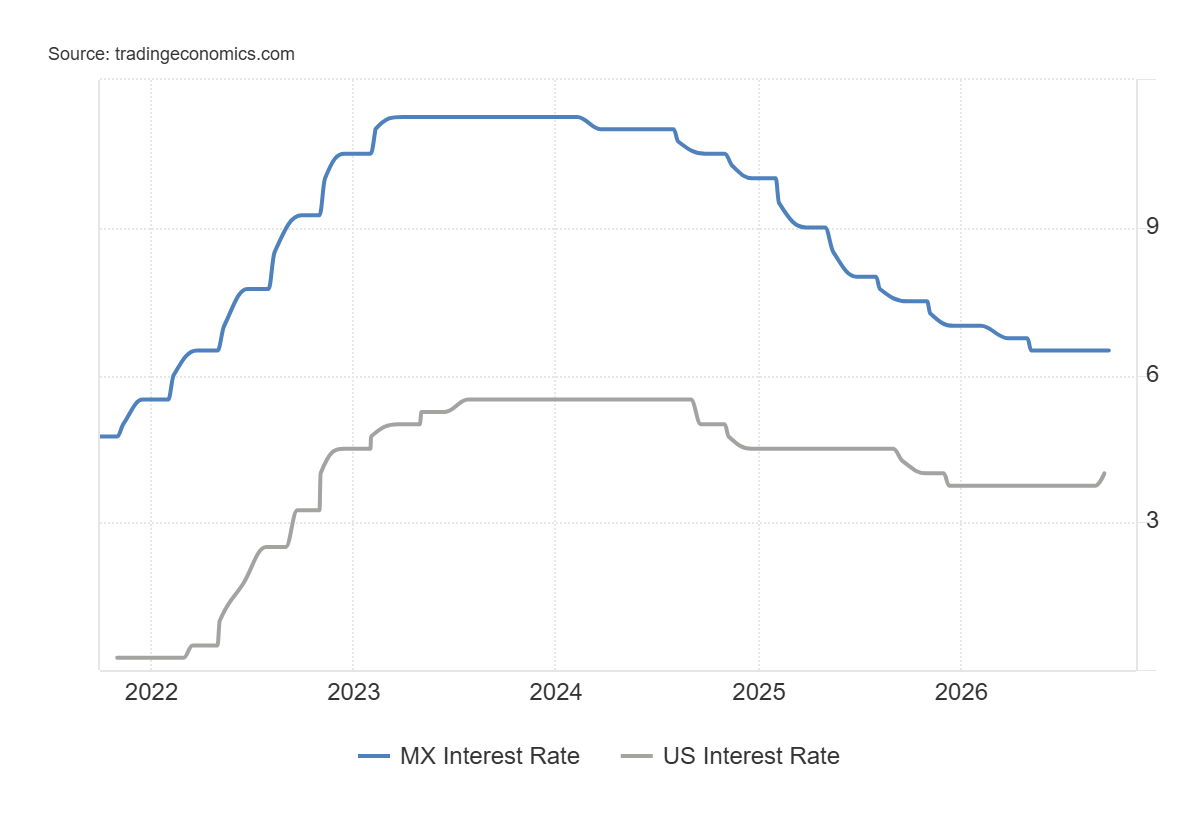
Source: TradingEconomics
On one side, the current backdrop continues to point toward a relatively stable Banco de México. The moderation in inflation has allowed policymakers to adopt a more neutral stance, and comments from Banxico Governor released on September 28 suggested that inflationary pressures are not showing signs of renewed acceleration. In addition, despite the recent depreciation of the peso, officials do not view the currency as being at concerning levels compared with the start of the year. This indicates that, for now, the institution is maintaining a relatively neutral approach for the months ahead.
The situation in the United States looks somewhat different. Although current probabilities show more than a 70% chance that the Federal Reserve will leave rates unchanged at the October meeting, expectations become more hawkish when looking further ahead. By December, markets increasingly favor a policy rate closer to 4.25%, while January 2027 scenarios are beginning to include possibilities of rates approaching 4.50%.
This suggests that even if the next Fed meeting passes without changes, markets still see room for higher rates in the United States over the coming months. With Banco de México appearing less inclined to alter its policy stance, this could continue to reduce the interest rate differential and limit part of the relative attractiveness of peso-denominated investments, a dynamic that helps explain the recent loss of momentum in the Mexican currency.
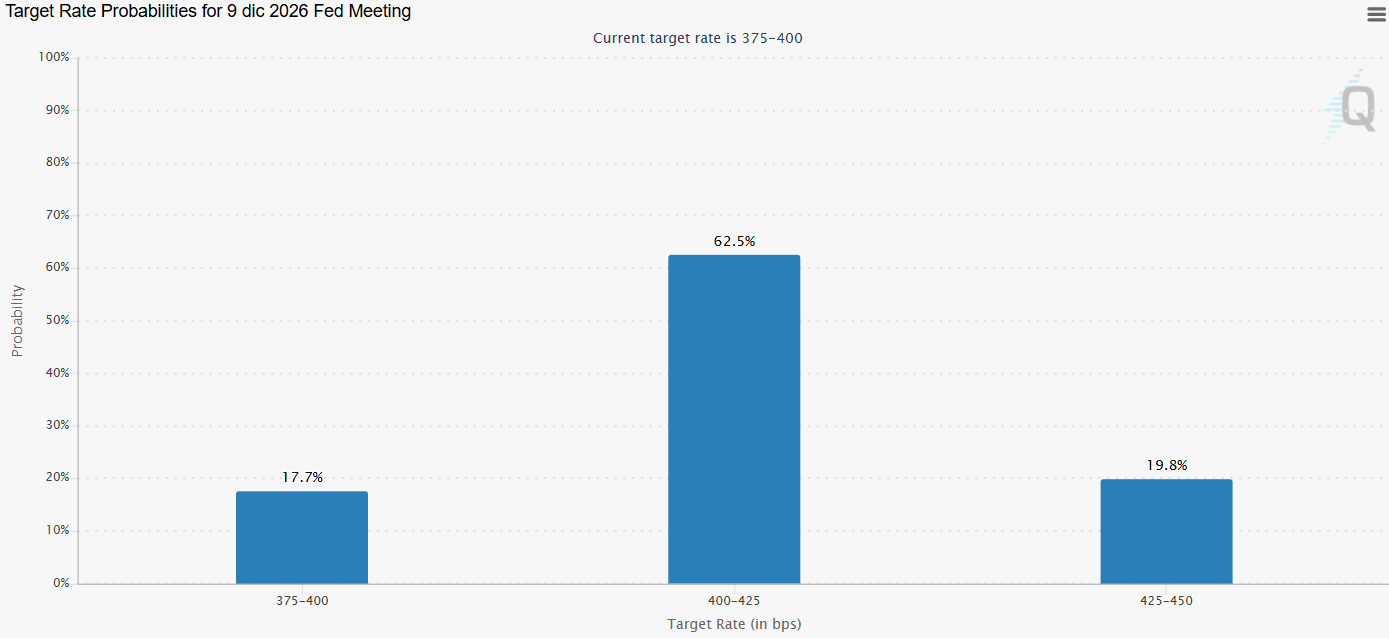
Source: CMEGROUP
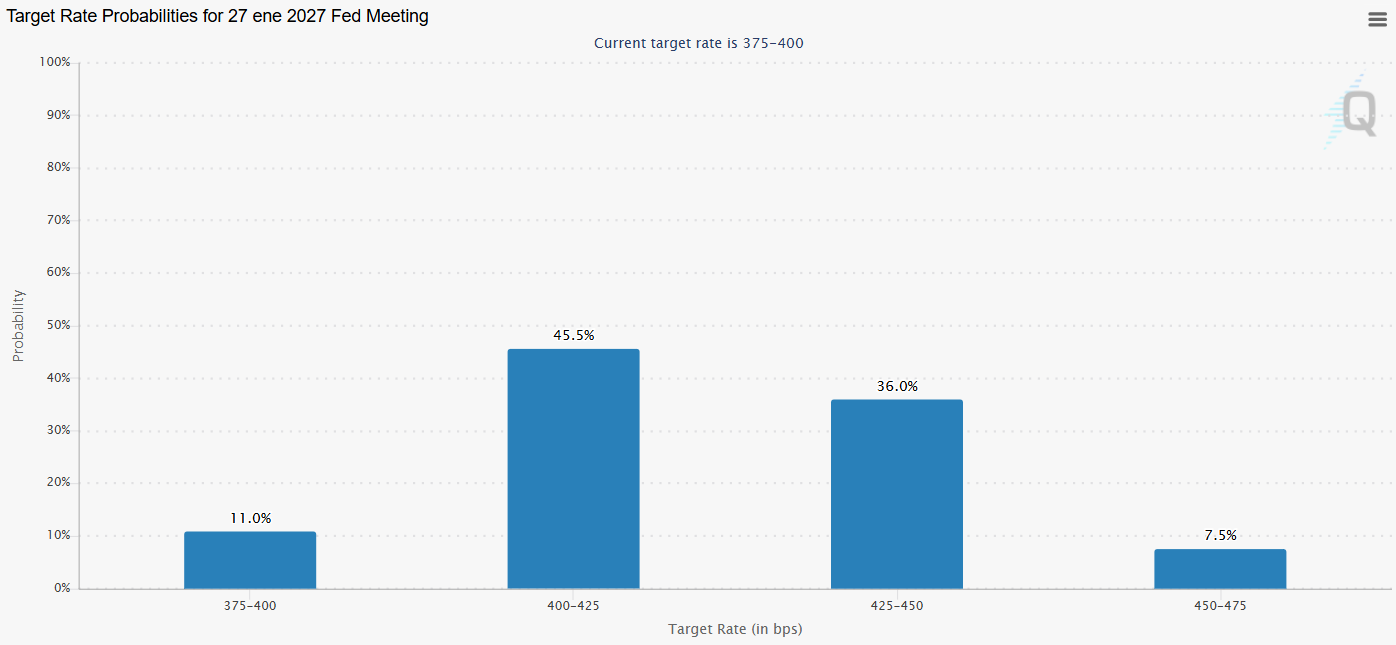
Source: CMEGROUP
With all of this in mind, the gradual reduction in the relative attractiveness of peso-denominated assets could remain a key theme over the coming months. If economic data and Federal Reserve commentary continue pointing toward relatively high U.S. interest rates, the buying pressure seen around USD/MXN could remain in place.
That said, tomorrow's NFP report also deserves attention. The employment release could directly influence expectations for the Federal Reserve's policy outlook. If labor market conditions begin to show a more pronounced slowdown, the room for future rate hikes could diminish. Under that scenario, some of the pressure currently affecting the peso could begin to ease, potentially leading to a more balanced and indecisive environment around USD/MXN.
USD/MXN Technical Forecast
Source: StoneX, Tradingview
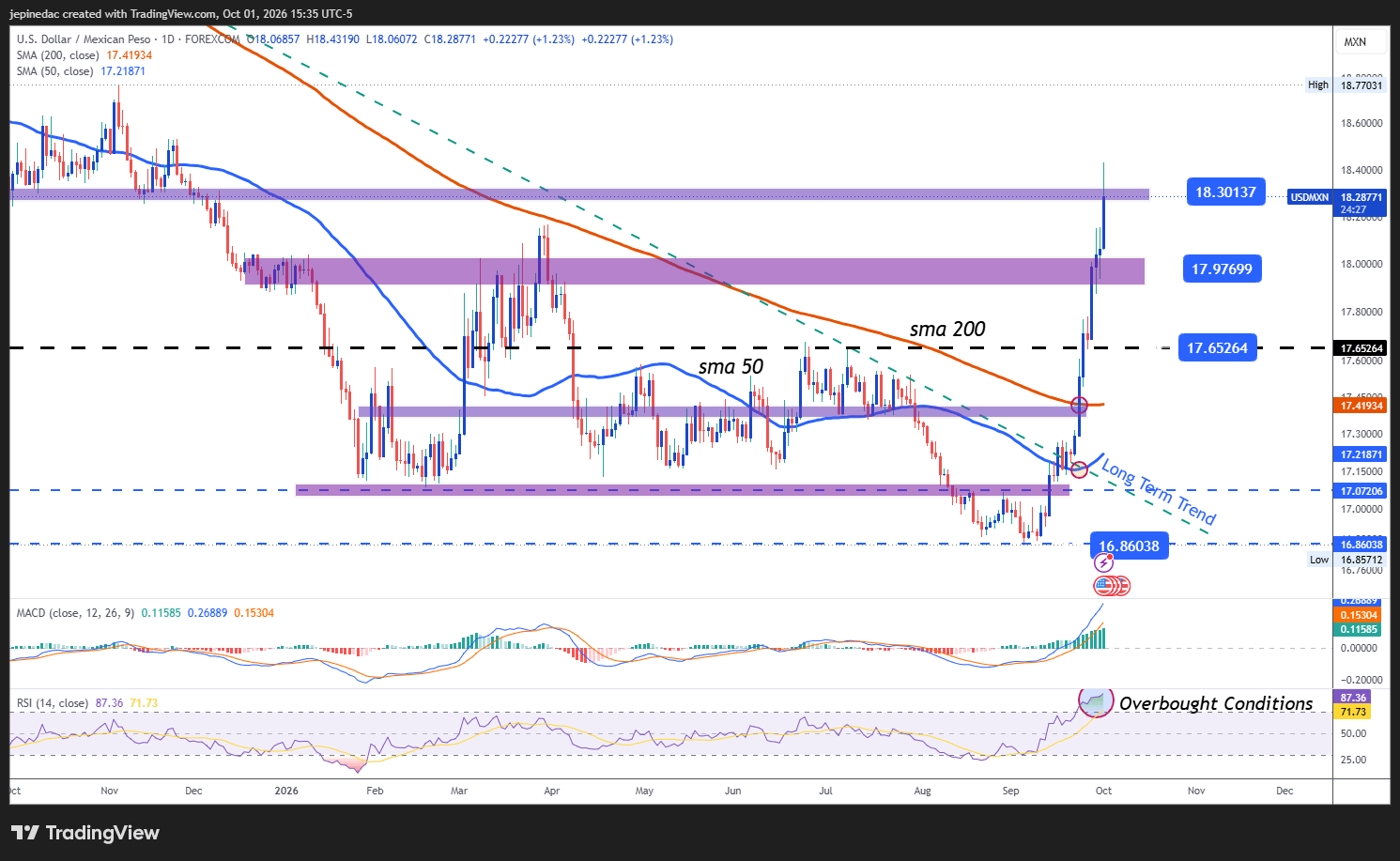
- The bullish move continues to dominate the market: Price action in USD/MXN has maintained a clearly dominant bullish bias over recent weeks. The advance has been strong enough to break above key moving averages and a long-standing bearish trendline that had dominated the market for months. However, despite the strength of the move, a more structured uptrend has yet to fully develop. The speed of the recent rally may also reflect an overextension in buying momentum, potentially leaving room for temporary bearish corrections in the sessions ahead.
- MACD: The MACD histogram remains above the 0 neutral line, reflecting that short-term moving-average momentum continues to favor a bullish bias. As long as this behavior persists, buying pressure is likely to remain an important feature of the chart.
- RSI: A similar picture can be observed in the RSI, which continues to trade above the 50 neutral level. However, the indicator has also moved beyond the 70 overbought threshold, a condition that is typically associated with excessive recent buying momentum and could begin opening the door to short-term corrective pullbacks.
Key Levels:
- 18.30 – Major Resistance: An important price zone not seen since December 2025 that currently represents the most significant upside barrier on the chart. Price action approaching this level could begin to face greater difficulty sustaining further gains and may create room for short-term corrective declines.
- 17.97 – Current Barrier: A previous retracement and equilibrium zone observed over recent months that now stands as the nearest technical reference to monitor. A move back toward this area could signal a pause in the recent bullish move and encourage a broader phase of indecision.
- 17.65 – Key Support: An important retracement area established during previous weeks that remains the most relevant downside barrier within the current structure. Sustained moves back toward this level could call into question the recent recovery in USD/MXN and potentially open the door to a more meaningful bearish bias in the weeks ahead.
Written by Julian Pineda, CFA, CMT – Market Analyst
Follow him on: @julianpineda25
Latest market news











Web Trader platform
Our sophisticated web-based platform is packed with features.
Open an account today
Experience award-winning platforms with fast and secure execution.
Economic calendar
Related articles

Nasdaq 100 Forecast: NDX slips ahead of Fed Chair Warsh’s speech
U.S. stocks are edging lower on Friday, giving back some of yesterday's gains after Nvidia's strong outlook revived the tech trade. The focus has now shifted firmly to Fed Chair Kevin Warsh's Jackson Hole speech, with investors looking for more clarity on the outlook for interest rates.


EUR/USD forecast: All eyes on Warsh at Jackson Hole - Forex Friday
For much of this week, the EUR/USD has been edging lower with the US dollar regaining some ground after last week’s sell-off that was triggered, in part, by the bond market worries. Investors have been unwilling to bet further against the US dollar so far this week ahead of Kevin Warsh’s keynote speech at the Jackson Hole summit, due later today.


S&P 500 Forecast: SPX after Nvidia revives confidence in the AI trade
U.S. stocks are heading higher on Thursday, with technology leading the move after Nvidia's stronger-than-expected outlook revived confidence in the AI trade.