

FX Futures Positioning: USD Longs Stay Stretched, Yen Bears Retreat | COT Report
USD longs remain stretched while yen bears retreat for a second week following joint intervention, according to the latest COT report.
Written by
Matt Simpson
Market Analyst
Only minor adjustments were made to FX futures exposure across the majors last week, outside of the yen. US dollar positioning remained heavily net-long, while yen bears continued to retreat for a second week following joint intervention. Elsewhere, positioning changes were relatively modest across the euro, British pound, Australian dollar, Canadian dollar and Swiss franc.
View related analysis:
USD Longs Stay Stretched as Yen Bears Continue to Retreat
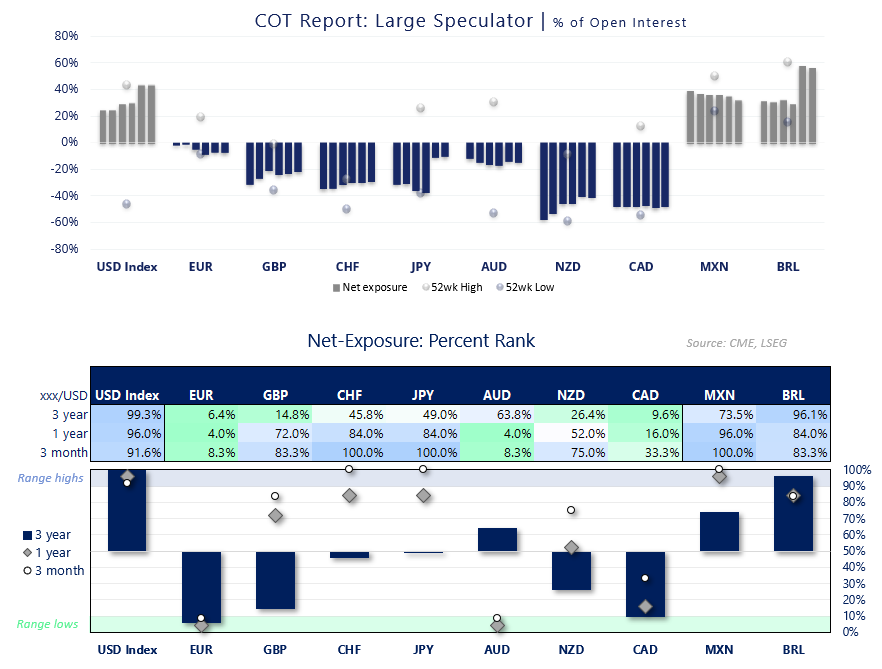
Large Speculator Positioning from the COT report
Source: CFTC (COT), LSEG
- US Dollar: Futures traders remained heavily net-long USD by $35.5 billion, trimming just $0.4 billion from the prior week.
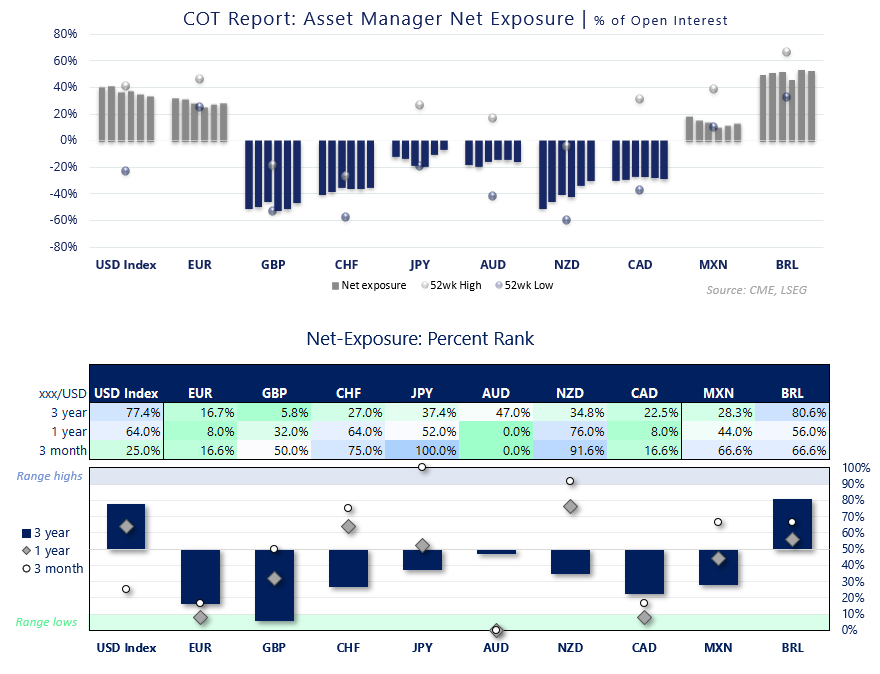
- EUR/USD: Net-long exposure rose by 6k contracts among asset managers, though large specs increased their net shorts by 2k.
- GBP/USD: Net-short exposure was reduced by a combined 8k contracts across large specs and asset managers.
- USD/JPY: Net-short exposure was trimmed by a combined 32k contracts across large specs and asset managers.
- USD/CHF: Traders remained net-short the Swiss franc by a combined 32k contracts.
- USD/CAD: Asset managers reduced their net-short exposure by 5.7k contracts.
- AUD/USD: Traders remained net-short the Australian dollar, with only minor adjustments to positioning across large specs and asset managers.
Asset Manager Positioning | COT Report
Source: CFTC (COT), LSEG
For traders wanting a deeper understanding of futures positioning, I’ve also published a guide on how to read and interpret weekly COT data in forex markets.
This content was created by an affiliate of FOREX.com and represents the views and opinions of the author/speakers, not the views and opinions of FOREX.com, StoneX Group Inc., or its subsidiaries. The content has not been independently reviewed by FOREX.com.
FX Futures Positioning | COT Report (IMM Data)
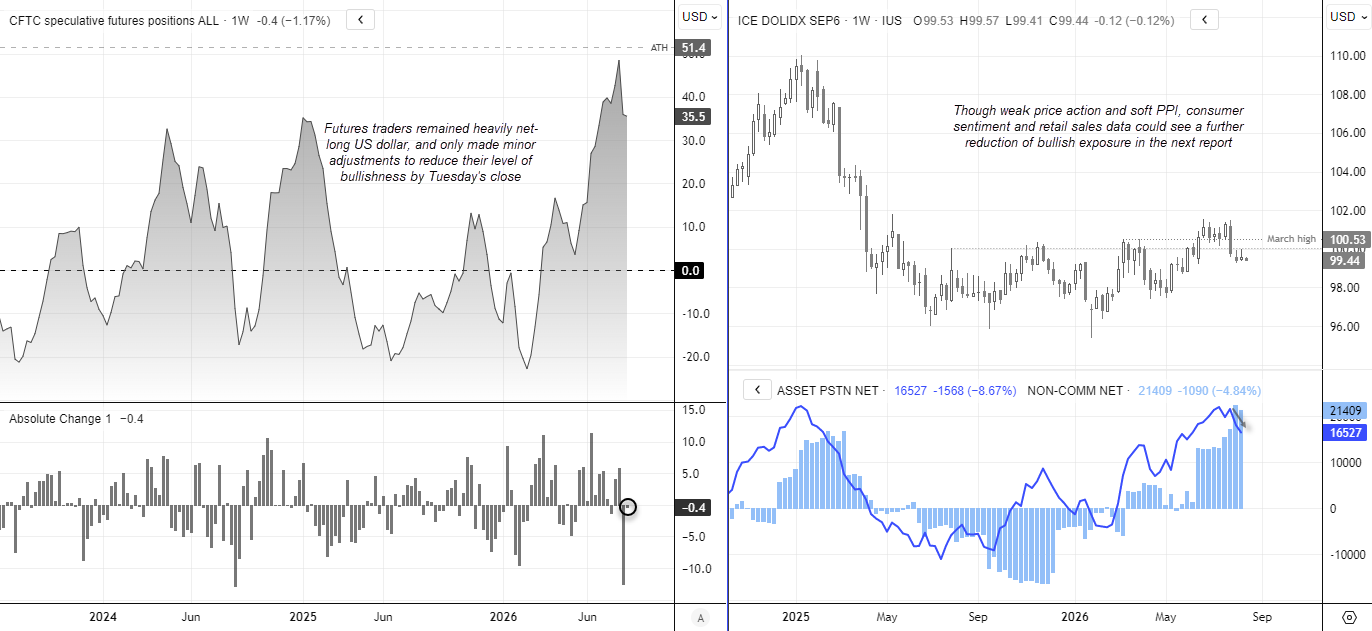
US Dollar Index (DXY) Futures Positioning | COT Report
Net-long exposure to the US dollar remains arguably stretched among large speculators, with its three-year, one-year and three-month percentile ranks all remaining above 90. That said, their net-long exposure fell by 1k contracts on the week to 21.4k, from its four-year high.
Asset managers trimmed their net-long exposure for a second week to 16.5k contracts, though it remains arguably high considering recent price action. But with US data slowly deteriorating and the US dollar index down 2.3% from its 17-month high, I suspect the upcoming COT report will reveal a less bullish picture among futures traders.
Source: CFTC (COT), ICE, LSEG
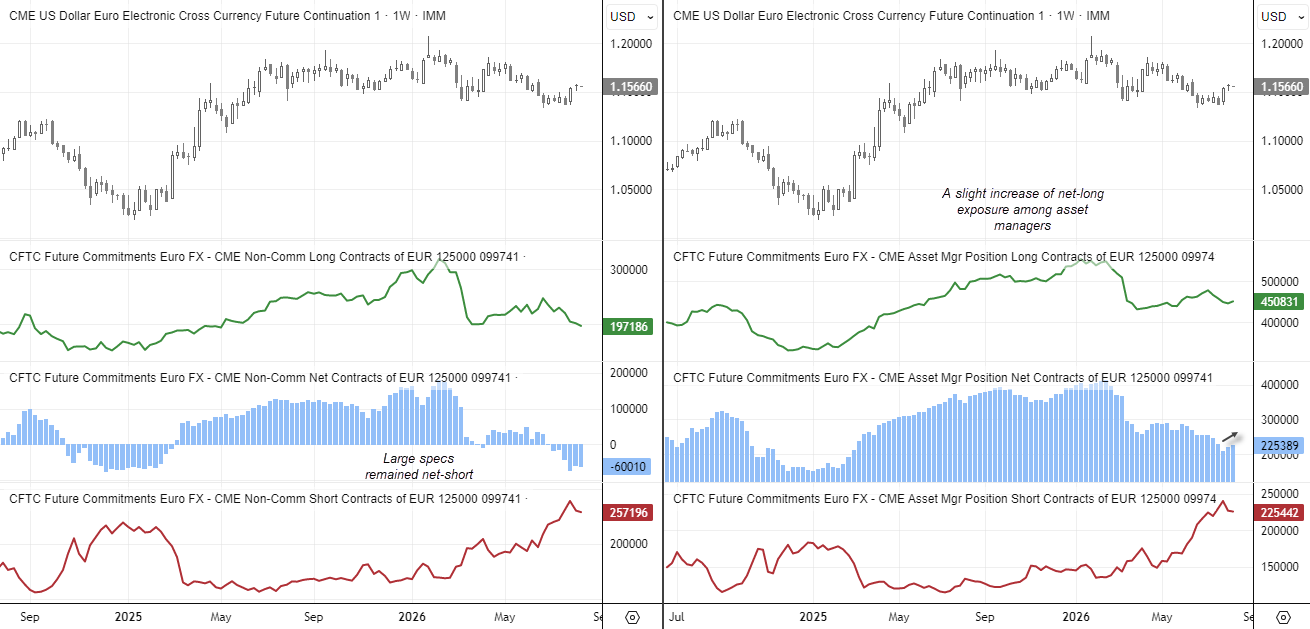
EUR/USD Futures Positioning | COT Report
While large speculators technically increased their net-short exposure to the euro by 1.9k contracts to 60k, they are still less bearish than they were two weeks ago at their 20-month peak. Asset managers also increased their net-long exposure by 6.1k contracts, meaning bullish exposure between the two sets of traders increased by 4k contracts.
Still, it is that time of year and volatility remains low, which is being reflected in the lack of any real change to FX exposure.
Ultimately, I continue to suspect we saw a decent swing low on the euro back in June and that traders may be approaching EUR/USD with a ‘dip’ mentality.
Source: CFTC (COT), CME, LSEG
USD/JPY Futures Positioning | COT Report
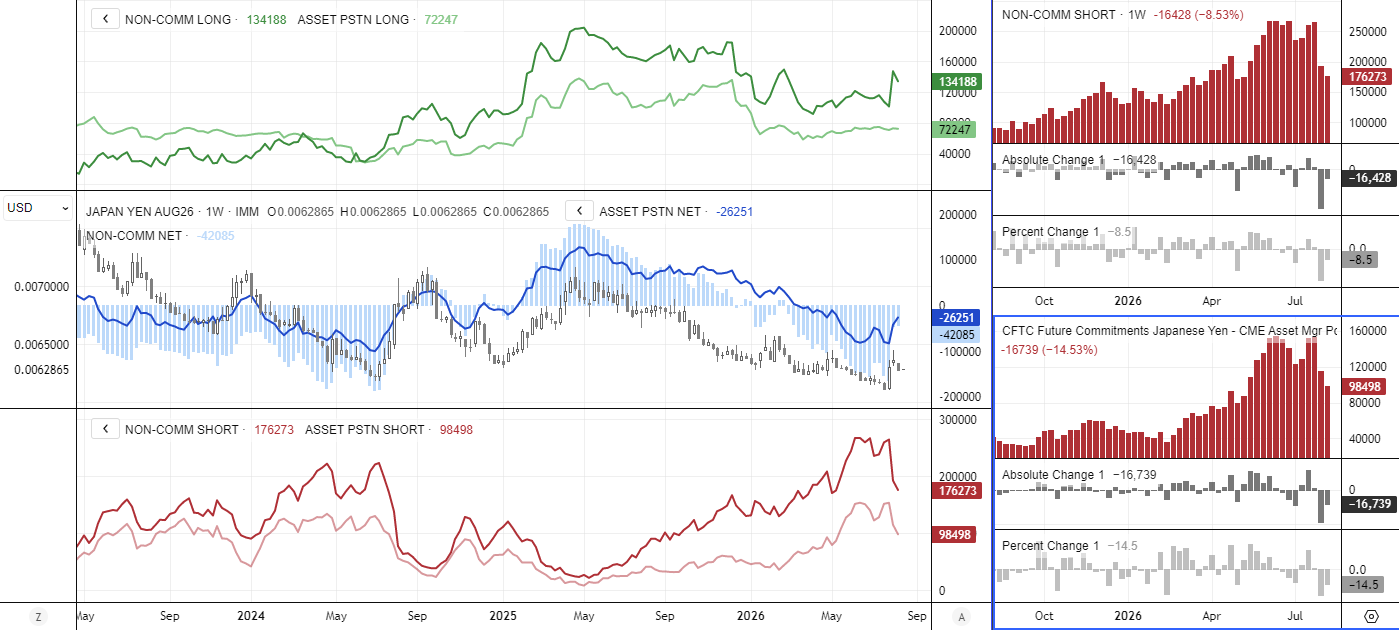
The closure of yen shorts continued for a second consecutive week following the joint intervention in the currency. While the pace of short covering has slowed, it remains pretty decent. Asset managers reduced their gross shorts by 16.8k contracts (-14.5%), while large speculators reduced theirs by 16.4k contracts (-8.5%), for a combined 32k contracts of short covering.
Despite this, yen futures were lower last week. But with a clear bullish range-expansion candle at multi-decade lows, alongside stretched market positioning ahead of the bullish reversal, I suspect the yen may have troughed for the year. And that translates to USD/JPY having potentially topped.
Source: CFTC (COT), CME, LSEG
AUD/USD Futures Positioning | COT Report
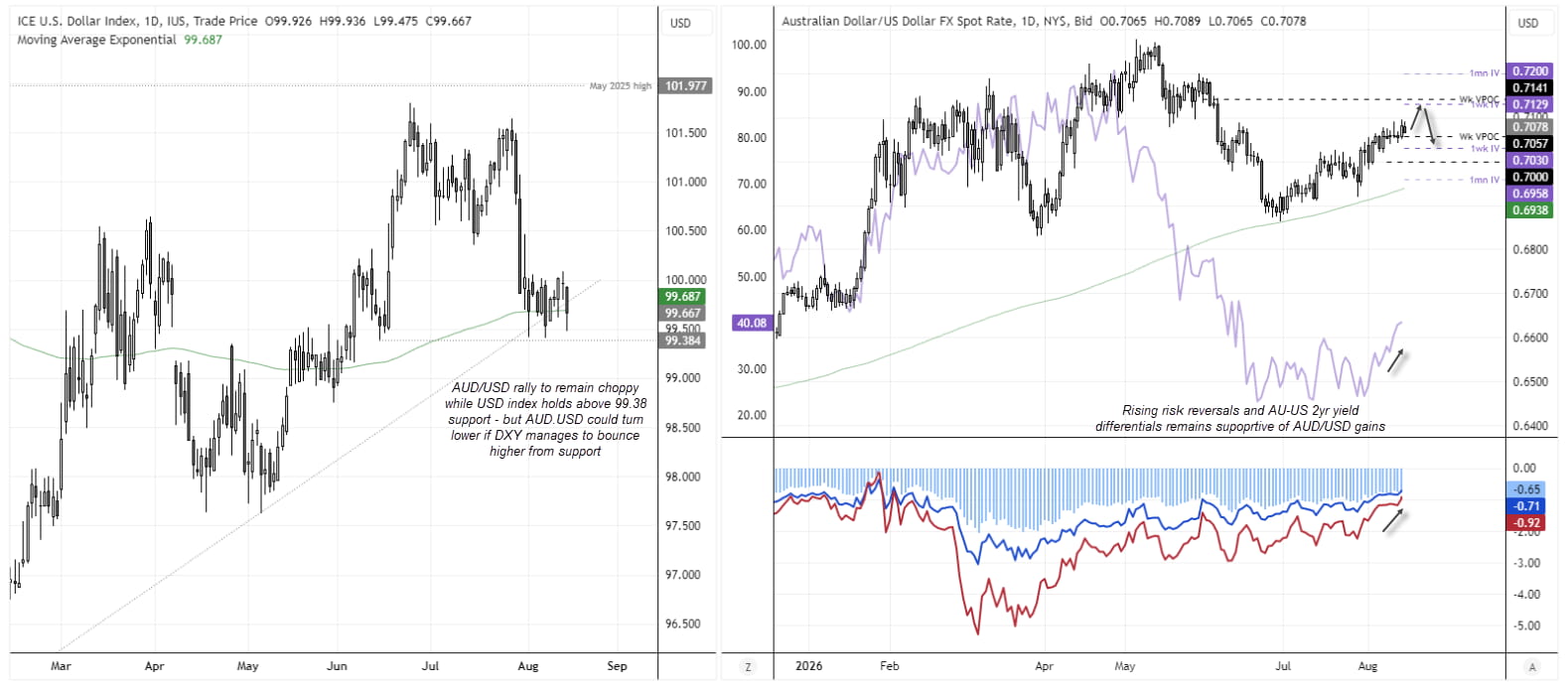
The Aussie continues to defy bearish futures positioning, with AUD/USD holding firm despite traders remaining net-short. Large speculators remain moderately bearish, with their three-year percentile rank at 63.8%, although their three-month rank has fallen to just 8.3%. Asset managers are also net-short, with their one-year and three-month percentile ranks sitting at zero, showing positioning at the lower end of its recent range.
With Australian employment data approaching, the report could provide the next catalyst for AUD/USD. A softer set of figures could further reduce expectations of another RBA hike and weigh on the Australian dollar, while stronger data could keep the prospect of further tightening alive and leave bearish futures traders vulnerable.
Source: CFTC (COT), CME, LSEG
View the full economic calendar
-- Written by Matt Simpson
Follow Matt on Twitter @cLeverEdge
How to trade with City Index
You can trade with City Index by following these four easy steps:
- Open an account, or log in if you’re already a customer
• Open an account in the UK
• Open an account in Australia
• Open an account in Singapore
- Search for the market you want to trade in our award-winning platform
- Choose your position and size, and your stop and limit levels
- Place the trade
Latest market news











Web Trader platform
Our sophisticated web-based platform is packed with features.
Open an account today
Experience award-winning platforms with fast and secure execution.
Economic calendar
Related articles

EUR/USD forecast: All eyes on Warsh at Jackson Hole - Forex Friday
For much of this week, the EUR/USD has been edging lower with the US dollar regaining some ground after last week’s sell-off that was triggered, in part, by the bond market worries. Investors have been unwilling to bet further against the US dollar so far this week ahead of Kevin Warsh’s keynote speech at the Jackson Hole summit, due later today.


DAX and EUR/USD forecast: Lower energy prices, yields offer support
But the question, of course, is how much further oil prices and bond yields can fall. For now, the combination is supportive of risk assets and is helping to sustain a relatively benign decline in the dollar. The focus today will be on US core PCE inflation, due for release shortly, while Nvidia’s second-quarter earnings will provide another test for risk appetite after the US markets close – not just for US indices but for global tech-heavy indices given the influence Nvidia has over the global tech and AI names.

Oil, EUR/USD Forecast: Two trades to watch 2608
Oil falls further on diplomatic hopes for a Middle East resolution. EUR/USD consolidates ahead of U.S. inflation and Jackson Hole.
