


USD/MXN Forecast: Peso Struggles to Recover Despite Mexico's Inflation Data
Despite the recovery attempt seen at the start of the week, a renewed phase of weakness has become increasingly evident around the Mexican peso in the short term. This can be observed in recent USD/MXN price action, with the pair gaining more than 1.2% during today's session, reflecting a stronger U.S. dollar and a renewed loss of ground for the peso.
Written by
Julian Pineda
Market Analyst
Despite the recovery attempt seen at the start of the week, a renewed phase of weakness has become increasingly evident around the Mexican peso in the short term. This can be observed in recent USD/MXN price action, with the pair gaining more than 1.2% during today's session, reflecting a stronger U.S. dollar and a renewed loss of ground for the peso.
For now, buying pressure remains relevant around the pair even after the release of Mexico's inflation figures. This reaction suggests that markets still do not see enough room for a significantly more aggressive Bank of Mexico in the near term. As long as expectations remain centered on a cautious central bank, part of the relative appeal that the peso has maintained through its interest-rate advantage over other currencies may continue to fade, a dynamic that could keep supporting USD/MXN strength in the sessions ahead.
What Happened with Mexico's Inflation Data?
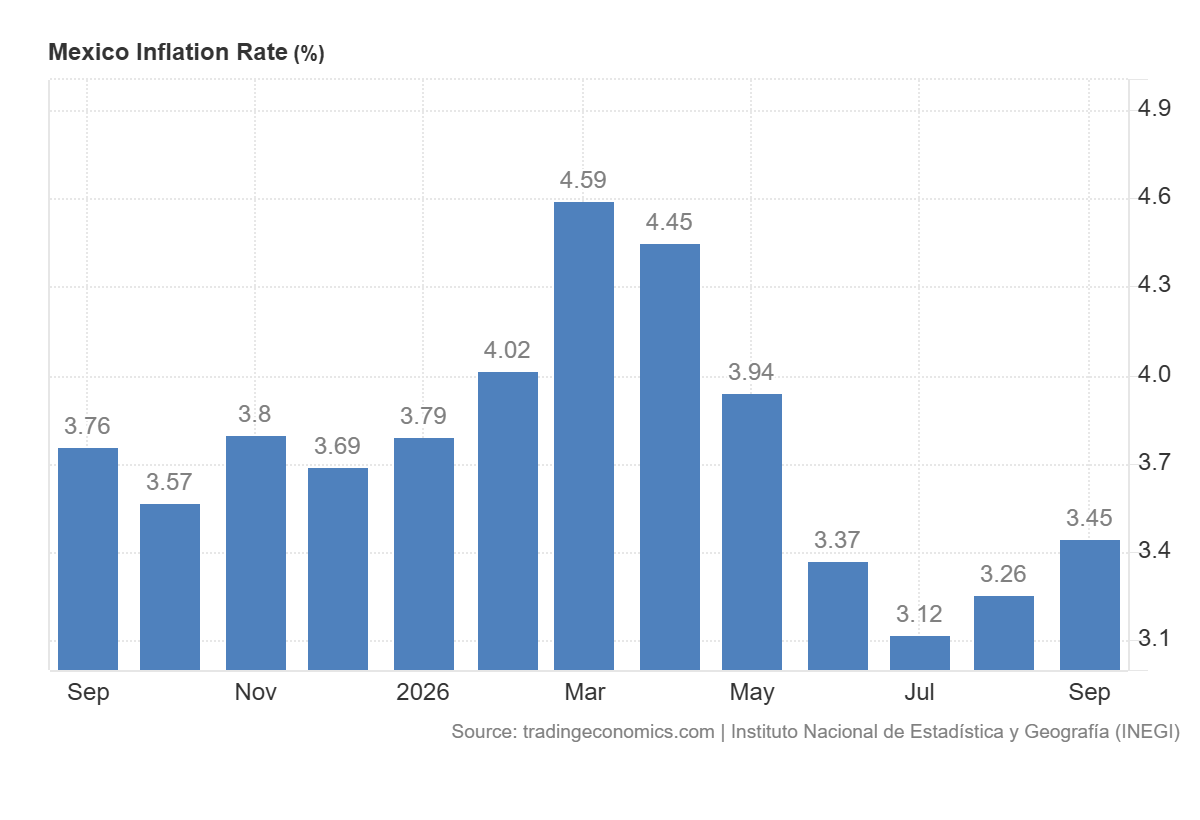
Mexico released its latest inflation figures during today's session. Annual inflation came in at 3.45%, slightly below the 3.47% expected by the market. However, the reading increased from the 3.12% observed in July and the 3.26% reported in August, reflecting a moderate acceleration compared with previous months.
Even so, the most important point is that inflation remains within the Bank of Mexico's target range and continues to trade below the upper limit of 4.00%, meaning that the recent increase remains relatively contained.
In addition, much of the increase came from more volatile components, mainly food prices, while core inflation continued to moderate for an eighth consecutive month, reaching 3.75%, its lowest level since 2025. This is particularly important because it suggests that the rebound in headline inflation is being driven by isolated factors rather than a broad-based acceleration in inflationary pressures. As a result, the data does not currently appear to represent a significant threat to the cautious policy approach that the Bank of Mexico has maintained in recent months.
Source: TradingEconomics
This remains important because the latest inflation figures do not appear strong enough to alter current expectations regarding Mexican monetary policy. For now, markets continue to price in a benchmark rate close to 6.50% by the end of 2026, assuming inflationary pressures do not deteriorate more significantly over the coming months.
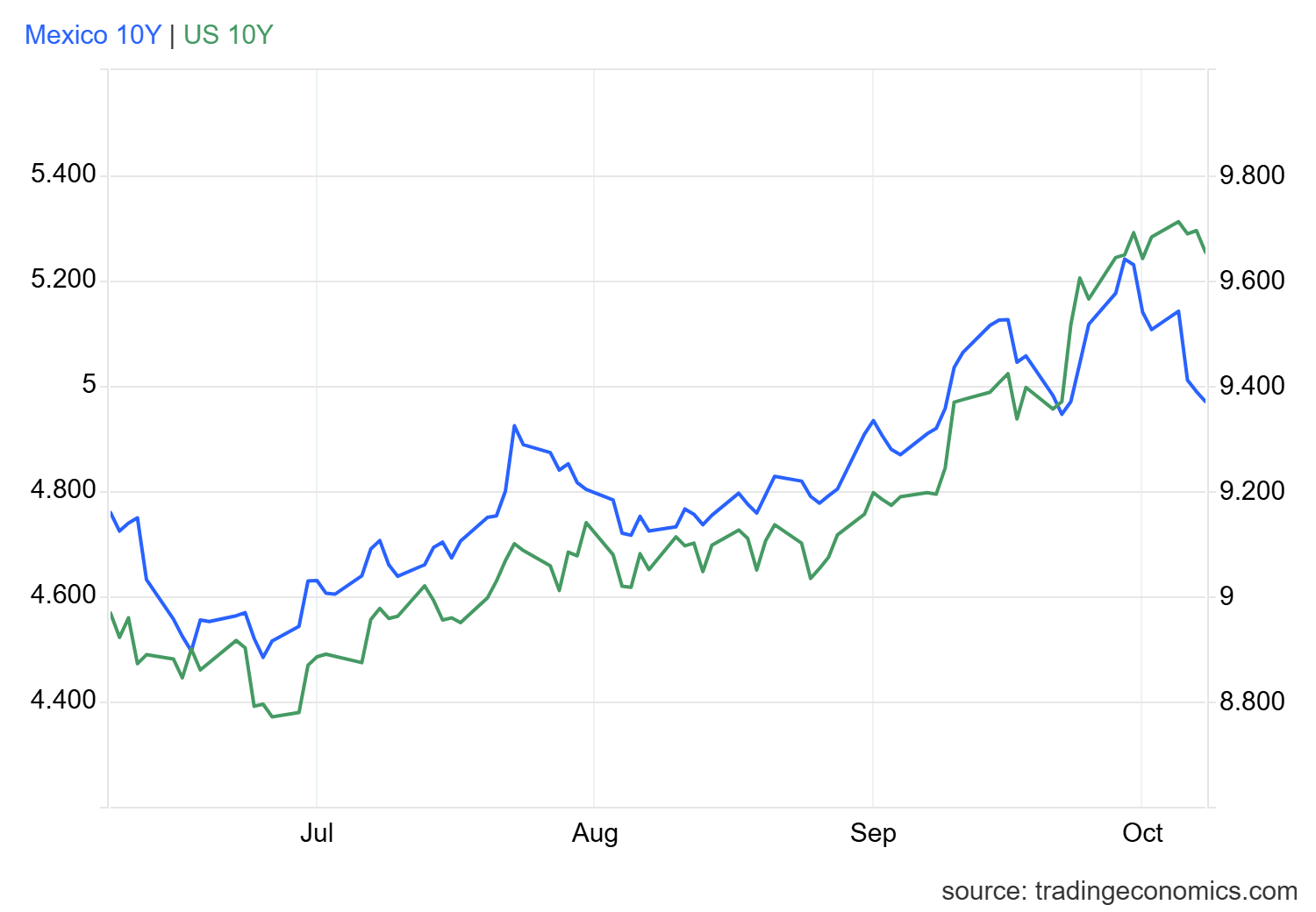
This outlook is also reflected in the bond market. Yields on 10-year Mexican government bonds had already been moderating before the inflation release and continue to trade around the 9.3% area, moving further away from the highs observed earlier this year. Meanwhile, U.S. Treasury yields continue to display a different dynamic, holding near 5.2% and reflecting far greater stability in recent market activity.
The difference is important because, while Mexican bonds have gradually begun to lose some of their appeal, U.S. Treasuries continue to offer relatively attractive yields, a situation that could keep supporting capital flows toward dollar-denominated assets.
Source: TradingEconomics
Taking all of this into account, expectations of a more cautious Bank of Mexico have begun to reduce part of the relative appeal of the Mexican fixed-income market, while U.S. yields continue to show greater stability. This environment could continue limiting the attractiveness of peso-denominated investments and support demand for dollar-denominated assets. As long as these conditions remain in place, the Mexican peso may continue to struggle to recover ground consistently, leaving room for continued buying pressure around USD/MXN in the sessions ahead.
USD/MXN Technical Forecast
Source: StoneX, Tradingview
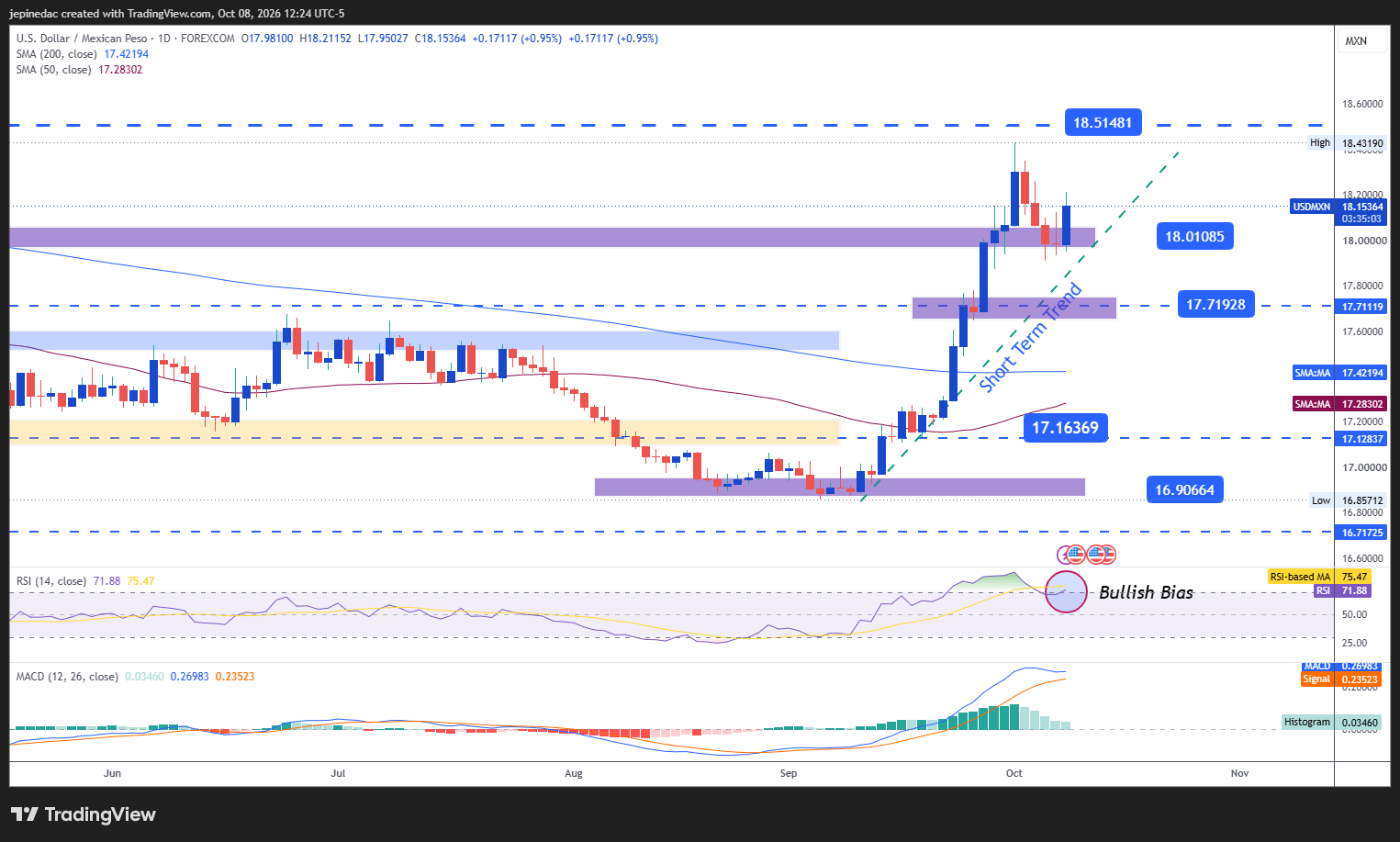
- The aggressive uptrend continues to gain relevance: Over recent weeks, USD/MXN has been developing a pattern of higher highs, allowing a relevant bullish trendline to emerge in the short term. This structure remains the dominant technical pattern on the chart and, as long as buying pressure remains intact, the trend could continue consolidating as the market's primary technical reference in the weeks ahead.
- MACD: The MACD histogram continues to trade above the 0 neutral line, reflecting that short-term moving-average momentum continues to favor a relevant bullish bias. This reading supports the importance that buying pressure continues to have within the pair's recent price action.
- RSI: A similar picture can be observed in the RSI, which remains above the 50 neutral level, supporting the strength of the recent bullish momentum. However, the indicator has also moved above the 70 overbought threshold, a development that highlights the speed of the recent rally and could leave room for short-term corrective pullbacks.
Key Levels:
- 18.50 – Major Resistance: A zone of significant highs observed in previous months that currently stands as the most important upside barrier on the chart. Price action that manages to consolidate above this level could reaffirm the dominance of buying pressure, reinforce the development of higher highs, and support a more established bullish structure over the coming weeks.
- 18.00 – Current Barrier: A level that aligns with recent retracement zones and an important psychological reference for the market. This area could become the primary level to watch in the event of short-term corrective declines.
- 17.70 – Key Support: A zone of important lows observed in previous weeks that remains the most relevant downside barrier on the chart. Price action returning toward this area could place the current bullish trendline at risk and begin to reflect a more evident loss of direction, potentially favoring a broader phase of neutrality in the short term.
Written by Julian Pineda, CFA, CMT – Market Analyst
Follow him on: @julianpineda25
Latest market news











Web Trader platform
Our sophisticated web-based platform is packed with features.
Open an account today
Experience award-winning platforms with fast and secure execution.
Economic calendar
Related articles

EUR/USD forecast: All eyes on Warsh at Jackson Hole - Forex Friday
For much of this week, the EUR/USD has been edging lower with the US dollar regaining some ground after last week’s sell-off that was triggered, in part, by the bond market worries. Investors have been unwilling to bet further against the US dollar so far this week ahead of Kevin Warsh’s keynote speech at the Jackson Hole summit, due later today.


DAX and EUR/USD forecast: Lower energy prices, yields offer support
But the question, of course, is how much further oil prices and bond yields can fall. For now, the combination is supportive of risk assets and is helping to sustain a relatively benign decline in the dollar. The focus today will be on US core PCE inflation, due for release shortly, while Nvidia’s second-quarter earnings will provide another test for risk appetite after the US markets close – not just for US indices but for global tech-heavy indices given the influence Nvidia has over the global tech and AI names.

AUD/USD Shorts Bear the Brunt of Hot CPI, Renewed RBA Hike Bets
Hot Australian CPI revives RBA hike bets, lifts bond yields and adds fresh pressure to crowded AUD/USD short positions.
