


Australian Jobs Report Hammers Another Nail into the Coffin for RBA Hikes
Australian jobs fell by 39.3k as unemployment held at 4.7%, sending the Aussie lower and prompting traders to scale back expectations for further RBA hikes.
Written by
Matt Simpson
Market Analyst
The Australian dollar fell across the FX majors following a weaker-than-expected employment report, which saw 39.3k jobs lost and unemployment remain elevated at 4.7%. The soft data prompted traders to scale back bets on another RBA rate hike, despite the central bank retaining a hawkish tone in this week's minutes. With labour market conditions deteriorating faster than the RBA anticipated, the case for further tightening is becoming harder to justify, adding to downside pressure on the Aussie.
Weak Australian Jobs Data Undermines RBA Rate Hike Expectations
Australian Dollar Falls Across FX Majors After Weak Jobs Report
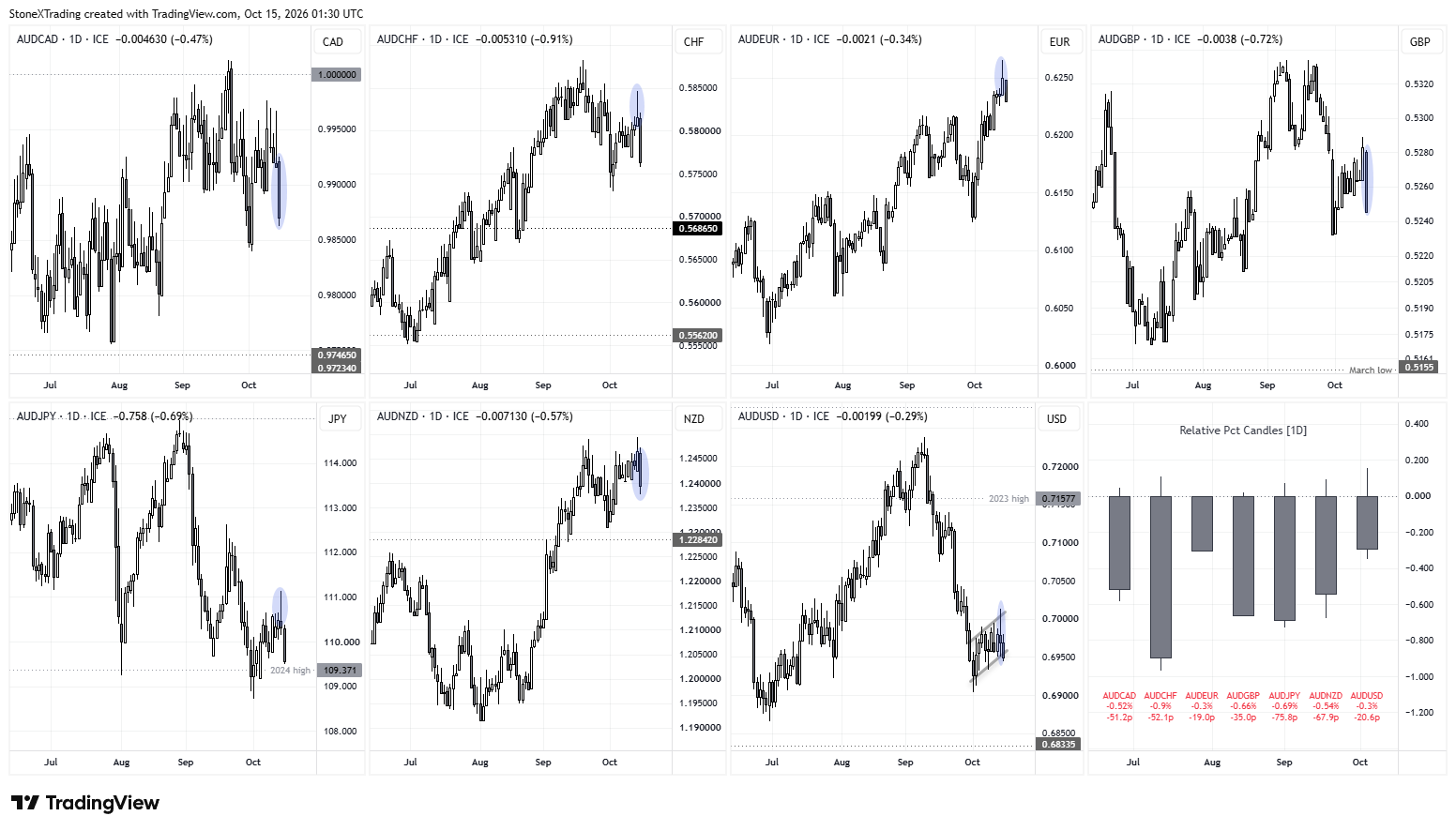
- Australian dollar: The Aussie is currently the weakest FX major in today's Asian session.
- AUD/CHF: Leads the declines as the Swiss franc benefits from safe-haven flows following a risk-off session on Wall Street after a hotter-than-expected US inflation report.
- GBP/AUD: My bullish outlook can now be revived after its pullback was initially a little deeper than I had hoped.
- AUD/JPY and AUD/USD: Both pairs are falling in line with my bearish bias.
- AUD/NZD: A double top appears to be playing out after the pair struggled to hold above its September high.
Australian Unemployment Exceeds RBA Expectations
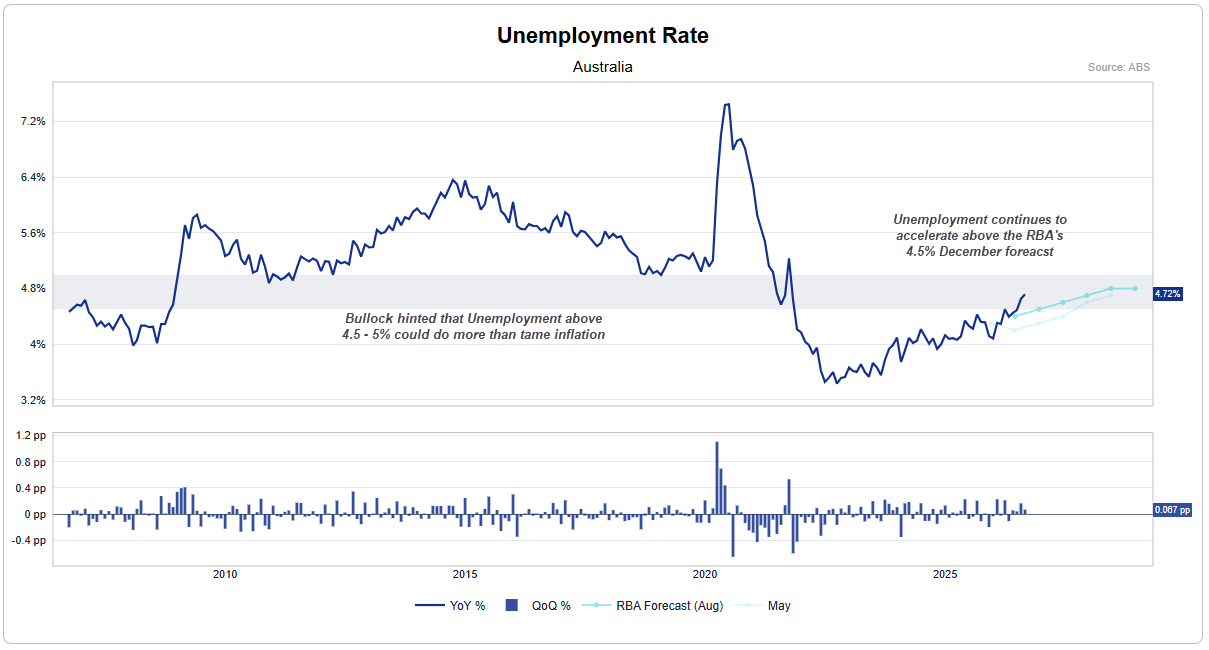
Australia’s employment situation continued to soften, further undermining the case for additional RBA hikes. The 4.7% unemployment rate was higher than the 4.6% estimate, and is now 0.2 percentage points above the RBA’s own 4.5% forecast for the December quarter.
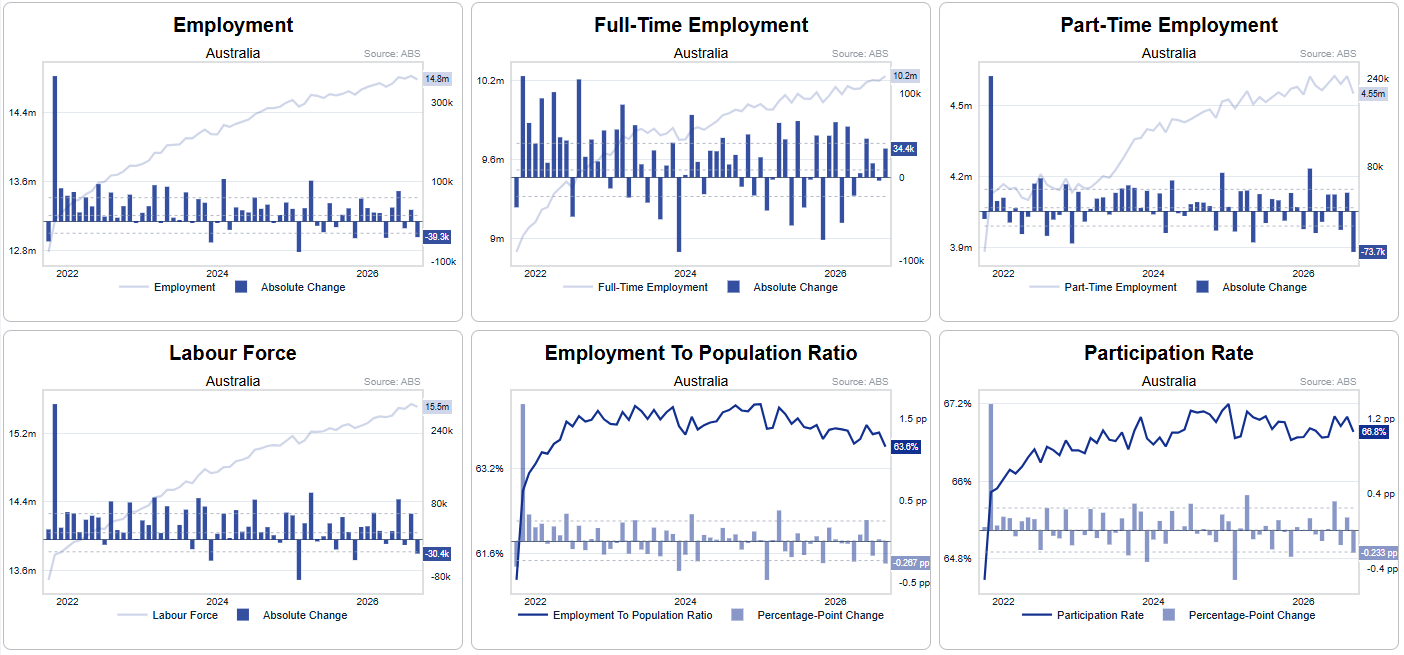
And despite full-time employment rebounding by 34.4k in September, the 73.7k decline in part-time employment resulted in a net loss of 39.3k jobs. The decline in part-time employment was its steepest since September 2021 and was also beyond a two-standard-deviation move from its long-term average.
But before we get too dovish on the RBA, it is worth remembering that Michele Bullock suggested an unemployment rate of 4.5–5% could be enough to ease inflation pressures. While this does not make a rise above 5% a hard threshold for a rate cut, the faster unemployment approaches that level, the stronger the case becomes for 4.6% being the RBA’s cash rate ceiling for now.
RBA Rate Hike Expectations Fall Following Weak Jobs Report
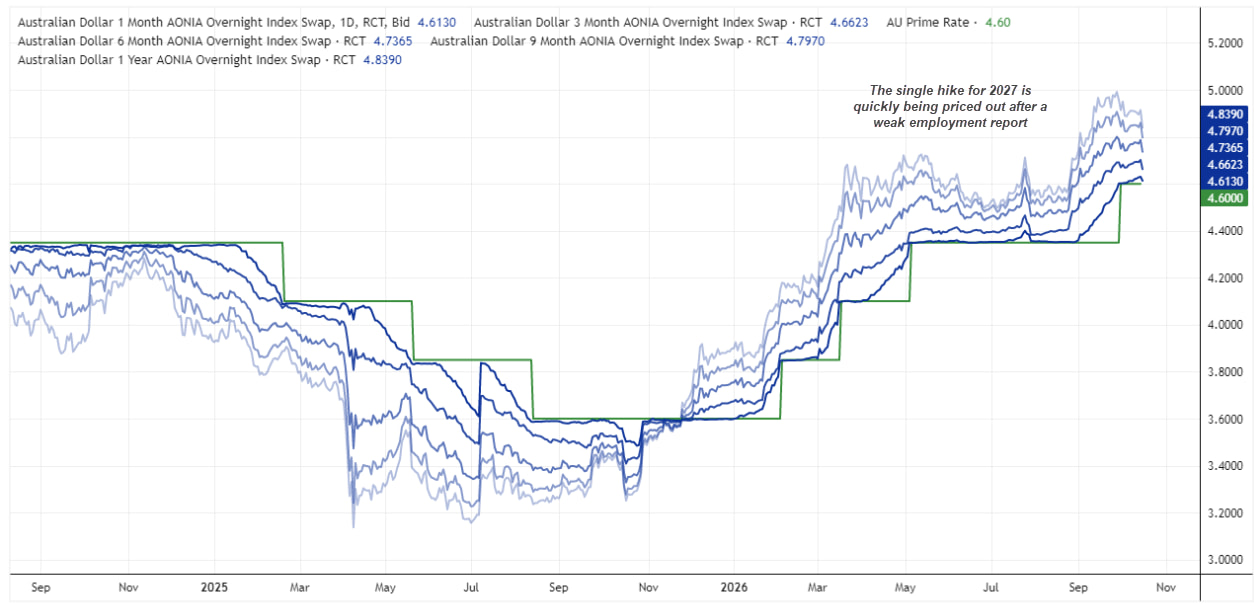
OIS rates also show a sharp decline in expectations for the additional hike traders had been pricing in for 2027, with the curve quickly moving back towards the 4.6% cash rate following the labour force report. So while the RBA minutes released this week leaned hawkish, traders are having a tougher time believing further hikes will materialise. Especially with business and consumer sentiment continuing to sour in light of recent hikes and the threat of more.
Ultimately, the RBA may have time to sit on its hands and simply wield the threat of another hike without committing. And with unemployment already above its December-quarter forecast, the burden of proof for further tightening increasingly rests with inflation.
Source: LSEG
Broader Employment Indicators Point to a Softening Labour Market
The broader employment picture also points to a softening labour market. The labour force contracted by 30.4k in September, while both the participation rate and employment-to-population ratio declined. Taken together, these figures suggest the labour market is losing momentum, even if the unemployment rate has yet to rise further.
Related tags:
Latest market news








Web Trader platform
Our sophisticated web-based platform is packed with features.
Open an account today
Experience award-winning platforms with fast and secure execution.
Economic calendar
Related articles

AUD/USD Shorts Bear the Brunt of Hot CPI, Renewed RBA Hike Bets
Hot Australian CPI revives RBA hike bets, lifts bond yields and adds fresh pressure to crowded AUD/USD short positions.
AUD/USD forecast tilted to upside as focus turns to key data
The AUD/USD continues to grind higher - as it has done so ever since risk assets bottomed back in April 2025. The Aussie has benefitted from rising metals prices and a strong Chinese yuan. The US dollar meanwhile has had bouts of strength here and there, but not much against the Aussie. The recent bond market stress has further increased the US dollar debasement calls. The focus now is turning to key data from both Australia and the US, and the Jackson Hole symposium.

AUD/USD slips as DXY ignores the playbook
The US dollar moved against its recent macro playbook on Monday. AUD/USD paid the price, although bulls still hold the upper hand.
