


Crypto Fundamental Analysis Central banks keep market caution in place
As the last week of July comes to an end, the cryptocurrency market is once again showing weaker short-term appetite. Over the last few sessions, demand has shown signs of caution, in a week marked by central bank decisions that failed to strengthen appetite for risk assets.
Written by
Julian Pineda
Market Analyst
As the last week of July comes to an end, the cryptocurrency market is once again showing weaker short-term appetite. Over the last few sessions, demand has shown signs of caution, in a week marked by central bank decisions that failed to strengthen appetite for risk assets. The possibility of more aggressive monetary policy remains an important factor for the market and could keep a broader environment of indecision or weakness in place over the next few trading sessions.

Central bank week
Several important monetary policy events took place during the week, including decisions from the Bank of England, the Bank of Japan and the Federal Reserve. All of them kept interest rates unchanged, but their statements and comments, especially in the case of the United States and the United Kingdom, once again highlighted that inflation remains above the 2.00% target and could still require additional policy adjustments.
These events were important because none of the central banks delivered a clear signal of monetary easing. Instead, the message continued to point toward keeping rates elevated or, in some cases, leaving the door open to potential hikes. In this context, the Federal Reserve remains especially important. Although Warsh’s comments did not confirm a rate hike, markets still see that as the most likely scenario for the September decision. According to the CME Group probability table, there is a probability close to 65% that the U.S. rate could move from the current 3.75% area toward a new zone near 4.00%. A similar dynamic could also become relevant for the Bank of England and the Bank of Japan, with the latter leaving the door open to potential hikes if inflation and pressure on the yen continue to increase.
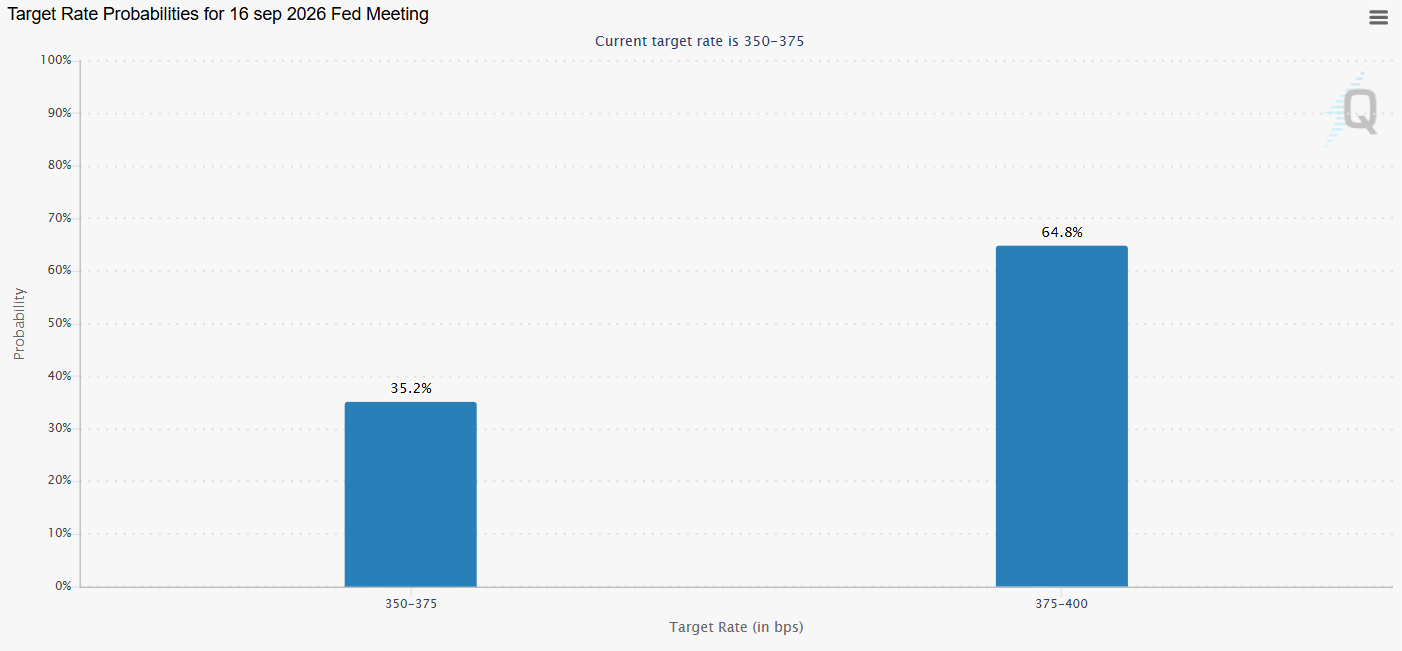
Source: CMEGROUP
With this in mind, the possibility of more aggressive central banks continues to represent a risk for assets such as cryptocurrencies. Higher rates can increase borrowing costs, reduce liquidity available for risk investments and support demand for more stable markets in the short term. This effect was already visible during the week in flows into the Bitcoin ETF market. Taking BTC as the reference asset, positive flows were only seen on July 29, with a small inflow of just over 80 million dollars. Since the beginning of the week, ETF activity had already shown signs of caution, suggesting that the market is still assessing the impact of potentially more restrictive monetary policy on risk assets.
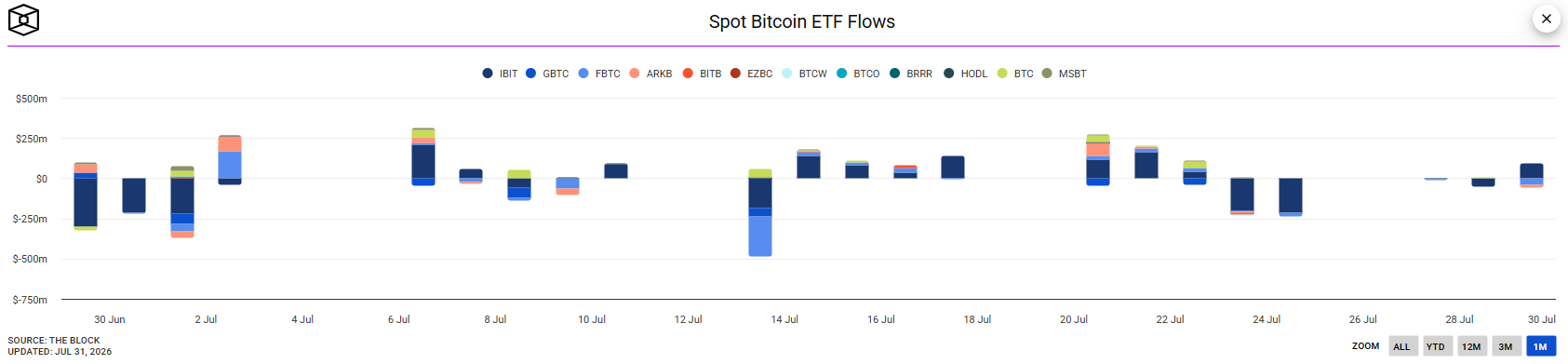
Source: Theblock
With all this in mind, the main catalyst limiting confidence in the crypto market remains caution around central banks that could stay restrictive over the coming months. As long as this outlook remains in place, demand for cryptocurrencies could continue to struggle to stabilize, keeping a short-term environment of indecision or weakness.
Bitcoin versus other markets
The loss of correlation between Bitcoin and traditional risk markets such as the S&P 500 has also started to become relevant. The correlation coefficient is currently near 0 on the average of the last 25 days, suggesting that both markets have lost a clear positive relationship in their recent movements. It is important to remember that the correlation coefficient can change over time.
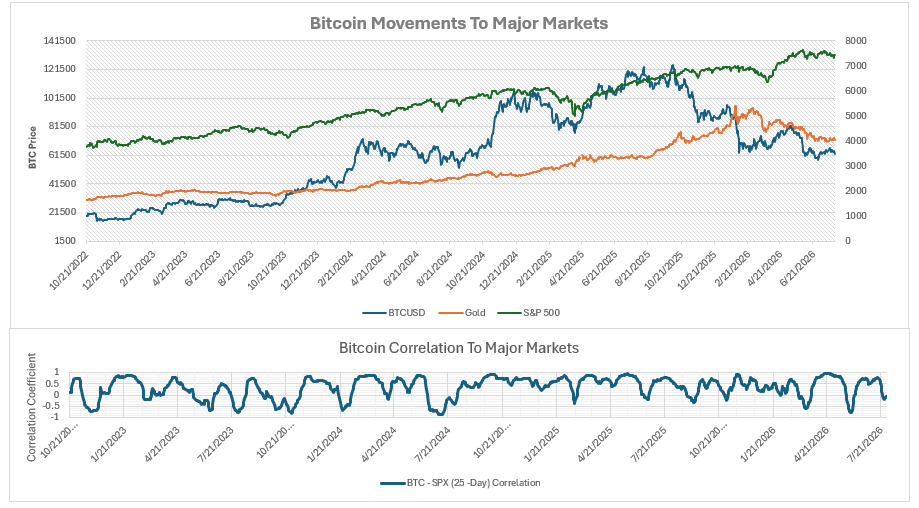
Source: Data – TVC, StoneX, Tradingview
This relationship is important because, while equity indices have tried to close the week with greater strength after a temporary decline in U.S. dollar demand, Bitcoin has not managed to follow that move in a meaningful way. This suggests that risk appetite has been more concentrated in equities than in crypto over the last few sessions. In this context, Bitcoin and the broader cryptocurrency market remain in a difficult position, as they are not being treated as a relevant temporary safe haven, but they are also failing to attract demand as traditional risk assets.
With this in mind, if this dynamic continues, it could keep reflecting weaker appetite for cryptocurrencies compared with more attractive substitute markets. This could reinforce a phase of indecision or weakness in the crypto market over the next few trading sessions.
Confidence remains stuck
Looking at the Crypto Fear and Greed Index, despite the slight recovery seen in recent weeks, the indicator remains near 34 points, still within the “fear” zone and without reaching “neutral” territory. This shows that confidence in the crypto market remains fragile and that there is still no stable environment of short-term optimism.
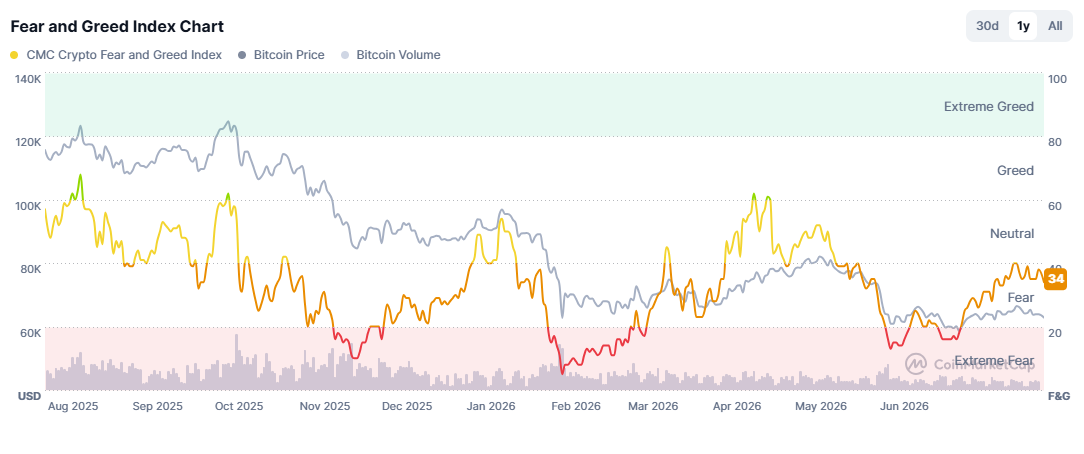
Source: Coinmarketcap
This dynamic suggests that, for now, there is not enough stability to confirm dominant demand in the cryptocurrency market. As long as the index fails to move into neutral or positive territory, confidence could remain fragile and continue to reflect a phase of indecision or weakness over the next few sessions.
Written by Julian Pineda, CFA, CMT – Market Analyst
Follow him on: @julianpineda25
Latest market news











Web Trader platform
Our sophisticated web-based platform is packed with features.
Open an account today
Experience award-winning platforms with fast and secure execution.
Economic calendar
Related articles

Bitcoin Forecast: BTC/USD Back to $80K Ahead of Warsh’s Jackson Hole Speech
After surging over $15,000 in the past 10 days alone, there is risk of a near-term pullback if Warsh says anything remotely hawkish at Jackson Hole - what are the levels to watch from here?


Bitcoin, Gold Price Outlook: US CPI & Overbought Risks in Focus
Bitcoin, Gold Price Outlook Following a steep risk-on rally across US equity indices and precious metals, several major markets are approaching critical technical levels as momentum becomes increasingly stretched.


Bitcoin, Dow Jones Outlook: Dow Tests Major Resistance and Bitcoin Lags Below $67,000
Bitcoin, Dow Jones Outlook: Bitcoin remains below $67,000 while the Dow Jones tests major multi-year resistance. Key technical levels that could determine the next market move.